Every haunted house has a story. A malignant owner. A heinous act. A terrible tragedy. Something that makes the people who see it shiver even on the hottest days. They rush past these places, sometimes running, until whatever lurks within those walls can no longer see or hurt them.
In Kansas, this house is on Kill Creek Road. Its very foundation is built on a terrible and heinous tragedy: the man who built the house, and his black girlfriend, were both violently murdered by the locals. Years after this crime, the Finch Sisters buy the house and become little more than evil witches to the townspeople. When one of them dies of disease and the other hangs herself from the same tree as the previously murdered lover, the story of Kill Creek only grows.
This house serves as an inspiration, as several horror writers (representing the provocateur, the ingenue, the christian, and the established, prolific veteran) are invited to the most infamous house in Kansas to film a live stream. While the house serves up a couple scares during the stream, most of what occurs there is unremarkable. A few cold winds, sounds, and a mysteriously bricked-up stairwell make up most of the mystery for these writers seeking inspiration.
It’s what happens after that inspires and strikes terror in the hearts of those same writers, as some dark force causes them to check out of their normal lives and throw themselves headlong into writing a story; despite using their unique styles, this story is remarkably similar for each of them. This sudden obsession, and the consequences they face when they try to stop writing, force them back to the house on Kill Creek, where shenanigans ensue. And holy shit, are their shenanigans.
It’s a straightforward read about the power of belief and how it interacts with spiritual forces. If you want a haunted house book where the house is haunted, but not where the typical ghosts are going to get everyone way, this is a good deviation from the mean. It has a similar feel to “The House Next Door” (Siddons), without all of the waxing sweetly about Southern life in between the house demon issues.
Would I Read it Again?: No. Everything in the book was pretty clear cut and once you read the ending, there’s not a lot that makes you go “So, that’s what happened.”
Rating: 3.5. It’s a solid horror novel, but that’s really it. There are some loose ends that get lost in the twist. Like another recent read, Last Days, it’s a little unsatisfying.
Not in the sexy way, but instead a darker, filthier fascination of what oblivion means to all I know as me. Terrified of either truth. That kind of thing.
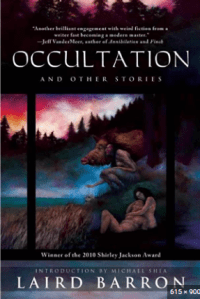
“Occultation” by Laird Barron definitely satisfies this particular hunger and manages to do so in one of my favorite formats: the short story. The book is a collection of nine short stories all dealing with those things that are beyond ken for many. Madness waits for the rest. If Eve ate an apple and gained the understanding of her vulnerability, then “Occultation” is eating the whole damned tree and losing oneself in the process.
I won’t pick a favorite story. The entire book is full of things I love. They range from a couple slowly going mad while the world outside devolves to eternal dark to a man who hears strange sounds in his vent, the voices slowly getting closer as he loses his mind. Most of the stories deal with relationships in some shape or form, showing both the comfort and claustrophobia such ties bring when the stars are right (when, really, they’re all wrong).
If you are into the kind of creeping madness that stays out of sight but definitely on the mind, while also breaking down the ties that bind us to reality in a sort of folie a duex, “Occultation” is a fantastic read.
Would I Read it Again?: Happily. I think this is one of those books where you pick up more and more details once you already know the end of the story.
Rating: 4.5. The .5 is about how dense the language can be, especially concerning dialogue. Reading through things again to catch clues is awesome, but needing to read it again to understand what is going on is a complete PITA.
What’s a house without a ghost? Still one bad motherfucker, if The House Next Door is to be believed. It doesn’t need any incorporeal spirit rattling its chains or throwing plates. Those are so… last year. Instead, it relies on a person’s own weaknesses, feeding them until they become grotesqueries and horrors beyond imagining. And what if you just happen to live next door to all of the zany butchery?
That’s the premise of The House Next Door. The neighbors, Colquitt and Walter, are pissed when they find out the empty lot next to their house— in a very influential Atlanta neighborhood— is to be no more. A newly-minted architect has been hired by an old money daughter of the South to build a house that says fuck daddy in all its glory. Colquitt and Walter do come around on it, even becoming close friends with the architect, as they see his talent come alive in the form of a modern home. Then shit starts to go down.
After several suspicious wildlife maulings, the new neighbors lose everything that is valuable to them: a child, reputation, their father— until they are driven from the home in an attempt to to maintain their reputations. Two more families follow, along with various incidences of “bad luck” with those who visit the house. The architect loses his talent, other neighbors watch their son throw his life away, and “Col,” as the book often calls her, and Walter almost implode an otherwise impenetrable marriage. Walking into this house is the karma equivalent of breaking a billion mirrors and passing under a ladder on your way out. It takes a family or two, as well as the drunken ramblings of the architect, before anyone believes something might be going on and Col/Walt find a reason to start taking… action.
Siddons is known for her slice of Southern, and I think that shows well in this horror story. One has to move those stories at a certain pace, or they become absolute trudges. In this case, it meant there was always more action with enough of the slice of life to make the story of this strange house in a conservative (of course, they think themselves liberal), old money community feel like an avoidable tragedy.
There are some issues with language used to describe an queer entanglement. In addition, a Jewish character is portrayed as a new money-hungry boo. It’s an unforgivable part of an otherwise good book, even though many might say it perfectly emulates the mindset of the Southern WASP who happened to write in 1978 about other Southern WASPS. It definitely shows how even those who consider themselves on the right side of the Civil Rights movement are the type who speak and act one way in public and become entirely different people within their cloistered communities.
Would I Read it Again?: Yeah. Apparently I rushed a little at the end and missed important information. This happened a couple of times and I had to go back to correct my understanding. The book isn’t so spectacular that I would read it again just for enjoyment, since I feel like I got most of what I needed the first time.
Rating: 3. The writing was solid, but the Jewish character really just threw off everything for me, especially with all the calls to it the characters make. I knocked a point off for that since it wasn’t just narrator perception framing the racism.
Michelle Paver is popular in many horror circles. She’s often mentioned on the /rhorrorlit board I follow for book suggestions.
However, the first book I read of hers was Wakenhyrst, which has horror elements but is more of a gothic romance. It has the requisite madness and a “maybe” demon, along with some tragedy and death.
Spoiler? Maybe. The main character, Maud, suffers an impossibly patriarchal father, while being the most competent character in the book. The book is very much her coming of age, moving from the innocent superstitions of her life on the marsh to and finding her agency; and it’s not just agency from her father, but from all of the superstitions, beliefs, and the expectations of a woman in her position.
It was okay. I love Maud in all of her iterations, and her maturation has layers of shit she throws off as she learns. However, it’s just okay. Perhaps her horror is better (I’ve ordered the books). It shares a trait with “The Little Stranger” (a book by another author who I otherwise love and speak well of) in that it’s just too long. I know Gothic Lit has a habit of lingering, but in the case of “Wakenhyrst” it drags the action down. I just want it a little cleaner.
Would I Read it Again?: So. Yes. I would. Like many books of its ilk, I always want to confirm that my first opinion is correct. Maybe there are some details that make all of the extra worth it. Usually, I’m a little disappointed.
I’m reading every Fear Street novel from my childhood and summarizing them here. Instead of subjecting you to all of the teen angst and bad decision making that turns Shadyside into the #1 place to be if you want to be murdered, I’ve taken on the burden.
Who am I kidding? I love trash horror. Enjoy the spoilers.
====
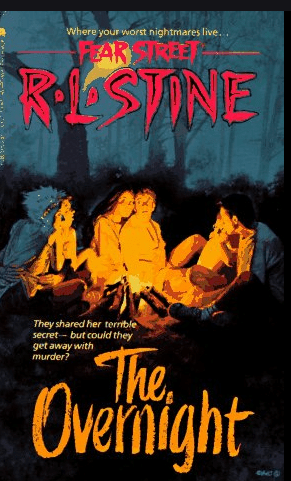
Of all the books I’ve read in the Fear Street series, which admittedly is both too many yet not enough, The Overnight might be the most straightforward one. There’s no real mystery, no threatening phone calls from a mysterious source, and no teenagers go on a weirdly murderous rampage to solve otherwise mundane problems.
Della O’Conner is our “protagonist.” She’s one of those teens that thinks the cycle of breaking and making up with her boyfriend is some kind of foreplay. The lucky guy is Gary, and they both have the personalities of turnips. They’re members of the Outdoors Club, around which our drama revolves.
Other members include the very punk rock Suki Thomas, who is very up for stopping the fun and games between Della and Gary. Maia is the very overprotected friend with the requisite strict parents. There’s the preppy Pete, who also wants to end the shenanigans between the unhappy main couple by hooking up with Della; Ricky Schorr breaks up the monotony by having the sole trait of cracking bad jokes for 99% of his dialogue in the book. Because of this terrible habit, everyone is really mean to him, because Shadysiders are way more interested in picking on the weird kid than identifying possible murderers in their midst. The cast finishes out with some random parents, Mr. Abner (the teacher in charge of the Outdoors Club), and the two strangers who come into play during the overnight.
The story starts with the Outdoors Club meeting about their upcoming overnight trip. After some bad jokes from Ricky and bullying from the other members of the club, there’s some posturing over who gets to date Gary from Suki and Della. Mr. Abner comes in to end all of their fun. He has a family obligation so he can’t chaperone the upcoming overnight trip.
His suggestion to postpone it was vetoed without him present. Maia spent a lot of time convincing her parents to let her go because they appropriately treat her like a teenage girl loose among other teenaged Shadysiders who could be evil ghosts or have an axe stored in their locker. So, the teenagers decide to go on the trip by themselves. Della’s mom thinks the overnight is a bad idea even with Mr. Abner there. But they still go. To Fear Island. Because that ever goes well.
They make it out to the island with minimal distress from Ricky and lots of flirting from Suki (Gary) and Pete (Della). Della gets particularly pissy because Suki crawls up Gary’s ass, and it’s obvious, but guys, they’re on a break. Ricky is a fan of ZAP, so he brought along some paintball guns. After they set up camp, they play some boys vs girls, and this is where the fun begins.
Della meets this creepy guy in the woods, and first mulls over how handsome he is. Like… a movie star, folx. He starts talking about how everyone is lacking in communication then attacks Della. She pushes him down a ravine; while she’s burying him with leaves, the rest of her rag-tag campers show up and verify that “he’s dead.” Instead of anyone thinking that they should tell their fucking parents, they all get very upset that someone might find out that they took the trip by themselves. Maia worries not one bit about the dead dude, but how she will never again be able to leave her house. Only Ricky has any sense, and in one of his few serious moments, he throws up everywhere. The friends agree to a cover up, and I honestly thought this would transition into a I Know What You Did Last Summer moment.
Instead, they go home and get terrorized for a week by people ding-dong-ditching them and sending threatening notes that include a charm from the dead man’s neklace. Maia is less worried about being murderated than her parents finding out, so they don’t end up going to the police. They do this even after they find out that the guy Della knocked down the hill was probably one of two men who robbed an old man and killed him. I’d say the suggestion of the culprits being ghosts was far-fetched, but they get points for considering a very real threat in Shadyside.
As a side note, Pete spends his time of abject horror also asking out Della. And even though she initially thought he was kind of a square, I guess watching Gary move on has opened her up to the possibility of dating someone whose main quality is being nice while wearing a popped collar. They go out on a date at a club together to seal the deal, and almost get run off the road by a psycho killer, but still no police, right?
Mr. Abner reschedules the real overnight with a chaperone for the next week, and the teenagers are appropriately terrified and provide a bunch of excuses. However, they realize they left one of Ricky’s ZAP guns on the effing corpse, so they agree to go back to retrieve it. Maia has no problem explaining the second overnight trip to her parents, so maybe they’re only strict when it’s convenient to explain plot points.
After a hike, they set up camp (again), and Mr. Abner sends the kids out to gather firewood. Not too far out though, because hanky panky is required on spooky islands. Della tries to get far enough out to retrieve the gun but is interrupted by Maia screaming. Someone knocked out Mr. Abner. Instead of leaving the island to get him help, they go out on an adventure to find the gun. They find the spot where Della knocked the guy into the ravine and find that he’s not there. She gets attacked and starts to run, finding out both men are still alive.
The men’s entire idea was to blackmail the kids so that their rich parents would pay them. Their robbery was apparently a bust, except for killing that old guy. There’s some back and forth cartoon shenanigans, until Della finally escapes to the campsite. Thankfully, despite no one calling them, the police wait for her there so they can take the burglars into custody. Surprise police are best police? In this one case only?
Then, we finish off with the prerequisite snappy ending. Della is definitely dating Pete and never again wants to go outside. Probably smart, given the town they live in.
I recently left Mighty Narwhal Productions, a company I helped to found. While I initially said this departure was amicable, paying attention to the line that we don’t talk about Fight Club, later issues have made it so that it’s important that I speak about what occurred with one individual in particular— Jason Andrew— which included a hostile work environment, sexist behavior, abusive work practices, and encouraging xenophobia.
The first thing I need to do is apologize. I am not an innocent in the events I am about to describe. I took part in them, allowed them to happen, or remained quiet when I should have spoken up for others. I can say that I was bogged down in work or I just wanted to make sure the hard work of many people saw the light of day, but that’s trying to justify the means. My intentions don’t matter. The actions do. On that note, I am not claiming anything about the people I name here other than Jason. The information I provide about Jason comes from memory, opinions based on past experiences with him, and the physical documentation I have access to. Some of this information is hearsay from him.
The second thing I need to say is that Mighty Narwhal is not just Jason Andrew. I feel like he made it seem that way more than once, but I think that’s part of his need for attention and the spotlight. He was an idea man, but the fact that there were successful events or books at all is on the shoulders of everyone else around him. I believe he was poor planner at best and knows how to surround himself with capable people. In no way am I trying to make it seem like people should not support Mighty Narwhal; I do believe they should not support Jason being a part of the company.
I was initially introduced to writing for gaming through By Night Studios. I was asked to write a plot kit for their Vegas event as a “try out.” I completed the process, although my try outs kept getting extended into additional work. Even this process was fraught with things that bothered me, but I found it more important to focus on finally being able to write for games. While I was at the event, Jason told me multiple times that Ree Soesbee was a troublesome employee who was not producing work and acting like a diva. Therefore, they were trying out new people to replace her. I was told not to speak with her, while Jason spent the weekend discussing how badly she was doing. At one point, there was a situation where she was emotionally distressed, and he laughed about how he thought she was melting down.
In addition, I later found out I was pitted against another female (Laura Dasnoit). While I am unsure at who made the decision, I was informed they needed another female to replace Ree. Jason told me that Laura failed out of the project because she did not know how to take constructive criticism and she was complaining that he was too harsh.
While I was at By Night Studios, numerous other events occurred. Some of the same things occurred within Mighty Narwhal. I’m only listing a few of them, but there were more.
When I was first hired for BNS, Jason told me a story about how he would seed different versions of a story with different people. If he heard one of the versions of the story, he would knew who was talking about what and not hire that person as they could not be trusted to keep their mouth shut.
During a telephone call while developing Black Furies, one of the other writers told me that women don’t want to throw chops, they just want to dress up. I immediately spoke up that there are plenty of women who like to throw chops. I was angry at this statement, and mentioned it to mutual friends of the person and myself. Somehow, this made it back to Jason, and he asked me to sit down with him at Midwinter. What occurred was a conversation where I was told that Ree had previously accused the company of sexism, so Jason was very disturbed that I had spoken about the phone call to others. I was told I would learn to play nice and not talk about what happened at By Night. We don’t talk about Fight Club. He insinuated that doing otherwise would result in firing me as a freelancer.
He hired two of his sexual partners as freelancers for By Night; he later hired the same two people for Mighty Narwhal. He frequently complained that they turned in work late and that most of it was not good. In some of these cases, he would claim he was giving them one more chance and coaching them. They continued to turn in late work that did not meet standards, according to him. However, he kept them as freelancers and paid them. In the case of Mighty Narwhal, he paid one of them in advance of other freelancers on word count that I do not believe was even completed at the time.
The same person who made the comment about women throwing chops would frequently degrade my work, speak down to me, and ignore me in areas where I was a subject matter expert. Sometimes, this was followed up with them reskinning the same work and claiming it as their own. I complained about this process more than once, and Jason frequently told me that the most important thing was the team, and I should remain quiet in order to keep the peace. At one point, after that person (a white male) lectured me on how it was not whitewashing to let white people play indigenous people *in a game framed in cinema*, I spoke to Jason about the need to intervene. He told me he had spoken to the person and told them that they needed to understand sometimes women were more emotional and, essentially, couldn’t take frank discussion or feedback.
After By Night was sold, there was still unfinished work on Changeling the Dreaming. From what I can piece together, Jason was approached by the new owner and asked to complete the project. I was excluded because I had previously reached out to the company about the person above as well as another employee who had allegedly made racist statements. I was considered too opinionated or forthright. Jason said they didn’t know how to “handle” me. He said he wanted me to complete the project with him, but only if I could put aside my differences and let the past go. I told him him could be polite and professional, but I would not let go of previous problems for the sake of peace. Especially since I had not even received an apology over any of it. I completed the work with little assistance from Jason. After I turned this work in, Jason told me Shane Robinette (someone I previously refused to work for) was still in charge of By Night Studios and had only been taken off the paperwork for the sake of optics. He had this information in advance, from what I can tell, and withheld it. Or, it’s not right at all and just another way to hit back at By Night.
My time at By Night Studios and Mighty Narwhal overlapped significantly. While I’ve tried to keep the incidents with their relative companies, there are some situations that occurred within the domain of both.
Jason put down several of his writers, including April Douglas, Renee Ritchie, Jeffrey Fowler, Jimmy Reckitt, Aen (I could not find her last name), as well as some additional freelancers. He called one of them a dud, another a child, and claimed one was a C level writer. This came up again during the Kickstarter, as we trended on Twitter for our low pay rate. While Jeff and I attempted to find a solution, Jason made fun of the status of one of the Twitter personas because of their Go Fund Me, claimed he hired a bunch of noobs to give them a credit, and insinuated they didn’t deserve more pay, even saying that he and I wrote most of the book. Whenever he felt threatened, I felt his first line of approach was to attack those around him.
In my opinion, he continuously violated any boundary I set for him when it conflicted with his desires. Only a few examples are below.
When the partners found out he was hiring writers and artists without even running it past us first, we had an entire conversation about how he needed to run potential hires past us prior to making them an offer. He tried to tell us it wasn’t our business because he was the Creative Director. At some point, we came to an agreement that as a business, he was required to run new hires past us. He complied with this only a couple of times before continuing to hire anyone he wanted without asking. Jeff stated he had to pay someone he didn’t even know was writing for us. In addition, Jason reached out to people with problematic histories, and only after the fact did he tell us who they were. He had to be informed they were not appropriate freelancers or artists. These histories were easily found in a google search.
He asked for the passwords to all of the social media sites, including our web page, in case I was “hit by a bus.” I complied, telling him to not log into these accounts, post from them, or otherwise interact with them since I had to make sure we shared a consistent message and brand. Instead, whenever he offered social media ideas that I vetoed because they were not appropriate, he would log in anyway to make these posts. In addition, he logged into my personal account for the website, even after I told him it was my personal account, to stay out of it, and I would handle any transfers to Jeff. He changed all of the information in the account to his own. He did the same with the Kickstarter, responding to questions in what I considered a confusing manner as well as adding new tiers whenever he felt Jeff or I weren’t responding quickly enough. He also made changes to the web page despite having no idea how it even worked.
After being told not to touch documents in review, he would regularly change them, adding our taking out information after they were edited and were in the final pass. He did the same with folders in Dropbox while we were in layout. When he was asked not to move things around, he came back that he should be able to since (he thought) I wasn’t working in those folders. Even after I had given him clear direction, and Jeff had to reiterate it, he would still move things.
He asked me for art direction for the core book. I created a Google document that outlined our art needs and provided suggestions for those pieces. Instead, Jason ignored this document and ordered art based on what he wanted, which meant some chapters had no art, some chapters had multiple art pieces for the same page, and some things were just not usable for what we needed at all. Whenever I tried to make corrections based on layout, he would tell me it’s not what I asked for when the needs were clearly outlined, and then blame me for his confusion when I pointed back to the document.
He asked me to design the Monster section for the book. I created a system that removed Qualities from this specific type of NPC and specifically told Jason that it was for ease of use. He added them back in and said nothing about it until we were in review and layout. He did not discuss it with me during the process or to advise on why he changed them until it was too late to do anything about his changes.
At some point, I needed to to speak to one of our artists to create a cover for one of my projects. As I was handling the KS, layout, and reviews at the same time, I needed additional time for this. Jason decided to give art direction instead which in no way met the needs of the project. He later brought this late email back up to chastise me so often I personally commented I felt like Hillary Clinton and “but her emails.”
Many times when I expressed dissatisfaction with his actions, he would call me rude or tell me I was obviously angry. This was usually followed up without how I should be nicer or how kindness would get me much further. I felt I was not allowed to be frustrated by his actions without being attributed to emotional responses or me being thought of as mean. Whenever he was condescending, inappropriate, or hostile it was because he had other things going on that excused such behavior.
He suggested we hire a new partner because she had put in a lot of work at an event. He wanted to do this to reduce costs; he was not interested in paying her for her time. This is in accordance to how my departure was handled. I initially decided to leave after there was an incident with Jason’s past legal history. As part of “proving” his side of events, he sent me the court case. My reading of this case made me physically ill, as I believe the story he told was very different from what happened. Jeff convinced me to stay another six months; what I felt was verbal abuse and a hostile work environment made it better for me to leave earlier for my mental health.
I was one of the two primary writers of the book, per his own admission.
I handled social media, social media questions, PR for multiple incidents where Jason was called out for his past, graphical design, and the website.
I handled editing and back end reviews, including sensitivity reviews (I had to take a section about how cool nazi uniforms were from Punching Nazis, handle a section on Lovecraftian racism, and many other topics of that nature).
I was responsible for answering emails for the information mail box.
I handled numerous financial tasks for Jeff, including setting up Drive Thru after the KS because Jeff was having issues pulling a backer report or didn’t know how to send out complementary copies.
I had to take over answering questions in the Kickstarter after the pay controversy because Jeff was worried about his responses.
I did research on costs for things like add ons, new artists to approach, and additional needed staff— including an editor that Jason allegedly claimed credit for.
When our initial layout artist had to back out of the project, I did layout for the Core Book, the Extended Edition, and the GM Screen, coordinating the multiple style changes made while we were in this process and requesting the additional art when Jason failed to follow the art brief. I worked with the printer to get the book to them, including proofing the hard copy.
I created numerous art pieces for the Extended Edition because there was not enough art for it.
After all of this, after being life support for Jason’s dream, the initial offer to “buy” me out was $1000; I received this after almost three months after I stated my intent to leave. They claimed this was because I was not willing to let them have the Cassiopeia project— I didn’t trust Jason. The only reason I received the $2000 final offer they gave me was I previously locked Jason and Jeff out of the Social Media because I noticed Jason making misspelled and poorly worded posts, and I was still officially responsible for those accounts. In addition, while I did not discuss the reasons for my departure outside of my immediate family (who saw the years of nonsense I lived through), Jason saw fit to badmouth me to others. I did not trust him to not sabotage the social media as I felt he had already showed a lack of maturity and professionalism.
His final apology to me, after I had expressed that I felt he abused me for months, was that he was sorry I felt that way. These are the last words he’s spoken to me.
In any given situation, Jason never listened to what I said. I had to funnel most it through Jeff so Jason wouldn’t just outright ignore me or be hostile with me. Jeff was not usually met with the same belligerence.
The following statements are made in general, regardless of the situation, and include some opinion.
Jason has called people with mental health issues crazy or insane rather than addressing them as people. He has done this to discredit their statements against him.
Jason has, in fact, badmouthed every person, save one, I’ve seen him professionally interact with. He’s called his peers, such as Ric Connelly and Jason Carl, dumbasses and fuckups, making fun of one of them for having nothing anymore. He’s done the same with people who pulled his events out of the fire. He called one of the people who ran his Ravenswood discord server a whale who would spend a lot of money on us if we paid them a modicum of attention. Jeffrey is allegedly one of his closest friends, and he’s told us on phone calls that Jeff was incapable of doing even the smallest project that was placed in front of him. He’s said not just negative, but humiliating (in my opinion) things about his own romantic partners, such as his own wife could not be trusted to keep secrets so she didn’t get to know important stuff.
Jason is incapable of respecting others when it conflicts with what he wants. This includes speaking poorly of them, being hostile with them, or just outright ignoring him. When he decides he is right, which is most of the time, he is always right no matter the means he goes to for proving it.
There’s a lot more. There’s always a lot more. For some of this, I have physical documentation. Jason removed me from the Facebook stakeholders group and blocked me, but I don’t think he’s aware I can still access its history, and I downloaded a significant amount of it because I strongly felt he would spin this story to his favor. In addition, I have sole access to the Stakeholders email list we used to communicate. Other information came through in phone calls and in person meetings. In the case of the Midwinter “We Don’t Talk Fight Club” meeting, I have the information verifying that he asked me to it and some talk of what it was about.
I expect this might also cost me some of the reputation I’ve built up as a solid worker and good writer; it’s already cost me some relationships with people I truly like when I reached out to warn them of some of this behavior. A lot of the industry asks you to put your head down and shut up, and anything other than that is considered stirring up shit. However, at this point in my career, I’m more concerned with newer writers being subjected to the same things. Others will say that Jason has always been amiable to them, and I will say he is to your face and as long as you don’t seriously challenge him in any way. But, think about how he has talked about others in your presence and know he’s doing that about you as well.
Again, I am not innocent. Coming from a LARP background, I have my fair share of shit talking. I have always tried to treat people relatively well and be forthright with them, but I’ve failed at that a lot more than I like. I involved myself with things that were not in alignment with what I want, at least, to be my values. I’m in the process of making amends for that, because it wasn’t fair to people like Ree, April, Renee, Jeff, or pretty much anyone I interacted with that I partook in that kind of BS. That said, someone who doesn’t see the wrong in that, who shows what I believe are sexist and threatening behaviors and doesn’t even attempt to hold themselves accountable, shouldn’t be at the head of a company like Mighty Narwhal either.
I’m reading every Fear Street novel from my childhood and summarizing them here. Instead of subjecting you to all of the teen angst and bad decision making that turns Shadyside into the #1 place to be if you want to be murdered, I’ve taken on the burden.
Who am I kidding? I love trash horror. Enjoy the spoilers.
====
I want to apologize. While a Fear Street book takes me all of an hour to read, I’ve had some difficulties in sitting down and writing about all of the illicit secrets and tantalizing murderers. The sky fell, and it’s been a complete pain in the ass.
When I say the sky fell, what I mean is that the ceiling in my dining room collapsed. Our house is over 100 years old and has seen quite a few repairs in its time. When we moved in, there was a hairline crack in the ceiling that we figured was from an old house settling in nice and right over time. We were wrong.
What had actually happened is that the previous owner had repaired the ceiling at some point. They nailed the thin wooden shims (lathe) that hold the plaster in with finishing nails. Then, they installed a heavy chandelier onto the lathe. Hundreds of pounds of plaster and lighting was all held in place by those teeny-tiny nails, and they finally said fuck it. The past month has been a process of putting up drywall, mudding drywall, and texturing and painting drywall. Since our dining room was already a wreck, we also took the opportunity to paint, refinish a few furniture and decorative pieces, and put up crown molding to hide the fact that our walls (or our new drywall ceiling) weren’t even.
We’re close to the finish line, though. Thus, I bring you the fine classical stories we all know and love from Fear Street.
===
After rereading three books (with one being very much out of order), I realized I’m going to run out of stuff to talk about. Every book is a simple premise that causes an inproportionate amount of teen drama, threatening phone calls, and sometimes murder and mutilation. I’m going to be shortening my recaps a little, unless a book is especially brilliant or bad.
Our main character is Meg Dalton. Meg has the habit of looking too young and being naive. Since naivety and gullibility are the traits of every protagonist in Shadyside so far, I’d say she’s cast perfectly. Her best friend, Shannon, looks like Molly Ringwald. Meg idealizes this beauty, which is just a reminder of how old I am as I get the reference and its sapphic vibes. Shannon once had a brother named Evan. Evan was murdered via shotgun the previous year in Shadyside and in the previous chapter in our world.
Meg has a moody, and frankly abusive, boyfriend named Tony. I’m not sure why she’s with this guy, beyond that fact that everyone in Shadyside has terrible judgement. He’s a condescending dickhead that has explosive anger issues, taking this all out on Meg. He also thinks he’s a murderer and almost becomes one— manifestation, baby!— just to cover his tracks. More on that later.
Dwayne is the town creeper, a rare feat in a town full of them. Brian is Meg’s cousin. The two of them play Wizards and Dungeons together in the woods, which practically means they are devil worshippers during this time period.
Our final two players are Ellen, who is Evan’s ex-girlfriend. She moved away after his death, and her return to Shadyside forms the premise of the book. What does she know? What secrets does Ellen hide within her heart? Is she a murderess? Nope. Just a plot device like Mke: Shannon’s half-brother who looks a lot like Evan.
There are several throwback moments to Lisa and Cory from the previous book. Apparently, not all is fair in their paradise. Cory is still a fucking moron, who knew?
Our story begins with a murder, supposedly over a girl who is very bad, and hoping to get away with it. I feel like wanting to get away with it is a given in the great majority of murders, and we should perhaps only mention cases where the murderer is just doing it to get caught and be treated to a fantastic trial and some jail time. Unless they’re a white dude, then they’ll just get job offers from Tucker Carlson.
We start our story with an introduction of the main players having a conversation while they ride their bikes, and Tony acts like an asshole. Meg reminisces or fantasizes about the past where he was nice, Evan was alive, and Ellen was around. Cory and Lisa interrupt her reverie, and Tony’s verbal abuse, to let them know that Ellen is coming back to town to visit a relative.
Meg decides with her friends that they should have a surprise party for Ellen so she knows they still love her. However, later that night, Meg receives a threatening phone call that she must not host a party. Apparently Ellen isn’t all that welcome. Also, can we talk about how in Fear Street phone calls are the modus operandi of all creepy people? Since the internet wasn’t around, I suppose every bully ever just needed to pick up the handset and make some vague threats. It’s just not Shadyside without 15 calls telling you that your current path is probably ill-advised.
Meg suspects it’s a joke, but Tony wants her to take it very seriously. He even advises her to call the police— how novel!— and wants her to not host the party. This doesn’t sound suspicious at all, especially from a guy who has temper tantrums every other second.
Along with more calls, Meg’s party invitations get torn up. She also receives a lunch bag full of red paint, almost gets run over, and gets a threatening message from the school secretary; however the woman doesn’t know who left it. Since the secretary also missed Cory hiding out in the principal’s office in the last book, I don’t think she should be responsible for children anymore.
Tony also gets some threatening messages and says he’s being followed, using those to support his efforts to have the party cancelled. When Meg doesn’t agree with him, he breaks up with her. A view into his thought processes reveals he wants to kill Meg because he’s afraid she might find out he was the one “killed” Evan. He tries to run her over, then contemplates pushing her off a cliff before he finds out she really has no clue he’s a complete dick.
Meg spends far too much time trying to figure out who the culprit might be. She recalls how Brian was in the woods the day Evan died and also changed from whatever happened there. Shannon, Brian, and Dwayne are also on her list. The last only gets there because he’s a creep who demeans dead Evan and lusts after Shannon, so at least she has some common sense. He also gropes Shannon a few times at a party, much to everyone’s gross-out factor.
She then makes the awful mistake of accusing Shannon, who rightly loses her shit on Meg about the accusation. Instead, Meg tries to justify her overreaction as guilt. Thankfully, she comes around on how it’s okay for her best friend to be pissed off at her for the accusation. Meg recalls a time the friends— Evan, Ellen, Tony, Meg, and Shannon— were all together. During a pool game, Evan goes batshit insane and smacks the hell out of Tony with a pool cue. After Evan knocks him out, Ellen starts screaming about how it wasn’t an accident, so there was some tension between the three.
Shit hits the fan when Tony and Brian go out to play Wizards and Dungeons together out in Fear Street woods. Tony pushes Brian down a gully because Brian witnessed Tony “kill” Evan. Both Brian and Meg are saved from Tony’s murderous intentions. This leads Meg to believe Brian has some sort of secret, so she then gives him the third degree. He responds with the kind of stuff you would expect a 10 year old to say about their video game adventure, so Meg’s just kind of pissed and low-key disturbed.
One awkward friend reunion later, the surprise party finally happens. Brian, despite his injuries, shows up to the party. Speaking like a drunken Gandalf, he tells everyone he’s brought Evan back to life. As I previously mentioned, Shannon’s other brother— Mike— looks a lot like Evan. They use this to freak Tony the fuck out, and he starts to brandish *the goddamned pistol* he brought to the party. He tells everyone he will confess to who killed Evan..
Only to freak the fuck out of the real killer, Dwayne, more. You see, Dwayne had a crush on Shannon, and Evan stood as the one obstacle to his adoration. You know, forgoing the fact that Shannon thinks he’s the worst. After shooting Tony, he takes the girls hostage, and the true story comes out.
A long time ago, in a land far away, Tony and Ellen were cheating on their respective partners. Ellen broke up with Evan, and he fled into the woods with a rifle. Tony and Ellen followed him, with Brian following after, and the gun went off in the middle of a fight. Tony assumed he killed his best friend. However, Evan was still alive. Dwayne finished him off because of his deep, abiding, and perfectly normal love for Shannon.
The girls distract him by screaming about a mouse, using the opportunity to knock Dwayne out. The final scene has Meg and Shannon discussing how Tony was responsible for threatening Meg. Brian, Mike, and Ellen made a plan to out Tony after he pushed Brian down the hill. Anyway, since Meg’s single now that Tony is no longer in the picture, Mike asks her out, and she agrees as long as there are no parties. I’d say she’s moving on a bit quickly, but I have a feeling the normal reaction to being almost dead in Fear Street is to immediately hook up with anyone who hasn’t become a killer yet.
I’m reading every Fear Street novel from my childhood and summarizing them here. Instead of subjecting you to all of the teen angst and bad decision making that turns Shadyside into the #1 place to be if you want to be murdered, I’ve taken on the burden.
Who am I kidding? I love trash horror. Enjoy the spoilers.
====
It begins…
When I was a kid, I remember these books being the best thing to happen to me. They had twists, they had turns, they had lots of murders, and even more ghosts. I’m unhappy to say that childhood me was very, very wrong.
This book has exactly one murder, and it happens in the prologue. I feel like I was denied something wondrous, a promised utopia of scary shit happening to stupid people.
The New Girl is our introduction to the world of Shadyside and, more importantly, Fear Street. We’re introduced to the high school where one in three teens will be eaten by a ghost or stabbed by an otherwise “innocent” looking friend. On Fear Street, however, that rate increases to at least 1 in two, or maybe everybody. Lord knows I ain’t a statistician.
The point-of-view character for The New Girl is Cory Brooks. Cory is hot shit at Shadyside High because he is the gymnastic golden child of the school. Number 1 jock, or so we’re told. However, given all of that sports’ knowledge, the kid has no idea what a red flag means. They practically rain down on him like men in a Todrick Hall video, and he just…keeps…being…stupid.
Cory’s best friends are David Metcalf and Arnie… something. Neither was very memorable, and they were best friends by default because “dudes.” Their most vital role is to act as the Greek chorus to the absolute fucking tragedy that is Cory Brooks.
His actual best friend is Lisa Blume, his lifelong neighbor. If Cory is terrible at recognizing red flags, green ones might as well be non-existent. Lisa is thirsty for this idiot. She asks him out on a regular basis, and she drops hints big enough to sink the Titanic. She does everything short of stripping and telling Cory to take her in the halls of Shadyside.
Our villain is supposed to be Bradley Corwin. He’s creepy, controlling, and outrageously angry about this guy who keeps calling and asking about his dead sister. Cory thinks this makes Bradley a Bad Dude™ rather than asking some preliminary questions from the girl of dreams while they are at school, like “Why does your brother think you’re dead?” or “Are you a ghost?” Nevermind all of that when there is a willing body trying to make out with you, right? Shadyside ghosts, man, you just can’t resist them with things like logic and critical thinking.
Then there’s Anna. She’s so pretty Cory can’t take his eyes off her; he even loses a gymnastics meet when he sees her. She is as equally creepy as her brother Brad. Multiple people tell Cory this, but he ignores all of that because he’s just too infatuated with her. She doesn’t have much of a personality and pretty much acts like a cursed doll, but none of those cause Cory to hesitate more than one scene befores he’s back to fantasizing about being with her.
Now, to the plot. We know from the prologue that someone killed Anna, who was oh so perfect and beloved. The very first page tells us the girl is dead, so the fact that Anna is up and wandering around the high school looking for her first kill… I mean, boyfriend… should raise suspicion to the reader.
We meet Cory as he’s doing a headstand stunt to make the lunchroom laugh. While he is upside down, he sees this pretty, blonde girl and makes note of her eyes, for some bizarre reason. I guess it can be forgiven since all the blood was in his head, even if we’re not sure which one. He loses his balance and dumps food all over himself in response to just seeing her. He hardcore questions his friend about the new girl, so we know he’s really into her already.
His friend Lisa helps him clean up, and he sees the girl a second time. He interrupts Lisa’s macking on him several times to wax poetic about his Lenore. Her very first words to him are “Please don’t,” which means, of course, he will. He fucks up his life for a week or two while he tries to figure out if this girl is real. His classmates confirm her existence as Anna from Physics class who lives on Fear Street, which is almost 75% of her personality. However, he still falls into fits wondering if he has found true love or just another Fear Street ghost.
Fear Street, to those uninitiated to the terrors that form the basis of this entire series, is the worst street ever. The problem in Shadyside isn’t homelessness or poverty wages, it’s this one street with creepy houses, weird animals, and lots of murder. Just don’t live there, right? Everyone is in a competition to die first, and that definitely includes you too..
Look, there’s a lot of small things I simply can’t summarize. We’d be here half the day while Cory waffles on whether he wants to be a white knight to a girl he’s never certain is real. I lost count of all the concerning situations he gets into, ignores, or writes away as simply not possible while he watches them happen. At some point, he just forgoes reality entirely. There’s yelling at the protagonist that they shouldn’t run up the stairs; then there’s yelling at the protagonist to kindly not trip over the very obvious stairs they refuse to acknowledge exist.
He calls Anna’s house multiple times. Every time her brother or mother pick up, they freak out and tell him that Anna is dead or doesn’t live there.
Every time he sees Anna at practice, he falls off something. Bad luck charm, indeed.
Anna calls him a few times to leave eerie messages that insinuate she needs help. One of the few things she tells him is how he’s all hers now. Obviously a sane girl only in need of a latte, amiright?
He breaks into the principal’s office to find out Anna Corwin doesn’t exist and doesn’t even go to Shadyside. From his reaction, he thinks this only makes her hotter.
He’s easily distracted by making out with her, but I’ll give that a pass because teenagers.
He reads a newspaper article that talks about Anna Corwin dying the previous year, but fuck all of that.
He receives several phone calls where he gets threatened. Not only that, but right after Lisa asks him to a school dance where Anna can overhear, Lisa finds a dead cat in her locker and gets her own creepy calls. Cory thinks it has to be Bradley since he’s the scary one.
He has several close calls with almost acknowledging all of the neon signals Lisa is sending and reciprocating, but Anna is a great big ruiner with her creepy calls and dead cats.
At the dance, Lisa gets pushed down the stairs. She recalls seeing a tall figure; after some Scooby Doo madness, Cory gets them out of a locked room with his slick gymnastics moves. Thank god Anna wasn’t around, or he would have managed to fall through the open window twice and fallen on both of his heads. They see Brad flee the scene. This immediately invalidates all other evidence and means Brad is evil.
Anna supports this with her own story: her sister Willa died tragically, it broke the entire family apart, and Bradley refused to acknowledge the death. In his madness, he started to believe that Anna was the one that died and became possessive and crazy about her. The newspaper got it wrong. She is the real victim. Poor Anna.
After a frantic Anna call, Cory rushes to her house to find Bradley trying to restrain her. She screams about how Cory is there for her and wants her. Brad tries to warn Cory away, but since it looks like the story he’s spun up in his head about Anna is true, our hero instead attacks Bradley.
Cory tries to get her to call the cops, but she leads him upstairs with some sweet promises of action to distract him from the crime scene in the rooms below. She then comes at him with a knife and somehow, despite her presence, he actually manages to pull off a gymnastics move and not die. Bradley gets his sister under control and tells the real story.
“Anna” is Willa, who killed her sister and took over her personality. Bradley was aware something was up when Anna started to go to school (like, how in the hell did the teachers miss that she wasn’t on the roster?), and Cory started calling the house asking for Anna. The reason that Bradley showed up to the dance was to get Willa back home before she killed someone. He made a mistake, thinking Lisa was Willa, and knocked her down the stairs by accident while trying to restrain her.
When it’s all said and done, Cory finally fucking recognizes that his girl Lisa has the hots for him. They watch a movie, kiss, and I assume become a couple with at least 50% more intelligence than Cory alone.
Death Count: 1, in the Prologue
Death Count on Fear Street: 0 (as far as I can tell, the sister died at their old house)
Actual Ghosts: 0
Rating: I don’t know… like 3/10? I’m seriously wondering if these things are satires about stupid teens. We’ll see?
Want to support me? Join my Patreon. In the future, these posts will be available to my supporters first, so they can ask questions, make jokes, or otherwise be part of the terror I’ve brought upon myself. You get early access before I release this on my personal web page and whatever other nonsense I create during my read throughs.
Recently, I watched the Fear Street movies on Netflix. They were everything I could have wanted from a movie based on those novels: lots of gore, teenage dumb, and bad things happening to Shadysiders. Given, Shadyside really only had a Fear Street problem in the books (as far as I remember), but I’m okay with a liberal interpretation as long as a cheerleader goes into bread slicer.
That inspired me to go back through all of the Fear Street novels. I basically lived in the library as a kid, checking out 30-40 books at a time because there was no internet; the only hobby I was “allowed” to have involved low parental involvement and commitment. I tore through the available Fear Street novels and whatever else I could get my nerdy hands on.. While I blame Stephen King and Peter Straub novels and movies for my love of horror— and let’s be frank, cheesy plotlines and practical effects— R.L. Stine was giving us terrible plot twists when M. Night Shyamalan was still figuring out how to hold a pen.
I’m writing a summary for every Fear Street book, reading all of teenage fiction so you don’t have to. Reviews will be erratic; while I have library cards for every metropolitan area and the state library, not all books are available either because they are on hold or the library just doesn’t have a copy of them (in which case, thank god for Kindle). These reviews include a lot of sarcasm. It might seem that I hate R.L. Stine, but I love his work with every fiber of my being. It is some of the best trashy horror, low-key entertainment that exists. Don’t come for me.
If you want to read the spoilers early and ask questions, you can join my Patreon at https://www.patreon.com/wuthering. You can also ask me to expound on certain plot points; I don’t promise those will be good since the main plot point of every Fear Street book is kids be dumb, yo. However, maybe I missed some complexity while a murderer throws every red flag out there, and the protagonists blithely walk into knives, chainsaws, and monsters.
Join me for bad decision island, teenage serial killers, and a thorough examination of what a shitshow it is to live on Fear Street!
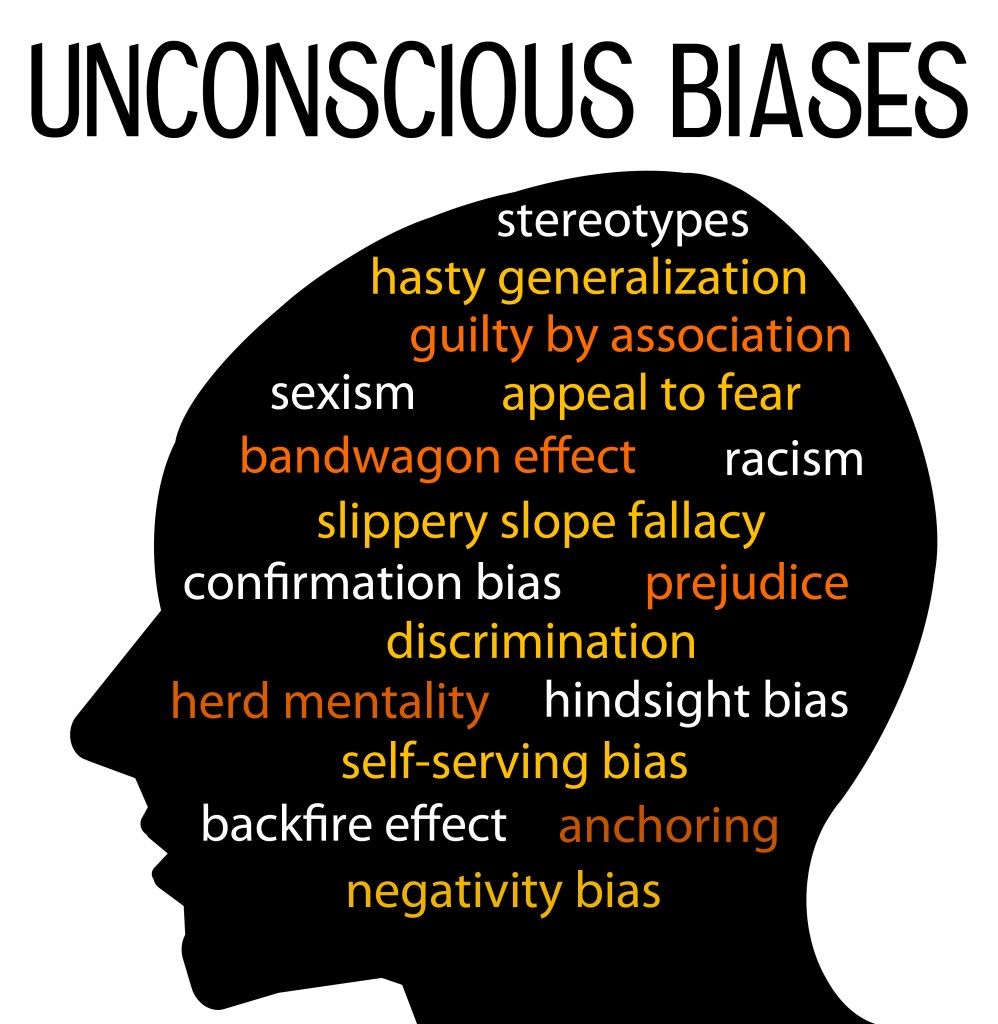
This post brewed for a good six months while we tried to get into the nitty-gritty of bias and what it is. We found we already talked about it in all of our previous articles, such as when we broke apart dehumanization in gaming. Dehumanization is the primary factor in our natural bias and the actions we take. If you’re new to Kill the Healer, you can check previous articles about it and how we strip away identifying factors of a person or group, seeing them instead as “Other”. It plays a part in Bias or Prejudice, which are feelings/thoughts in favor or against something or someone, sometimes sweeping across those included in their “group”.
As humans, we are all biased. We are a product of our environment, formed by the things that happen around us, the mores and values of our close groups (including friends, family, and peers), and our histories. We can’t escape those things nor deny their existence. A lot of bias is unintentional, meaning we don’t realize that prejudice influences our thoughts or actions. It’s locking the car door when you see someone approach you in a crappy neighborhood. It’s microaggressions like asking a person of color about their schooling or assuming a trans person always has dysphoria. Unintentional bias consists of small (and sometimes large) things we don’t realize we are doing, based on the assumptions we have about the world.
We build these biases through our experiences, relationships, and histories and they are the foundation from which we act. And, while we cannot escape the framework of our minds, we can take efforts to acknowledge where the faulty foundation stones are and maybe try to straighten them out a little and constantly improve them. Bias is basically the Winchester House– we’re going to keep building weird shit, pulling other things apart, and finding a way to confuse a past that haunts us so it can’t find us again.
Before we get into this, many people will deny their bias. It’s hard to admit, when you feel like the ruler of liberal thoughts and actions, that you might also be a little bit biased in some way. Many people will say ‘I don’t see color” or “everyone is the same ” and not only do those statements deny the fact that these constructs exist, they negate the experiences of the people who have to live within those very different skins. It also prevents you from dissecting your opinions and thoughts to understand that we all have opinions and feelings, even the dark ones at the back of your head, and they influence what you do.
Now, we’ve talked bias against others to death without specifically pointing out one of the most prevalent biases: the one towards ourselves. Even if we doubt ourselves, possess shitty self-esteem, or have issues of personal inadequacy, we favor our thought processes above others. After all, it’s why we don’t believe others when they tell us good things about ourselves– we’ve already made up our mind otherwise. We have a personal investment in what we are thinking, how it makes us feel, and how it plays out in our actions. Even if these investments reinforce sorrowful or painful things about ourselves, we have a stake in that hurt.
For example, if I believe my opinions about politics are inherently right, they become my facts and I, like most people, am going to argue my opinion to the point of death because I believe in its value– which supports my fundamental self and self-esteem. Rightness makes us feel good and releases all sorts of fun chemicals that make our brain happy. However, while the chemicals make us feel good, we draw some improper conclusions: for us to be right, someone has to be wrong. Being wrong makes that person less than us and someone we can easily dehumanize. Their values are faulty and wrong equals bad. It means we’ve drawn black and white conclusions in order to fuel our othering and made an enemy rather than someone who disagrees with us.
We inherently justify ourselves. When confronted with a different opinion and facts supporting that opinion, we come into conflict with our personal biases. Maybe I bunker down, holding the line and disputing whatever “facts” someone gives me. Maybe I’m wrong. Maybe I’m bad. But that can’t be, right? That bias, not to be the wrong, bad person is a source of conflict. It causes us to lash out at the person who created the feeling, in ways that reinforce the feelings we naturally have regarding the situation.
Below are two example situations in which this can happen: in reinforcing our belief in our own due diligence and our victimhood.
Due Diligence: Due diligence is a situation in which a person has reasonably completed a task. For example, there is an obvious lack of diversity in gaming. One of the ways to address that is making a space– not talking about making a space, not simply offering the space, and not occupying that space. However, many people cannot make the space at all, much less understand how to let the intended parties in.
In gaming, we often put out all-calls, posting in social media that we need certain people. This is certainly a step in the right direction, as it recognizes that gaming is not as diverse as it should be. It’s just a step though and it’s not far enough.
Let’s examine it through real life. You are organizing a party where you want people to meet new faces. You open it up to your neighborhood, to the people in your immediate area and maybe post signs or the neighborhood forum. You get people who are obviously enthusiastic to attend. You’ll have people who don’t pay attention or decline your offer. However, you’ve only extended your invitation to your known area which is homogenous and consists of people you already know. The same old faces are going to respond to your invitation.
When we just all-call to our known group, we are doing the bare minimum. We are going to see the same people over and over by including the already homogenous groups we are in. Despite that, we feel like we have made a sufficient effort. We have done our due diligence. We are not in the wrong since we wanted and encouraged diversity. We have a natural bias that we’ve done what we needed to.
However, if I want to ensure I have a diverse table, I don’t rely on my known resources. I invite others specifically or ask them for recommendations of people who might be interested. I advocate and keep making those spaces, and I don’t let them be filled by other people– people for which those spaces aren’t meant for. And, if someone calls us to the floor, we acknowledge that the people who’ve been oppressed damn near death beneath the rocks are the ones who might be able to point out when we are slacking on getting them out of there.
Victimhood: A victim is someone who something has happened to. We can victimize others in a variety of ways in gaming, from excluding them from a game table to targeting them for mental and physical violence. There is no end to the ways we can hurt one another.
Note: This example does not apply to abohorrent and illegal situations of abuse. People in those situations should seek appropriate help from legal and mental health professionals. In addition, this does not advocate remaining silent or not taking any action in other situations, but to evaluate your emotions and the facts to make healthier choices for yourself.
We have a character that we love. We’ve spent hundreds of hours putting it together and working on it. It is an act of creativity we brought into this world. It is important and valuable to us. At some point, however, our character offended someone, whether through something they said or something they did.
After this happens, we find that we are in a sticky situation. Other characters verbally attack us. Weird political stuff happens in-character. People are talking and plotting out-of-character about us. Our character gets attacked multiple times. It makes us feel bad because the character is a part of us.
Then the worst thing happens: the character is killed. It’s like a part of us went with it– an investment of time, emotions, and energy. We are angry, and we are biased not to direct that anger at ourselves, but at the people we believe wronged us, turning us into a victim. The bias of being the victim justifies much of what we do to seek reparations for our anger and pain.
Others wronged us. In clear black and white (to us, at least), we ended up in a place through no fault of our own. We’re right, and therefore we have the right to belittle, hurt and seek revenge against the person/people who are wrong and bad. We have the right to strike out as we are the victim. After all, they initiated this attack and therefore we can hit back. Every action, though, is a result of another action. Nothing occurs in a vacuum. We default, in cases where we feel hurt, to the stance of the victim. It’s our internal bias defaulting to ourselves.
Think of every social media war ever and examine who thinks they were wronged and how it flows down to every other person involved. If, instead of posting videos, media, or words about this situation, the person realized they are the ones perpetuating the cycle of their own victimhood, they would be able to take a more effective approach to addressing their emotions, such as reaching out to someone in charge or the other person. That they are not right. That they may be in the wrong, at least in some part, but that it doesn’t make them bad but responsible for consequences and handling them/the conflict maturely.
Every emotion has a basis in a situation and every situation has facts. When checking the facts, don’t use words like I feel or I believe and only state what is factually true. Let’s put this in the perspective of our examples:
Every emotion has a basis in a situation and every situation has facts. When checking the facts, don’t use words like I feel or I believe and only state what is factually true. Let’s put this in the perspective of our examples:
We want a cool game and recognize that we’re complete shit as being diverse as gamers. We make a generalized post asking for new faces and a diverse cast for our next game. We don’t get any answers, so we fill the slots and run the game anyway.
A person of color, someone who the space was meant for, calls us on it. We get angry because we feel like we did everything possible to include others (although, as we discussed, making a space is a hugely different thing). We’re hurt and want to feel like we are the right ones. We think of letting people attack the person on our behalf as we focus on our pain at being called out for bias. If we checked the facts, we would find out the following.
We wanted to run a diverse game.
We put an all-call out.
We did not specifically contact women or people of color.
We ran the game, calling it diverse.
Someone with personal experience advised us this was not a diverse game.
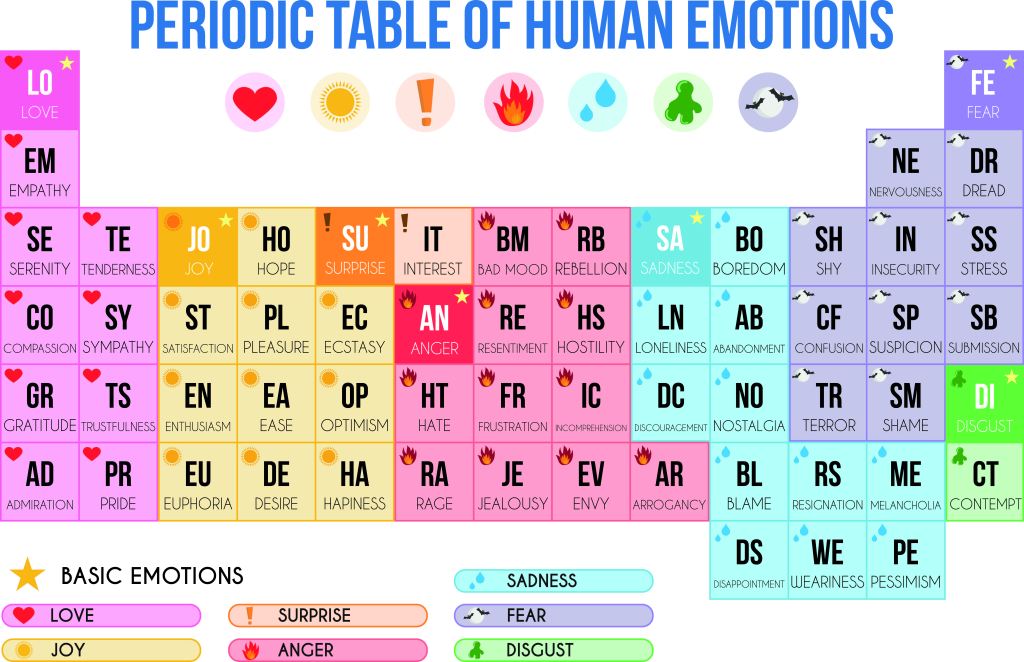
We keep breaking down the information until all we have is factual context. We do this even with our emotions, determining why we are angry and if our action is justified based on the anger. After we checked our facts, we realize that we’re hurt because our personal integrity was called into question, and we feel as though we are a bad person for being in the wrong.
We can’t be sure the person had any ill intent. They mostly likely just want us to meet our goals and want to explain how we can be better at representing diversity. Most of all, the person was right. We could have done more. That doesn’t necessarily make us wrong, and thus bad, though our self-bias tells us that. We made a mistake and we’re responsible for it, but we have no justification to perpetuate more anger and grief. No one victimized us. We just didn’t do our due diligence in something we thought we took all the steps in.
2. Someone kills our character. We’re angry, because we not only lost a huge investment of resources on our part, but we feel targeted out-of-character as a result of the string of attacks on our character. We feel like going on FB and vague-booking about it or calling out the people we feel hurt us. We think, because something bad happened to us, we are permitted to perpetuate that badness on those who we hold responsible.
Let’s check the facts.
I am a person. My character is a construct.
My character did something that offended someone else several months ago
Other characters participated in vocal/physical/etc attacks, which culminated in my character’s death.
I have not spoken with the attacker in a negative fashion out-of-character.
We are not our characters, but we do invest a portion of ourselves into the character, so it hurts when it gets attacked. Maybe we didn’t believe the offense was that big, either in character or out-of-character, but the other character did. We don’t know if the other person considered the reasons as frivolous as we did. We don’t know if that other person hated us out-of-character and targeted us in the only fashion they have available. We assume that we are the ones wronged because of personal bias, because it feels like this construct we created is a part of us, so the attack was on us. We are hurt, but our facts don’t point us at the other person, even if we want them to hurt as much as we do. We have no justified reason for our attack based on our facts.
And yes it’s a lot of work that’s on our shoulders to always break down information and handle our emotions appropriately, but think of this way: for a long time none of it was on our shoulders. We ignored the big pile of things we needed to do to dismantle. So now we have more work to do in a shorter period of time. We don’t get to pick away at it slowly anymore– that time has passed– we’ve got to throw our back into and just get it done. We don’t get to be the offended ones, the ones that are hurt, when someone points out we aren’t carrying our load or otherwise makes us examine ourselves.
We are responsible for recognizing our biases and handling them in an appropriate way. We are responsible for checking our facts against what our mind tells us, then being the people who address our feelings and actions, including making our own reparations to correct any damage we’ve done. We are responsible for checking that voice that fuels our emotions and tries to tell us we’re justified and determine if we really are. The very first thing we should tell ourselves is that we are responsible for our emotions, even if they are the result of something someone else did.
Yes. We’re all biased. Yes. We’re all responsible for dissecting and handling it maturely. And yes, maybe you’re wrong. But it’s okay– as long as you’re willing to shine a light on yourself and make yourself better.






 The Wuthering Cephalopod