Blog

The Endings, The Endings AAAAARGH

An Interlude: I am chronically ill. It’s something auto-immune adjacent, if not dead on, that is exacerbated by some severe PTSD and fatigue that mean I’m always a tightly-wound ball of nightmares and naps. Because I don’t communicate like normal peeps (thank ND), doctors tend to think it’s not as bad as it is, even when it’s pretty damned bad.

My psychiatrist though? That guy? He’s a damned rock star. He looks at test results. He puts things together. He knows it’s a complicated history, I’m not looking for the hard drugs, and I just want to do things like be able to focus and sleep. I’ve lived with the pain for years. Same for the trauma. But as I age, my brain handles all of the non-voluntary functions with less and less grace. 

Que the rock star. He put me on some sleep meds which allowed me to put a lock on my night time routine. I’ve gone from very poor to poor on the Likert scale of sleep. It’s insane. I have a modicum of energy. I deep cleaned and organized two whole rooms I haven’t been able to seriously work on for years.

All this to say: I’m sitting on my computer a little less. Reviews will come accordingly until I finish the backlog of household stuff I’ve had to let go. Ideally, as we adjust and find the perfect sleep med, I’ll get through all of that more quickly and still be able to apply my brain to writing, reading, and all of the art that comes with an overactive brain that can actually do the corresponding work. 

Anyway, onto some books!

I can’t remember where I saw the list, but I think it was something to do with Bram Stoker award nominees and winners. Of course, I added that shit to my TBR pile like the internet was showering me with manna from heaven and not just presenting information in a useful way, because I love making lists that later crush me with how long they’ve unintentionally gotten. Reddit’s /horrorlit knows the game.

Two of the books on the list were Josh Malerman’s Malorie and E.V. Knight’s The Fourth Whore. And man, you would think a book about cosmic aliens driving you mad and another about how Lilith is trying to stick the landing on the whole apocalypse thing would vary vastly in terms of execution, but then you read them. And they’re both disappointments in very similar ways: both are about the end of the world as we know it and the endings are terrible.
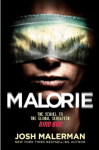
Cover of Malorie. Woman blindfolded with image of woods projected against blindfold.

Malorie by Josh Malerman: 3. With Malorie, Malerman is telling the story of what happens not in the immediate aftermath of a world-altering event, but ten or twenty years later. Once the children born into that world start becoming adults and the conflicts between those who were traumatized and those who’ve never known anything but this new normal arise. In a lot of ways, it’s about how some only know how to fight and others learn to adapt. 

Malorie is trying to live her life by the fold, and her now teenage children want to break free from her vice-like hold on safety measures, especially her teenage son. Tom is a bit of a rebel, a dreamer, and an inventor, not unlike his namesake (which is mentioned a bajillion times). To add to all of their issues, they’ve finally found a safe space, she’s managed to keep those kids alive as a result, and life is as good as it can get when you’re bundled up for winter at all times, even the dead of summer. And then the census taker comes by with information to disrupt all of that, including tantalizing details for Tom, such as a new train that allows people to travel across Michigan in (relative) safety. So, they uproot their lives. And their mores. And maybe some values along the way.

Almost 90% of this book was building to what laid at the end of the train, including a conflict with a villain from the first book. The last 10% was trying to wrap up all of those details in a bow without any real climax. The book spent a huge amount of time going somewhere, then just abandons that for a final kill and “oh things are better now.” It made what was otherwise good storytelling up until that point feel like a wacky, inflatable, tube man stepped up to tell the final chapter of the story. 
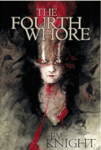
Cover of the Forth Whore. Woman from chest up, fire coming eyes.

The Fourth Whore by E.V. Knight: 2. Trigger warning: there is so much sexual assault in this book. Lilith is on the warpath. She was betrayed by Adam. She was betrayed by her creator. She was betrayed by the one person she trusted after being left in the wilderness, and then he had the audacity to betray her a second time to “save” her from the demoness he helped mold her into being. So, she’s picking up “Whores” to complete her four horseman vibe, including a prostitute she wants to wage STD war and a women’s doctor she wants to sow discord. Then there’s our protagonist, Kenzi.

See, when Kenzi was a wee thing she saw the Angel of Death, Sariel. Sariel has also been banished from heaven, but only until he collects all of these demonic souls he’s in part responsible for: he’s the former lover who betrayed Lilith, boning her down and then letting his other angel friends throw her into a cave to be raped by demons for a millenia. Then, because he hates consequences, he seals her soul into a talisman that he carries around and eventually gives to baby Kenzi because “she reminds him of someone.” Kenzi gets into a literal drug war and somehow activates the talisman, releasing Lilith and becoming the demon’s replacement for Sariel. 

The more I read the book, the less I liked it. Sariel groomed Kenzi from the time she was seven to be his beloved. He has set it up so he can always be her white knight, putting her through some shit for that to be true. Gross. He did the same thing to Lilith’s innocence, basically being a whiny, man baby about his feels while she was sexually assaulted into losing everything that made her human. And then the book makes him the hero, because Lilith should stop being so big-mad about God and Adam and Sariel. She should practice forgiveness. She needs to learn to let go. Deep breathe. Yoga. All that.

Fuck that noise. Lilith’s on the nose about most of what she says. When she’s being a bitch, such as killing some previous allies, she’s acting completely out of character. She’s acting like Sariel or Lucifer or one of the men, and that’s what makes her villainous. Yet, they get to be the heroes, including the disgusting angel who let the love of his life get raped for thousands of years by demons. He grooms his other great love, starting when she is seven,  by white knighting and m’ladying up the place. The fact that Kenzi chooses her groomer, going so far as to die to save him, makes me gag. The fact that Lilith got left holding the bag as the “demoness,” one final time is a disservice to her. Kenzi should have told them both to stuff it it, made the fucking crow raise her dead boyfriend, and peaced out while Lilith ripped Mr. “I’m a Whiny Crybaby Pedophile” a new hole for him to shit out of.

I knocked off two points for that shit crap. I’m with Lilith. When men fail us, eat them alive. Always.
Two Sentence Reviews

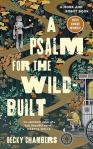
Cover of A Psalm for the Wild-Built; monk having tea in tea cart in bottom right corner, robot in top left. Road surrounded with flowers winding between them.

A Psalm for the Wild-Built by Becky Chambers: 4.5. Dex, a tea monk, seeks meaning and purpose from a life that always seems slightly off; they leave their known world, meet up with a robot, and make you ask more existential questions than such a quaint feeling novella should. I didn’t think I would like this book when I first started reading it, but I absolutely loved it in the end.

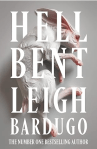
Cover of Hellbent, Wet and possibly dead white rabbit with red eyes in fetal position against gray background.

Hellbent by Leigh Bardugo: 3.5. Galaxy Stern can see and speak to the dead, and managed to send her would-be boyfriend to hell; now, she has a gentleman demon, a plot against her beloved Yale secret society, and an open portal to hell somewhere, OMG. I enjoyed The Ninth House, despite some concerns about a few of the plot points, and this hits the same spot of being entertaining while not dragging itself down in complicated side quest prose.

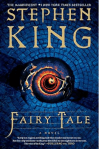
Cover of Fairy Tale. Boy holding lantern beside dog, looking down a well.

Fairy Tale by Stephen King: 1. Boy meets old man and dog, old man has lots of gold from a secret kingdom under his shed, boy enters kingdom, and boy saves it. Man, I couldn’t even dedicate a long entry to this since I hated it so much; it’s tropey BS with a white, male saviour, and I hoped it was satire when he only became whiter and more saviour-y, but I’m just not sure about anything anymore in this upside down world.

Dark Matter by Michelle Paver

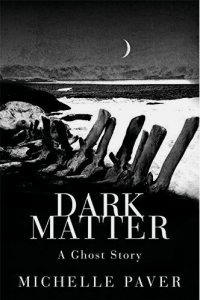
Cover of Dark Matter. Black and white depiction of whale bones against ocean.

There’s nothing quite like the bitter cold and pitch-black nights to really set the horror at a 10, is there? For me, the first introduction was “The Thing” followed by the X-files episode “Ice.” The frozen parts of our world hide a multitude of mysteries and more than a few sins, and desolation is nearly as terrifying as the things that make use of such isolated places and people. Dark Matter plays on all of that: the desires we hide, the darkness that threatens us with oblivion, and the things that lurch and crawl when the night never ends and secrets are easily hidden beneath the ice.

It’s almost 1940, and Jack Miller is seeking a change. He’s been through it in the past couple of years, and all he wants is a place where he feels he’ll be useful and appreciated. Fortunately, he’s not terrible at being a wireless operator. Unfortunately, his pick for an arctic expedition to study weather patterns might be his reach exceeding his grasp, because holy shit, does that expedition break him in every possible way.

His first issue is the class divide between him and his comrades. Adventuring then (and now) is a rich man’s hobby, and Jack is far from the moneyed aristocracy who can typically afford all the things a team needs to luxuriate in an environment otherwise whole-ass in on the scarcity. He lets these differences pass when it comes to his friend Gus, but finds them pompous when handled in almost the exact same way by another adventurer. Part of that pass he gives Gus is he’s got it pretty bad for the golden boy of the expedition and the lack of such things for Albie (not his favourite) is how the richer man hinders said affections from developing naturally.

His second issue is that the Arctic is not a fucking playground. It’s the kind of cold that kills an unprepared man before they even know they’re dead. The ice in the bay keeps people from going in and out, and an accident when it’s frozen over means death. The days are short, then non-existent, submerging Jack in an intense darkness where time and space lose all meaning to him. The old money he travels with might find all of this some sort of bonanza of scientific exploration, but even they are brought back to reality when Gus suffers an infection that forces him and Albie back to the known world, leaving Jack by himself to develop unchecked mental health issues.

Jack’s  third issue is the haints. Maybe Jack would have paid attention to the red flag from the captain of the ship that escorts them to Gruhuken— it’s a cursed place with a dark history— if he weren’t so mad about the sled dogs or Albie. Miners used to inhabit the location, and something dark lingered long after they left. Jack first starts encountering this “memory” while there is still daylight to be had, but it starts pursuing him more wholeheartedly when Jack is left alone due to the medical emergency. Then the daylight gives out to 24 hours of dark and darker.

I loved this book. Despite Jack telling us the story through his journal entries, atmosphere becomes another narrator, and the Arctic is fucking terrifying. These men framed it as an adventure, but really it’s worse than any of the ghosts that might remain. It tells its own blood-soaked stories in the extremes it forces humans to endure and enact. For every bit I thought Wakenhyrst was a bit droll with its exposition, the slow burn of this was like freezing to death under the eyes of past horrors, and that is such a beautiful kind of dawning horror to feel as a reader. 

Would I Read it Again?: Gods yes. I’ve recommended it to several people, but trying to get my family to read my recommendations is like pulling teeth, especially since my tastes are super weird. This feels like a book where you pick up more context each and every time, where the reveal doesn’t spoil anything because it’s not the horror part of the story.

Rating: 4.5. It is a slow burn, and I think a lot of people might get turned off based on that, especially if they are looking for high drama all of the time. However, that burn is built into the narrative, and it’s appropriate here. If it were faster paced, it would lose some of the “chipping away at your sanity” that’s the point of the whole thing.

Two Sentence Book Reviews

The TL;DR for the past two weeks:

Respiratory Infection: 1
Me: 0

Cover of Road of Bones. Above view of winding highway entering frozen woods.

Road of Bones by Christopher Golden: 3.5. While making a documentary about ghosts on the Kolyma Highway— a Siberian highway built by people whose same bones form its foundation the process of creating it— Teig and his filmographer buddy travel to the northernmost point and spend the rest of the book running away from what they find there and its manifestations within their immediate circle. The middle part, the part that’s supposed to be the exciting chase, drags on a bit since there’s only so much of “bad shit is coming for us right now” a person can take before you want an actual climax; however, it’s an interesting take with a basis in folklore rather than a haunting.

Cover of No One Gets Out Alive. Front view of decyaing woman from throat to nose.

No One Gets Out Alive by Adam Nevill: 3.5. Our heroine is down on her luck, especially when it comes to boarding houses with more than one murder, a crazy god in the basement, and her male neighbours just being utter creepers. I had watched the movie, which does hit differently due to its focus on the diaspora of immigrants, the themes of old gods doing brutal shit holds true; the ending on this was on par with The Reddening for me and the building tension of random weird shit happening fit Nevill’s slapdashing-creepy-shit-everywhere style more than a lot of his stories do. 

Cover of The Book Eaters. Images cout out of book pages of woman and child approaching cut out of house.

The Book Eaters by Sunyi Dean: 4. Devon is a rarity in her world, a female book eater— a species that absorbs knowledge through eating books— and she’s passed around accordingly as a broodmare, at least until she gives birth to a son who doesn’t consume pages, but brains, memories, and personalities; past trauma leads her on a quest to save her tiny serial killer child from the rest of her “family.” This wasn’t a super complicated story in terms of language, but it’s a novel approach on vampirism and the obtainment of knowledge, whether humane or brutal; man, though, it gets an extra point just for world building as that’s where it really shined.

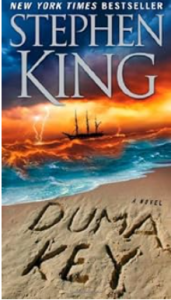
Duma Key by Stephen King

Duma Key is one of my favorite books from Stephen King. I’m not sure why, since much of the wooj is in the background and back loaded in the last chapters of the book, which typically means he relies heavily on the characterization and description. Which, one he does well even if it’s not exactly terse and the latter… I don’t need that kind of in-depth information about anyone’s nipples, IT. 

Duma Key is about Edgar Freemantle, a man left broken physically, mentally, and spiritually by an accident at his construction business. To begin his second life, he travels to stay in Florida, at the old beachfront property known as “Big Pink.” There, he returns the hobby of painting, and that renewed passion for art brings him in contact with Sarasota’s elite; a illness-stricken old woman and her damaged carekeeper, both also in their second life; and a terribly, old consciousness hungry for death. Edgar also receives some supernatural side effects that leave him curious for what the island’s capabilities.

I, obviously, love this book. Though a slow build to the end, it’s one of those times when Stephen King’s love of description really works: he creates a claustrophobic, almost jungle-like atmosphere filled with strange ghosts and stranger history for the new artist seeing all of it for the first time. In a book about art, it doesn’t seem like a sometimes inappropriate drag. On the other hand, if you’re reading a book like this for frequent scares that keep your heart pounding, it’s not going to work. This one takes its time wrapping you strangle fig.

Would I Read it Again?: I’ve read this book numerous times. I’m even working on some art for it, if I ever manage to do more than sleep for days on end. 
Rating: 4. Maybe a 4.5. I’ve got to be real here, despite my love of this book. Sometimes it dwells too long on the atmosphere, even for someone used to Stephen King. Despite how much I love something, I try to insert some objectiveness into things.

Two Sentence Reviews

Before I got into my Two Sentence Reviews, a little update:

Part of the reason I started reviewing the books I read is to get some regular practice for writing. I spent a long time writing fiction, then got very burned out due to gaming industry drama that just killed every desire in me to ever write again, despite how much of my identity was telling stories.

If writing is a muscle, writing reviews and snippets of things are how I exercise it. I’m just really good at falling off that train because depression means your motivation is always less than 0. However, I’m trying to post reviews at least once a week. I eventually hope to have a second post with whatever else I am working on, such as longer reviews, fiber and other arts, book-inspired art, movie BS, Fear Street summaries (these are erratic because of having to track down copies of 30+ year old books in order), and whatever other random things pop up so that I’m writing, even if it isn’t exactly Bram Stoker level material.

With that, you can follow me on Instagram, which is theoretically updated more often, at @wuthering_cephalopod. I don’t do the Musk app, but part of my “being better at being a person… sometimes” is posting on Bluesky at wuthceph.bsky.social

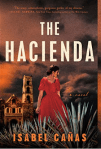
Cover of The Hacienda. Woman in red spanish-style dress in front of house.

The Hacienda by Isabel Cañas: 3.5. Beatriz, a mestiza woman, marries into a higher (and much whiter) caste in order to escape the legacy of her rebellious father; instead, she finds herself haunted by the ghost of her new husband’s vengeful late wife, the terrible presence of his overbearing sister, and his expectations regarding what Beatriz should be and do with only a somewhat competent priest to help her. While it wasn’t extremely difficult to figure out where the plot was going with the main mystery, I’m always a fan of Mexican horror and how the themes shift based on when it takes place. 

The cover of The Silent Companions. Wooden cutouts of same child in Tudor-dress repeat across cover.

The Silent Companions by Laura Purcell: 3. Widowed, Elsie returns to the crumbling estate her husband left her, his poor cousin in tow; while there, she’s constantly hearing the sound of cutting wood, seeing the wooden cutouts of the home moved around, and finding out about a demonic, hidden child from 200 years past. While it’s interesting to me that Purcell likes to focus on haunted objects in her books (I have several more on the reading list), I could barely remember what this book was about other than wooden cutouts; so, I suppose it was solid, but nothing to write home about.

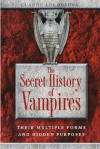
Cover of The Secret History of Vampires. Red cover with stonr gargoyle on front.

The Secret History of Vampire by Claude Lecouteuxs: 4.5. Less a secret than an interesting collection of sources, this book brings together ideas from letters, texts, stories, and various other sources in an effort to interpret our fascination with vampires. Man, this book gave me so many ideas on how to create a vampire game that is actually different from everything that’s out there; the primary and secondary sources are perfect for drawing your own conclusions about what vampirism meant to the people who thought they were being haunted by them.

Cover of The Broken Girls. Woman in red coat in front of blurred out institutional building.

The Broken Girls by Simone St. James***: 3.5. At a school for “troubled” girls, a group of young women bond over their shared trauma and a vengeful ghost, until one of their own goes missing without a trace; in the present, a young woman grapples with her sister’s murder at the abandoned school, as well as the mysterious deaths at the location. This was the first book I read by St. James; it took me a few chapters to recognize I was rereading it, which reminded me that I always felt the ending of the past mystery felt a little tacked on. 

The cover of The House of Small Shadows. Broken porcelain doll arms and legs against black background.

The House of Small Shadows by Adam Nevill: 3. After several tragedies— a missing childhood friend, mental health issues, a bullying incident, and a miscarriage— Catherine takes a job in her home town cataloguing a doll and puppet collection that has a mind of its own. This book is essentially my partner’s worst nightmare— haunted dolls abound— and Nevill tries to wrap it in a neater bow than he usually does, but so many of his books leave me wanting just a little more than the atmosphere he’s willing to give.

***From what I’ve read of Simone St. James, she blends the beats of crime mystery with a supernatural force in every book. Best of both worlds if you’re a true crime lover who just wants a ghost to pop up and testify now and then. 

Two Sentence Book Reviews

I’m at least 50% back on my shit. Which means after a long period of sleeping a lot and trying to manage my chronic health issues, I’m reading and writing again. Unfortunately, while I was off both of those, I was still adding books to my to-read list. I’m Sisyphus on Everest at this point.

Cover of All the Murmuring Bones, dark blue with mermaid tail.

All the Murmuring Bones by A.G. Slatter: 3.5. Bound to the sea, the heroine’s family has seen their once-promised wealth dwindle, and she’s not willing to be the bargaining chip they exchange to regain their status. It’s a predictable but okay variation on the gothic horror trope; the world-building, however, was exceedingly good.

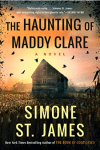
The cover of The Haunting of Maddy Clare. Farm house in corn field.

The Haunting of Maddy Clair by Simone St. James***: 3. A ghost with a very poor history with men throws shit around and possesses people until they promise to find out what really happened to her. This was one of the first things I read from St. James, and it’s really just okay— there are some problematic elements— in comparison to the later stuff.

Cover of Yerba Buena. Illustrated cocktail and flower arrangement on green background.

Yerba Buena by Nina Lacour**: 3.5. Named after the “good herb” one character uses in her bartending, this is a story of two women struggling with the fall out of addiction, including the mysterious childhood death of the bartender’s best friend, while also falling in love with each other. Despite the emphasis on trauma, this really is a sweet love story that feels a little dreamy.

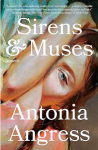
Cover of Sirens and Muses. Classical-style painting of woman in bedsheets.

Sirens and Muses by Antonia Angress**: 3.5  Four artists, each of them struggling with what the meaning of art is in a world of commercialism, fall in and out of each other’s orbits. The ending was just a bit… I felt like I wanted more or less, so it was very Goldilocks with no perfect solution.

Cover of House of Hunger. Woman with red dress and black choker.

House of Hunger by Alexis Henderson: 3. In a society where the rich use the literal blood of their peasants to feed and bathe themselves, mystery and a sapphic love affair blooms between the drinkee— a bloodmaid— and her rich mistress. It’s a queer take on Bathory mythology, and I gave bonus points for that despite now it seems the plot never gels.

**There was a meme going around that listed a series of Lesbian/Queer novels for every mood. I read every one of them, except for Salt Fish Girl as I had to order a hard copy. I replaced it with a novel, The Tiger Flu, from the same author which was also focused on queer relationships.

***From what I’ve read of Simone St. James, she blends the beats of crime mystery with a supernatural force in every book. Best of both worlds if you’re a true crime lover who just wants a ghost to pop up and testify now and then. 


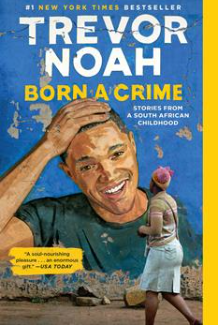
Trevor Noah’s “Born a Crime”

Cover of Born a Crime, woman in South African dress looking at graffiti style image of Noah from waist up

I have a confession to make. When my friends post books they like, I check out a description of the book to see if I would like it too. That makes my compulsion to look up the menu for the restaurants my friends are eating at because of my obsession with food seem mild by comparison. Right? Please tell me I’m right…

“Born a Crime” was one of these books. I had seen Trevor Noah before hearing of the book, but not really connected his name to more than his talk show comedy bits.

Here’s the deal. I can’t review or evaluate the way someone speaks of their lived experiences. I can say if you don’t like being made to think about what systemic racism has done to marginalised ethnicities, you won’t like this book. There’s a lot of moments where some might see themselves in a role later to be determined that of the oppressor. What I can say is that he does it with a great deal of vulnerability and humour. There’s a common thread in how our generation interacts with a generation of parents everywhere, and he captures that exquisitely, right down to how there’s an entire group who would beat us senseless as children and pretend to be pacifists the entire time as they age.

If you like funny stories that might make you question a few of your beliefs and values, this is the right book for it. If not, I don’t think you’ll ever like it, even if it could change your mind.

 Would I Read it Again?: Yeah. While I am not rushing out to buy it right now, if I ever saw it at the bookstore I might pick it up. The stories have reread value.
Rating: A 5. I can’t really think of anything negative to say about this book, and it made me laugh out loud more than once.

Two Sentence-ish Sometimes-Horror Reviews

Cover of Paradise Rot: black with various plants and flowers.

Paradise Rot** by Jenny Hval: 3. I’ll be quite honest: I’m still not sure what happened in this book, beyond a young woman moving into an apartment (with another woman); both her environment and her roommate slowly become enveloped by vegetation, a lush and rotting Eden of bodily functions, desire, and connection. I think I would like it better untranslated, because it’s very much not a linear story so much as an evolution.

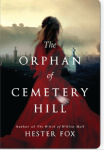
Cover of "The Orphan of Cemetery Hill." Woman in red, historical dress from behind, overlooking graveyard and church.

The Orphan at Cemetery Hill by Hester Fox*: 3. An honest-to-God medium, Tabby ran away from a life of exploitation to live in a cemetery where she has all the friends she could want, only for a rich boy and a bunch of graverobbers throw a wrench in her plan. It’s not bad, but not really a mystery so much as trying to capture the actual bad guy in escalating Scooby Doo situations.

Cover of "How to be a Tudor." Back cover with red writing, thorny vines, and Tudor rose on it.

How to Be a Tudor by Ruth Goodman: 4.5. This book goes over the day-to-next day life of a person living in England during the Tudor time period, including things like routines, how life changes based on income levels, and what people would have eaten and enjoyed as entertainment. I think this, along with How to be a Victorian, are required reading for historical fiction set in the named period, because it provides some lived-in experiences as well as references from history.

Cover of "Ghost 19." Black and white inverted photo of window with curtain draped to side and vase of flowers.

Ghost 19 by Simone St. James***: 3. An actress escapes the city to recoup after some mental exhaustion, losing herself in the neighbours’ lives; meanwhile, something lurks in the basement, and she slowly finds her life limited not only to the house, but to fewer and fewer rooms within the house. It’s an okay short mystery, focusing on the influence of how deteriorating mental health is burdened even more by a haunting.

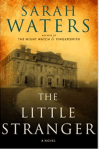
Cover of "The Little Stranger." desaturated image of palatial estate in front of bright yellow sky.

The Little Stranger by Sarah Waters: 3. A nostalgic physician returns to a house he loved as a child, to a once-rich family that has disintegrated in the years since he left. He loses himself in those memories— the house, his ideals and both of their ghosts— over the people who need him. I know Sarah Waters more for her queer-focused books, and I just enjoyed “Tipping the Velvet” and “The Fingersmith” (which was the better mystery by far) much more.

*All of Hester Fox’s work that I’ve read focuses on a heroine during a specific time period (which varies but is always “Gothic” in tone). The protagonist is usually an outcast for some reason, and public opinion of her is not very high. There’s also a romance, and so far it’s all been with males who have a reason to be an insider. The ending is always at least sorta happy. Add some dark secrets and mix liberally with elements of the supernatural.

**There was a meme going around that listed a series of Lesbian/Queer novels for every mood. I read every one of them, except for Salt Fish Girl as I had to order a hard copy. I replaced it with a novel, The Tiger Flu, from the same author which was also focused on queer relationships.

***From what I’ve read of Simone St. James, she blends the beats of crime mystery with a supernatural force in every book. Best of both worlds if you’re a true crime lover who just wants a ghost to pop up and testify now and then.

Slaying the Dragon by Ben Riggs

Cover of "Slaying the Dragon."Front facing red dragon head.

I write role playing games. I’ve taken a break over the past year because of improving my mental health after a bad run with my previous company, as well as improving my physical health so my disabilities leave something of me. However, I still have a project or three I need to complete, if only to say that I could do it on my own and with the people I’ve chosen to work with. TL;DR: I’ve been in the trenches.

So have the people discussed in the Slaying the Dragon, which is a history of the Dungeons and Dragons franchise from the moment Gary Gygax started to it, from its growth from his basement into what it became under Wizards of the Coast. It collects news stories, personal interviews, and observations regarding how the game became what it is today.

It’s fitting that I read this book during the WoTC monetization OGL nightmare. That need to keep creating projects so you can make money is what the makers of Advanced D&D have struggled with all along: from the early days of just putting out too much work and diluting their product lines and creating trading card games, to trying to find the spotlight in Hollywood. The same story plays out again and again: gamers are not business men, but we seem to have a need to control every aspect without seeking appropriate counsel from those in the know. 

This book is required reading for anyone who is in or wants to be in the business of making games. I see many parallels to mistakes I have personally made or have been a party or witness to. Had I read this book? I would have known better. It reiterates, without saying it, that no matter the game or format, we all end with the same issues because it’s the people that severely underestimate what it means to interact with others and run the business side of creating those games.

Would I Read it Again?: Yep. I bought a copy specifically for highlighting and discussing if/when anyone else in my house bothered to read it. 

Rating: 3.5. While the author’s voice makes an otherwise dry topic more interesting to read, it also has moments where the bias toward or against certain people is really obvious. At times, it could use a little more objectivity in the subject . Yes, only a fan could write this way, but they also need to separate themselves from the artists they love.