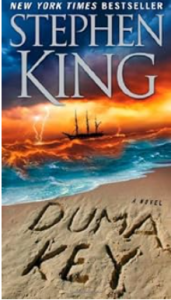
Duma Key by Stephen King

Duma Key is one of my favorite books from Stephen King. I’m not sure why, since much of the wooj is in the background and back loaded in the last chapters of the book, which typically means he relies heavily on the characterization and description. Which, one he does well even if it’s not exactly terse and the latter… I don’t need that kind of in-depth information about anyone’s nipples, IT. 

Duma Key is about Edgar Freemantle, a man left broken physically, mentally, and spiritually by an accident at his construction business. To begin his second life, he travels to stay in Florida, at the old beachfront property known as “Big Pink.” There, he returns the hobby of painting, and that renewed passion for art brings him in contact with Sarasota’s elite; a illness-stricken old woman and her damaged carekeeper, both also in their second life; and a terribly, old consciousness hungry for death. Edgar also receives some supernatural side effects that leave him curious for what the island’s capabilities.

I, obviously, love this book. Though a slow build to the end, it’s one of those times when Stephen King’s love of description really works: he creates a claustrophobic, almost jungle-like atmosphere filled with strange ghosts and stranger history for the new artist seeing all of it for the first time. In a book about art, it doesn’t seem like a sometimes inappropriate drag. On the other hand, if you’re reading a book like this for frequent scares that keep your heart pounding, it’s not going to work. This one takes its time wrapping you strangle fig.

Would I Read it Again?: I’ve read this book numerous times. I’m even working on some art for it, if I ever manage to do more than sleep for days on end. 
Rating: 4. Maybe a 4.5. I’ve got to be real here, despite my love of this book. Sometimes it dwells too long on the atmosphere, even for someone used to Stephen King. Despite how much I love something, I try to insert some objectiveness into things.

Two Sentence Book Reviews

I’m at least 50% back on my shit. Which means after a long period of sleeping a lot and trying to manage my chronic health issues, I’m reading and writing again. Unfortunately, while I was off both of those, I was still adding books to my to-read list. I’m Sisyphus on Everest at this point.

Cover of All the Murmuring Bones, dark blue with mermaid tail.

All the Murmuring Bones by A.G. Slatter: 3.5. Bound to the sea, the heroine’s family has seen their once-promised wealth dwindle, and she’s not willing to be the bargaining chip they exchange to regain their status. It’s a predictable but okay variation on the gothic horror trope; the world-building, however, was exceedingly good.

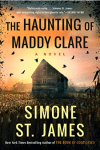
The cover of The Haunting of Maddy Clare. Farm house in corn field.

The Haunting of Maddy Clair by Simone St. James***: 3. A ghost with a very poor history with men throws shit around and possesses people until they promise to find out what really happened to her. This was one of the first things I read from St. James, and it’s really just okay— there are some problematic elements— in comparison to the later stuff.

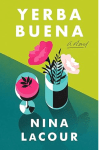
Cover of Yerba Buena. Illustrated cocktail and flower arrangement on green background.

Yerba Buena by Nina Lacour**: 3.5. Named after the “good herb” one character uses in her bartending, this is a story of two women struggling with the fall out of addiction, including the mysterious childhood death of the bartender’s best friend, while also falling in love with each other. Despite the emphasis on trauma, this really is a sweet love story that feels a little dreamy.

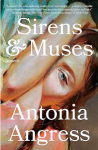
Cover of Sirens and Muses. Classical-style painting of woman in bedsheets.

Sirens and Muses by Antonia Angress**: 3.5  Four artists, each of them struggling with what the meaning of art is in a world of commercialism, fall in and out of each other’s orbits. The ending was just a bit… I felt like I wanted more or less, so it was very Goldilocks with no perfect solution.

Cover of House of Hunger. Woman with red dress and black choker.

House of Hunger by Alexis Henderson: 3. In a society where the rich use the literal blood of their peasants to feed and bathe themselves, mystery and a sapphic love affair blooms between the drinkee— a bloodmaid— and her rich mistress. It’s a queer take on Bathory mythology, and I gave bonus points for that despite now it seems the plot never gels.

**There was a meme going around that listed a series of Lesbian/Queer novels for every mood. I read every one of them, except for Salt Fish Girl as I had to order a hard copy. I replaced it with a novel, The Tiger Flu, from the same author which was also focused on queer relationships.

***From what I’ve read of Simone St. James, she blends the beats of crime mystery with a supernatural force in every book. Best of both worlds if you’re a true crime lover who just wants a ghost to pop up and testify now and then. 


Two Sentence-ish Sometimes-Horror Reviews

Cover of Paradise Rot: black with various plants and flowers.

Paradise Rot** by Jenny Hval: 3. I’ll be quite honest: I’m still not sure what happened in this book, beyond a young woman moving into an apartment (with another woman); both her environment and her roommate slowly become enveloped by vegetation, a lush and rotting Eden of bodily functions, desire, and connection. I think I would like it better untranslated, because it’s very much not a linear story so much as an evolution.

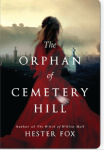
Cover of "The Orphan of Cemetery Hill." Woman in red, historical dress from behind, overlooking graveyard and church.

The Orphan at Cemetery Hill by Hester Fox*: 3. An honest-to-God medium, Tabby ran away from a life of exploitation to live in a cemetery where she has all the friends she could want, only for a rich boy and a bunch of graverobbers throw a wrench in her plan. It’s not bad, but not really a mystery so much as trying to capture the actual bad guy in escalating Scooby Doo situations.

Cover of "How to be a Tudor." Back cover with red writing, thorny vines, and Tudor rose on it.

How to Be a Tudor by Ruth Goodman: 4.5. This book goes over the day-to-next day life of a person living in England during the Tudor time period, including things like routines, how life changes based on income levels, and what people would have eaten and enjoyed as entertainment. I think this, along with How to be a Victorian, are required reading for historical fiction set in the named period, because it provides some lived-in experiences as well as references from history.

Cover of "Ghost 19." Black and white inverted photo of window with curtain draped to side and vase of flowers.

Ghost 19 by Simone St. James***: 3. An actress escapes the city to recoup after some mental exhaustion, losing herself in the neighbours’ lives; meanwhile, something lurks in the basement, and she slowly finds her life limited not only to the house, but to fewer and fewer rooms within the house. It’s an okay short mystery, focusing on the influence of how deteriorating mental health is burdened even more by a haunting.

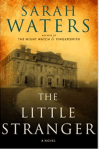
Cover of "The Little Stranger." desaturated image of palatial estate in front of bright yellow sky.

The Little Stranger by Sarah Waters: 3. A nostalgic physician returns to a house he loved as a child, to a once-rich family that has disintegrated in the years since he left. He loses himself in those memories— the house, his ideals and both of their ghosts— over the people who need him. I know Sarah Waters more for her queer-focused books, and I just enjoyed “Tipping the Velvet” and “The Fingersmith” (which was the better mystery by far) much more.

*All of Hester Fox’s work that I’ve read focuses on a heroine during a specific time period (which varies but is always “Gothic” in tone). The protagonist is usually an outcast for some reason, and public opinion of her is not very high. There’s also a romance, and so far it’s all been with males who have a reason to be an insider. The ending is always at least sorta happy. Add some dark secrets and mix liberally with elements of the supernatural.

**There was a meme going around that listed a series of Lesbian/Queer novels for every mood. I read every one of them, except for Salt Fish Girl as I had to order a hard copy. I replaced it with a novel, The Tiger Flu, from the same author which was also focused on queer relationships.

***From what I’ve read of Simone St. James, she blends the beats of crime mystery with a supernatural force in every book. Best of both worlds if you’re a true crime lover who just wants a ghost to pop up and testify now and then.

Two Sentence-ish Sometimes-Horror Reviews

Cover of "Miseducation of Cameron Post." Zoomed out shot of girl wearing cowboy boots sprawled over rolled hay.

Miseducation of Cameron Post by Emily M. Danforth**: 4. A coming-of-age story through a queer lens, as Cameron— expert swimmer, not so expert at hiding her desires— falls in-love with her best friend and betrayed by her, ending up in a conversion camp. This feels like a good story for teenagers to see queer people in their many different forms keep the cores of their beings intact.

The cover of "The Widow at Pale Harbor." Zoomed-out shot of woman in read cloak walking through fog in front of a mansion.

The Widow of Pale Harbor by Hester Fox*: 3.5. She’s a possible witch who was married to and widowed by the town patriarch; he’s a wanna-be preacher with a dead wife and baby. Together, they fight crime. It was a lot of fun, and I think anyone looking for romance and mystery will enjoy it.

Cover of "Cantoras." Coastal rocks with waves breaking over them.

Cantoras by Carolina De Robertis**: 4. Several lesbians find a retreat by the sea in a regime-led Uruguay, and this story follows their lives as they choose wisely, poorly, and even tragically in cases of love, oppression, and freedom; Cantoras means singers in Spanish. I enjoyed realistic and flawed characters who wanted to be the best version of themselves, but struggle with what that means.

The cover of "A Lullaby of Witches." Golden clock tower of top of mansion home against teal flowered background.

A Lullaby of Witches by Hester Fox*: 3. Two witches are drawn together from across the centuries, connected by a common bloodline; but what does the ghost really want from the descendent of flesh and bone: just to be remembered or something more? It’s slightly less gothic than its predecessors due to a modern protagonist, and it’s an okay story and romance with a predictable ending.

Cover of "Strange Creatures." Upside down picture of gold-tinted  grass and trees. The shadows of two children holding hands over this image.

Strange Creatures by Phoebe North**: 3.  A young woman recreates and loses herself the fantasy world she once shared with her missing brother; reality and fantasy become one as she explores her feelings, including those about the girl her brother used to date. A lot of people like this book, and the themes of damage as this exponential force and the desire for a fantasy often resonate with me as well. This just didn’t catch me like that, even if textually sound.

*All of Hester Fox’s work that I’ve read focuses on a heroine during a specific time period (which varies but is always “Gothic” in tone). The protagonist is usually an outcast for some reason, and public opinion of her is not very high. There’s also a romance, and so far it’s all been with males who have a reason to be an insider. The ending is always at least sorta happy. Add some dark secrets and mix liberally with elements of the supernatural.

**There was a meme going around that listed a series of Lesbian/Queer novels for every mood. I read every one of them, except for Salt Fish Girl as I had to order a hard copy. I replaced it with a novel, The Tiger Flu, from the same author which was also focused on queer relationships.

Iain Banks’ “The Wasp Factory”

The cover of "The Wasp Factory." Pictures of four wasps on front in yellow.

I swear to god, every time I remove one book from my list, someone makes a vaguely-related-to-my-interests post on r/horrorlit that adds 5 more books on my list. In this case, the question asked, “What are some of the scariest quotes from horror books.” Someone mentioned a line from the “The Wasp Factory.” While I don’t remember the quote, I sure as hell remember “The Wasp Factory.”

Frank is a psychopath, in only that his mind has compartmentalized his behavior, removing him completely from human nature. Abandoned by his mother and left with a father who hates anything that seems to remind him of women, he grows up on a small island in Scotland with only a dwarf as a friend. Frank isolates himself from the most basic of relationships, as he was savaged by a dog as a very young child and sees his lack of genitalia as another thing that makes him other.

Frank’s life is full of ritual and signs. He kills animals with abandon, using their skulls, viscera, and other parts to create totems, tools, and ritual components to protect himself and help him decipher the future. His favorite creation is the wasp factory, a clock he tinkered with, creating 12 modes of death for the wasps he captures and seals in the clock. The death the wasp chooses from the twelve— including fire, poison, crushing, drowning, etc— influences what Frank sees as signs. And he’s been looking for them more often because his brother Eric has escaped from the mental institution and keeps making cryptic calls to the house about coming home.

This book is brutal. Frank describes their life, their actions, and their routines in a way that feels almost mundane, leaving the reader to suss out just how deranged his behavior is. There’s a tragedy at the center of this book, numerous ones actually, and they are made all the more horrifying by how Frank sees them as an everyday part of his alien mindscape. There’s no supernatural influence at work here, just people, and it loses none of its scariness despite that. I wouldn’t recommend it for anyone who is squeamish, as cruelty to animals and body horror abounds. 

Would I Read it Again?: Like Requiem for a Dream (a great film), this is a one and done book. It’s just too much, not from a critical standpoint, but from a mental one. I felt like I gained something from this book, but it’s not something I want to revisit.

Rating: 4. Man, it’s really hard to write something and someone so very repulsive at their cores. This book does that, while making it something you compulsively keep reading to find out what happens. I had to put it down a time or two just to digest the material, but I still kept picking it back up to see what was next.

Two Sentence-ish Sometimes-Horror Reviews (Part 3)

I’ve been writing reviews for a month or so now and have yet to get out of my December reading. In an effort to catch up. I’m just going to do a batches of one or two sentence reviews. Given that I read two-three books a week, I’d otherwise just be a skeleton typing things 400 years from now like some Muir protagonist.

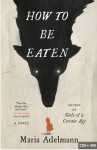
Cover of "How to be Eaten." Black wolf head coming from top of book toward little girl outline in red.

How to Be Eaten by Maria Adelmann: 4. No one emerges unscathed, even those in fairy tales; what happens to those women when the story is over, in a world where public opinion and social media are just as destructive as any evil queen? Four women come together to tell the stories that made them from their viewpoint as trauma group therapy for each of them. These were brilliant retellings with a bit of emphasis on what happens when the happy story is just another bit of fiction.

Cover of "The Tiger Flu." Illustrated tiger in center of brown, orange, black, and neutral mosaic.

The Tiger Flu by Larissa Rai**: 4. One person seeks a new starfish— a young woman who can regenerate any portion of her body to provide spare body parts— after her lover, the only remaining starfish in her tribe, dies from the flu. Lai does well with character voice, narrating the point of view with different words, structures, and tones to differentiate who is telling the story, and I’m looking forward to Salt Fish Girl.

Cover of "Mostly Dead Things." Lime green cover with pink, illustrated flamingo on it.

Mostly Dead Things** by Kristen Arnett: 2.5. After Jessa-Lynn’s father commits suicide, her mother goes off the rails and her brother’s wife— and maybe Jessa-Lynn’s one true love— abandons him as well; then there’s that pesky art curator who just keeps encouraging…. Nonsense. I wanted to like this more, with all the dead things and queer love (and it does have some black humor I enjoyed), but it just never hits quite right with its plot or characters.

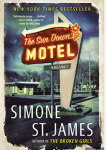
Cover of "The Sun Down Motel" Cover in shades of blue with red, retro-styled motel sign.

The Sundown Motel by Simone St. James***: 3. After her aunt disappears from a motel under mysterious circumstances, Carly moves to the same town and works at the same place only to find ghosts the building— and a serial killer— have left behind. It’s solid, though the plot telegraphs from a mile away and just needs a true crime podcaster to put the few missing clues together.

Cover of "Dogs of Summer." Red and light blue cover with image of two girls hugging in center.

Dogs of Summer by Andrea Abreu**: 3. A coming of age tale between two adolescent girls on the Canary Islands, it’s a story that focuses on how all those things at that age have a measure of the grotesque, especially attraction. I think the story loses a lot in the language translation, although the narrator does sound like the almost obsessive 10 year old girl she is. 

**There was a meme going around that listed a series of Lesbian/Queer novels for every mood. I read every one of them, except for Salt Fish Girl as I had to order a hard copy. I replaced it with a novel, The Tiger Flu, from the same author which was also featured queer relationships.

***From what I’ve read of Simone St. James, she blends the beats of crime mystery with a supernatural force in every book. Best of both worlds if you’re a true crime lover who just wants a ghost to pop up and testify now and then. 

Two Sentence-ish Sometimes-Horror Reviews (Part 2)

I’ve been writing reviews for a month or so now and have yet to get out of my December reading. In an effort to catch up. I’m just going to do batches of one or two sentence reviews. Given that I read two-three books a week, I’d otherwise just be a skeleton typing things 400 years from now like some Muir protagonist. 

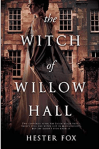
Cover of Witch of Willow Hall. Woman wearing regency dress in front of mansion.

The Witch of Willow Hall by Hester Fox*: 3.5. Banished from Boston as a result of a horrible rumor about her sister, Lydia is just trying to live her life with superpowers when she meets her Mr. McHotty. It’s not a deep read, but a little something angsty to add to my cotton candy endings doesn’t have to be.

Cover of Hidden Pictures. Shadow of car, trees, and person burying body against dark blue background.

Hidden Pictures by Jason Rekulak: 3.5. Is the nanny crazy, she’s fresh out of rehab; is the kid creepy, he’s seeing ghosts and drawing like someone many times his age; or are the parents simply too indulging, Teddy has a thousand rules and little freedom? It’s a modern take on a Gothic trope, with a ghost that gave me a fear of cottages for at least two days.

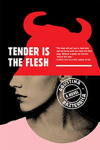
Cover of Tender is the Flesh, lower half of head is female, upper half is of a cow.

Tender is the Flesh by Agustina Bazterrica: 4. Due to possibly nefarious reasons (the government lie, never!), society now relies on humans for food, leather/hair goods, and dairy products; our point-of-view character receives what is the wagyu beef of people and establishes a forbidden relationship with it. I feel some of the brutality was made more vicious by the translation, and while I don’t eat a lot of meat anyway, I have never thought about being a vegan so hard.

The cover of The Fifth Season. Stone symbol against dark background.

The Fifth Season by N. K. Jemisin: 4.5. In a weird narrative structure that eventually makes sense, three women describe their experiences with powerful elemental sorcerers known as Orogenes, men and women who can move the very earth. I was initially thrown off by the way the story unfolds, but when I started putting it together it felt very rewarding and I loved the world building. 

Cover of The Book of Cold Cases. Car with door open in front of white house on rainy night.

The Book of Cold Cases by Simone St. James***: 3.5. Shea Collins has a day job, but you wouldn’t know it with the amount of time she spends writing her crime blog, and she’s just landed the whale: Beth Greer, an uber-wealthy old woman who was tried and acquitted of serial murder when she was in her early twenties. There were a few weird loose ends, but the ghost makes sense and the motives aren’t completely pulled out of thin air, so it’s a decent murder/ghost mystery.

=======

*All of Hester Fox’s work that I’ve read focuses on a heroine during a specific time period which varies but is always “Gothic” in tone. The protagonist is usually an outcast for some reason, and public opinion of her is not very high. There’s also a romance, and so far it’s all been with males who have a reason to be an insider. The ending is always at least sorta happy. Add some dark secrets and mix liberally with elements of the supernatural.

***From what I’ve read of Simone St. James, she blends the beats of crime mystery with a supernatural force in every book. Best of both worlds if you’re a true crime lover who just wants a ghost to pop up and testify now and then. 

Michael McDowell’s “The Elementals”

Red sky with sun, black shadow of house and sand against red background

I have a problem, one that Adam Neville (we’ll get to him later) has caused to flare up to a ten. I thought I like nebulous endings, the things we can’t define or understand, the things that just exist without beginnings or endings.

I was half right (I still enjoy a vague ending), but I need an origin story, if just because I know the author just didn’t throw sand monsters at me without a thought.

Enter “The Elementals.”  In a twist no one saw coming, a rich family does what rich families do by spending a summer in two houses (the third is uninhabited) on a strip of sand they’ve had in their family forever. This is all precipitated by the death of their matriarch, a harsh and unloving mother who drove them all batshit insane, when not outright abusing them. The point of view does change from time to time, but most of the story unfolds in front of India, the daughter of Luker and granddaughter to that same awful matriarch. 

She’s the innocent of our tale, despite her required precociousness. It’s this lack of experience along with an adult-like perception that gives her the ability to see the horrors of those mansions on the sand, but also be able to explain and interpret them for the reader. Unlike the adults, who have had the mysteries of the third mansion hovering in their lives for as long as they can remember, she doesn’t know what’s going on and won’t take a denial as an answer.

In this process, she seems to awaken whatever lives there on the beach, and it shows itself capable of taking human form despite its lack of a human consciousness, mimicking the people it’s stolen away over the years. Whether it’s malevolent or just alien and hungry is left to the reader; given its desire to consume, I tend more to the latter. It’s a neat analogue of what sand does to even the oldest and greatest of things— it drowns and devours them. Savage mothers eat their children right up.

I could have taken the ending if I knew some things, like why that third house? Why that strip of sand? What screamed into the void and drew these things? I’ve always felt even the most cosmic of horrors needs an invitation. Yes, bad things just happen without a reason and maybe we don’t get that answer because it would read too much like a cautionary tale when we’re supposed to just fear the sand; however,  I need about 25% more exposition to feel like someone at least put some thought into it. I’m also not fond of the magical black person trope (I’m looking at you Stephen King) because it’s lazy.                 

Would I Read it Again?: I think I would. This is considered one of the quintessential horror novels of our time, and a lot of people think it’s terrifying. I just didn’t get that feeling from this, and I have to wonder if it’s me when this happens. 

Rating: 3.5. I reserve the right to adjust this if/when I read it again.      

Two Sentence-ish Sometimes-Horror Reviews (Part 1)

I’ve been writing reviews for a month or so now and have yet to get out of my December reading. In an effort to catch up. I’m just going to do a batches of one or two sentence reviews. Given that I read two-three books a week, I’d otherwise just be a skeleton typing things 400 years from now like some Muir protagonist. 

====

Cover of Death By Cashmere. Yarn basket in front of ocean view window.

Death By Cashmere by Sally Goldenbaum: 3.5. Ocean-side knitting club investigates the murder of upstairs roommate while doing traditional, wealthy East Coast BS. Fun little murder mystery with a focus on yarn; also, you get a knitting pattern in each book!

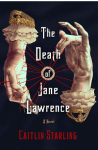
Cover of The Death of Jane Lawrence, two hands with something resembling a cat's cradle string drawn between them.

Death of Jane Lawrence by Caitlin Starling: 3.5. Young orphan seeks a loveless marriage that will meet her requirements for a husband and lifestyle, but doesn’t anticipate the necromancy (or actually falling in love with him). It’s okay, but suffers a bit from the trope of cosmic horror not requiring more than some creepy shite happening.

Leah Remini's headshot Seriously. The whole cover.

Troublemaker: Surviving Hollywood and Scientology by Leah Remini: 4. Sci-fi religion abuses those who speak out or ask questions about it: I mean, where is Shelly Miscavage? While not an entirely unbiased view of Scientology, it’s a worthwhile read where you can at least see why Remini left and continues to speak out against it.

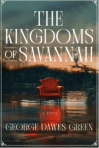
Cover of the Kingdoms of Savannah. Red velvet chair sitting in the middle of a swamp.

Kingdoms of Savannah: A Novel by George Dawes Green: 2.5. In this mystery, Savannah’s wealthy elite does like rich people do as they seek one of the rumored locations for freed black men and women during the reign of slavery in the South. I feel like it’s coasting on Green’s reputation, since it’s not poorly written but still ultimately unsatisfying, unless you really enjoy the tiny snippets of history.

Cover of the collected Schizophrenia. Different colored marbleized patterns.

The Collected Schizophrenias by Esmé Weijun Wang: 3.5  A collection of essays about how Schizoaffective disorder sent one woman’s life off the tracks and how she has to constantly struggle with what it means to herself and others. Any person with mental illness can relate to how difficult it is to both find almost everything impossible while also trying to deflect what others perceive to be true,

Elizabeth Kostova’s “The Historian”

Cover of The Historian by Elizabeth Kostova. Half face of statue with rest in darkness.

I love this book. 

And while I could end the review there, as long as I added how much I loved it a few more times, I’ve committed to writing more words.

The Historian is a love letter to the weird history surrounding the life of Vlad Tepes and the myth of Dracula. After a diplomat’s young daughter discovers his cache of records and books dedicated to the history of Vlad Tepes, she starts to research the stories on her own. As she finds out more information, she even asks her father to tell her the stories from his youth, when he also sought out Dracula after receiving a strange book with a cryptic map when he was younger.

This map leads them on a strange journey, with malevolent figures and disappearances abounding, through how history viewed Dracula, as well as what it says about him. The book takes us from academics and anachronistic protectors in Turkey to abandoned castles in Romania, mingling folklore with the rigorous nature of academia. At first, it’s a father telling a story to his daughter about his own youth, before they throw themselves back into the search once more, following historical breadcrumbs with both glee and apprehension.

This is not a book of action, even though the characters do follow the myth from location to location. It’s a passionate letter to the history that supports a mythology and how those things seep into and change our primary sources. The language is beautiful, just as you would write to a lover who inflames you just… so. It reminded me quite a bit of “Interview with the Vampire” by Anne Rice with how it invokes atmosphere and mystery with language rather than a great deal of action.

If you don’t like slow books, this is not the read for you. I do suggest maybe just taking in the first chapter to see if you can get into it, but it’s still a tough sell if you like faster-paced mysteries. If you love history and language, this is such a great combination of those topics. It’s obvious Kostova loves both, and it’s nearly impossible not to get caught up in that underlying current of enthusiasm if you’re even vaguely a history buff.

Would I Read it Again?: Well, I liked it so much I bought it so I could do exactly that. Most of my reading is through the Libby app, but I felt this was a needed member of my personal library. I also was able to pick up another recommended book through it that’s a glorious historical reference for my writing work.

Rating: 5, if you like history. Probably more of a 3 if you want people to start doing things rather than telling stories.