
First of all, a lot of this will be published off Beehiiv. I’ll post the links over here, but straight from the horses mouth and all. They just have easier options for sharing to social media, and I’m trying to make less of my life paperwork.
Tag: horror
Adam Nevill Deep Dive

I’ve mentioned it before, but here it is again: I love a good rabbit hole.
Given my neurodiversity, obsessive deep dives are the free spot on the bingo card. However, that also comes with a side order of having no short term memory. I either immediately put it on a list (and, sometimes, eventually even use those lists) because I do have good long term memory and recall, or I binge every source of media I can find until the author releases something else, someone mentions it on social media, and I start again because I’ve missed a bunch of their work.
With authors, I tend to be a binger and check out everything I can get my hands on from the library or the book store. Hell, sometimes I do it even if I think they are terrible, because there are few things my brain likes better than a hit of dopamine from good ol’ confirmation bias. I like being really firm in my opinion that I’m right and complete in that rightness, okay?
Nevill was another one of these rabbit holes— or fucked up barrows in his case. I’ve reviewed his work before in shorter reviews and included those with a few edits. During my final check for this piece, I found out there were five or six more, so I’m in the process of reading and including them. Thankfully, I put it in parts so I have some time.
Adam Nevill likes to tell stories where people violate basic tenets of dealing with the supernatural, the norms of not being a fuckwit are just thrown out the window, and people just let weird shit into their houses, apartments, or satanist dens. And that’s the basic summation of his work: brilliant ideas, lots of folk horror, unknowable antagonists.
It’s the unknowable antagonists— things that just exist because they always have— that irk me. Because existence itself creates a history. Black Mag or antlered giants are not in a vacuum, so where is their folklore? Part of that is on me: I’m good with cosmic horror. I understand some things just exist, and they do bad things without any explanation other than their existence. However, I read for the deep lore, and Nevill doesn’t often write it. It sucks, because I really appreciate his characters and settings, but I’m blueballing it through the end like a teenager watching porn static for some back story.
Anyway, over the next few months, I’ll be releasing my reviews for his books among my other projects. I plan on hitting his novels, novellas, and short story collections up, but I am not going to venture into collections by other editors that include him. I simply don’t have the time to get that far into collection books, because stupid me would read the whole thing and end up in weird book-land forever. Not the good one. The one where you end up mummified under your TBR pile after your cats had their fill.
Two Sentence Reviews
Currently Reading: Exquisite Corpse by Poppy Z. Brite
Wearing: Nightflyer by Olympic Orchids Perfume. We’re dealing with a number of corpses this week, and this smells like the “good” dirt after a rainy day: primal, freshly turned, and— just shy of sickly— sweet and floral. It fades into more of the mineral notes, a little salty and musky. I don’t know if I would wear it out and about unless I waited until the initial sweetness faded or layered it something to turn that note a little less… fecund. Still, I love smelling like a bog witch getting a good burial done, and it’s perfect for a fall or spring day layered in-between skin, sweaters, and blankets while reading some PNW murder mystery.
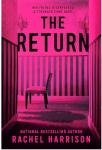
The Return by Rachel Harrison: 3. Elise’s best friend disappears during a hiking trip, and she spends two years wishing for her back; when Julie finally makes her return, something wrong has happened to her, and it’s only exacerbated by the getaway the group of friends has to celebrate the miracle of her survival. I think I would get the hell out of dodge after the first couple of issues, as the book is red flag central and Elise being all “Nah, fam, I got this.” She did not have this.
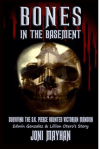
Bones in the Basement by Joni Mayhan: 3ish. A first hand account of the hauntings at the S.K. Pierce mansion from previous home owners. I’m not even sure how you rate books like these: the writing wasn’t a complete mess, and it’s a decent resource book for writing things that go bump in the night.
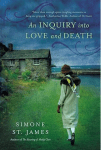
An Inquiry into Love and Death by Simone St. James**: 3. A young woman leaves her privileged women’s college and travels to the small town her uncle died in to handle his affairs, chase ghosts and nazis, and bone down detectives. It’s very typical, which means it wasn’t not enjoyable, but it wasn’t anything I would get excited and nerd dump about.
**From what I’ve read of Simone St. James, she blends the beats of crime mystery with a supernatural force in every book. Best of both worlds if you’re a true crime lover who just wants a ghost to pop up and testify now and then.
Two Sentence (Sometimes) Reviews
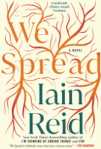
We Spread by Iain Reid: 3.5. An elderly woman becomes untethered to the world she knows when her partner dies and, she can no longer live on her own; in her new, special, nursing home she becomes the artist she once was, but at some cost she can’t define. It is beautifully written, even if I think there’s something off about the conclusion, and like the previous book, you have to pay attention to every detail.

Hester by Laurie Lico Albanese: 3. This retelling of the Scarlet Letter, but if Hester was a real woman (in this case, a talented seamstress and maybe witch) and Hawthorn was, ultimately, a fuckboy. It didn’t have me hanging on the edge of my seat, and there was a bit of magical negro nonsense, but it was mostly an okay read.

Wives and Daughters by Elizabeth Gaskell*: 3.5. Molly is a physician’s daughter in ye oldie times, and has to go through the tribulations of her father’s second marriage, her step-sister stealing her love interest, and a rumor mill trying to ruin her reputation by romantically associating her with a creep of a man. It’s what I expected from this type of book, and I actually enjoyed a peek into the non-regency (wrong time) politics and social scene in a project otherwise full of it.
*I’m on a bit of a Jane Austen kick and doing some mapping work on the books, but it also meant I brought in things that were adjacent, like Gaskell’s book and other historical romances. You know the plot: plucky heroine, class politics, and steamy hand brushing. Surprisingly enough, this kind of stuff is useful for writing horror.
Two Sentence Reviews
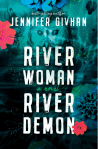
River Woman, River Demon by Jennifer Givhan: 3. A traumatized woman must deal with her friend’s murder, her husband’s arrest for said murder, and her ex being back in town while also being magical. I had not remembered much about this book, so had to look it up; I remember having weird plot concerns, but it was a standard horror read.

Thistlefoot by GennaRose Nethercott: 4. Siblings inherit two things from their distant relatives: a house on chicken legs and an unrelenting horror created and forged in the fires of past atrocities. I found this entire story to be just the right balance of humor, horror, and charm, and just the perfect fairy tale for a winter night (when is how far behind I am).

I’m Thinking of Ending Things by Iain Reid: 3.5. During a trip to visit her boyfriend’s parents, a woman contemplates ending the relationship, but as her feelings break down about her partner, weird things and coincidences start happening. I liked it, even if it required a lot of going back and rereading things for me, because every detail mattered in this “everything is not as it seems” story; just keep that in mind for your own read through.
Alma Katsu’s The Hunger and The Deep
History is fickle. We all know that, right? That the “facts” in our historical recollections at best belong to survivors of an event, in the middle belong to those relying on recollections and their own perceptions and observations, and at worst to those who achieved victory and rewrite their struggles to turn them into heroes. It’s all got some modicum of storytelling and fiction. Alma Katsu seizes this whole concept and then runs off with it to create some paranormal shenanigans.
To be transparent: I stumbled upon Alma Katsu’s books by accident. I had meant to check out Nick Cutter’s book The Deep, but when you mix the library app with sleep meds, you get what you get and you don’t throw a fit. So, I ended up with a book by Katsu.
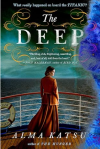
The Deep is about the Titanic and the Brittannic in two timelines involving, relatively, the same people. The beginning of the book starts with a letter from a father to a sanitorium regarding his missing daughter, Annie Hebley. The doctor, in a rare moment for a physician at the beginning of the century, decides to leave the question unanswered out of respect for the patient’s privacy. Annie has been his patient for years, even though no one thinks anything is wrong with her. Her call to action is a letter from an old friend, one she met on the Titanic, regarding a position of a nurse aboard the once sister of the doomed ship, the Britannic. Encouraged by the hospital, she takes the position.
From there, the timeline switches between the Titanic and the Britannic. Annie, a servant to the first class on the Titanic, integrates herself with the culture and spiritualist conjecture of the rich, becoming entangled within their affairs and fearing their talk of spiritual possession. She also meets the husband of a wealthy woman and creeps on him for a bit, while everything else melts down on the ship and the inevitable happens.
That’s pretty much what happens on the Britannic as well. The man, who Annie was sure died on the Titanic, shows up as a wounded soldier on her new boat and having learned zero manners in the years since the disaster, she creeps on him some more and tells him of all the sexy things they did together. Of course, he remembers none of it. There’s a whole reason for it, and we already know the Britannic sank too. Chick is 0/2.
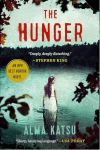
The Hunger also deals with a historical event, the Donner Party. I don’t think I have to rehash 90% of that. People go west. Rich people make poor leadership decisions. They get caught in the snow and start eating each other because long pork is better than dying of starvation. Except this time, the party is being pursued by something that likes eating everything below the skull of little kids, some people are acting bizarre and attacking others, and some of the more prominent historical figures (Tamsen Donner) may be witches or psychics or mediums or whatever.
I feel like I should like these books. I like history. I like ghosts. Hell, I even like the whole mysterious, possible-cryptid eating people. And yet, there’s something a little too precious for me in her writing, even as she describes cannibalism and vengeful spirits. And maybe I’ll still read her other stuff, because I have a morbid fascination with confirmation of trends and an abiding love of being happily surprised. It’s why I did a deepdive into Hester Fox, and despite never finding a deep appreciation for Fox’s work, I at least settled into a familiarity with it. I know I’ll pick up her newish one about the internment camps, even if her romantic-specific historic peeps-paranormal is kind of a little too…prissy? For me, at least, though I recognize that it’s a viable style and format for a lot of other readers so I still want to support the work.
Would I Read it Again?: No. The style isn’t my jam. I (probably) keep throwing myself at whatever else she publishes, but I don’t think I’ll be doing any rereads of old material.
Rating: A solid 3, and The Hunger pulled The Deep kicking and screaming there. Like I said, this is definitely for somebody, and it’s okay for whoever that person is. I have some weird issues around rewriting actual events, especially when they were such awful tragedies for those involved, but that’s my spider-filled brain trying to wrap itself around historical theory and how malleable it can be in fiction.
The Endings, The Endings AAAAARGH
An Interlude: I am chronically ill. It’s something auto-immune adjacent, if not dead on, that is exacerbated by some severe PTSD and fatigue that mean I’m always a tightly-wound ball of nightmares and naps. Because I don’t communicate like normal peeps (thank ND), doctors tend to think it’s not as bad as it is, even when it’s pretty damned bad.
My psychiatrist though? That guy? He’s a damned rock star. He looks at test results. He puts things together. He knows it’s a complicated history, I’m not looking for the hard drugs, and I just want to do things like be able to focus and sleep. I’ve lived with the pain for years. Same for the trauma. But as I age, my brain handles all of the non-voluntary functions with less and less grace.
Que the rock star. He put me on some sleep meds which allowed me to put a lock on my night time routine. I’ve gone from very poor to poor on the Likert scale of sleep. It’s insane. I have a modicum of energy. I deep cleaned and organized two whole rooms I haven’t been able to seriously work on for years.
All this to say: I’m sitting on my computer a little less. Reviews will come accordingly until I finish the backlog of household stuff I’ve had to let go. Ideally, as we adjust and find the perfect sleep med, I’ll get through all of that more quickly and still be able to apply my brain to writing, reading, and all of the art that comes with an overactive brain that can actually do the corresponding work.
Anyway, onto some books!
I can’t remember where I saw the list, but I think it was something to do with Bram Stoker award nominees and winners. Of course, I added that shit to my TBR pile like the internet was showering me with manna from heaven and not just presenting information in a useful way, because I love making lists that later crush me with how long they’ve unintentionally gotten. Reddit’s /horrorlit knows the game.
Two of the books on the list were Josh Malerman’s Malorie and E.V. Knight’s The Fourth Whore. And man, you would think a book about cosmic aliens driving you mad and another about how Lilith is trying to stick the landing on the whole apocalypse thing would vary vastly in terms of execution, but then you read them. And they’re both disappointments in very similar ways: both are about the end of the world as we know it and the endings are terrible.
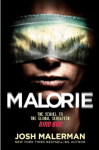
Malorie by Josh Malerman: 3. With Malorie, Malerman is telling the story of what happens not in the immediate aftermath of a world-altering event, but ten or twenty years later. Once the children born into that world start becoming adults and the conflicts between those who were traumatized and those who’ve never known anything but this new normal arise. In a lot of ways, it’s about how some only know how to fight and others learn to adapt.
Malorie is trying to live her life by the fold, and her now teenage children want to break free from her vice-like hold on safety measures, especially her teenage son. Tom is a bit of a rebel, a dreamer, and an inventor, not unlike his namesake (which is mentioned a bajillion times). To add to all of their issues, they’ve finally found a safe space, she’s managed to keep those kids alive as a result, and life is as good as it can get when you’re bundled up for winter at all times, even the dead of summer. And then the census taker comes by with information to disrupt all of that, including tantalizing details for Tom, such as a new train that allows people to travel across Michigan in (relative) safety. So, they uproot their lives. And their mores. And maybe some values along the way.
Almost 90% of this book was building to what laid at the end of the train, including a conflict with a villain from the first book. The last 10% was trying to wrap up all of those details in a bow without any real climax. The book spent a huge amount of time going somewhere, then just abandons that for a final kill and “oh things are better now.” It made what was otherwise good storytelling up until that point feel like a wacky, inflatable, tube man stepped up to tell the final chapter of the story.
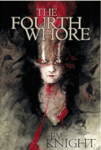
The Fourth Whore by E.V. Knight: 2. Trigger warning: there is so much sexual assault in this book. Lilith is on the warpath. She was betrayed by Adam. She was betrayed by her creator. She was betrayed by the one person she trusted after being left in the wilderness, and then he had the audacity to betray her a second time to “save” her from the demoness he helped mold her into being. So, she’s picking up “Whores” to complete her four horseman vibe, including a prostitute she wants to wage STD war and a women’s doctor she wants to sow discord. Then there’s our protagonist, Kenzi.
See, when Kenzi was a wee thing she saw the Angel of Death, Sariel. Sariel has also been banished from heaven, but only until he collects all of these demonic souls he’s in part responsible for: he’s the former lover who betrayed Lilith, boning her down and then letting his other angel friends throw her into a cave to be raped by demons for a millenia. Then, because he hates consequences, he seals her soul into a talisman that he carries around and eventually gives to baby Kenzi because “she reminds him of someone.” Kenzi gets into a literal drug war and somehow activates the talisman, releasing Lilith and becoming the demon’s replacement for Sariel.
The more I read the book, the less I liked it. Sariel groomed Kenzi from the time she was seven to be his beloved. He has set it up so he can always be her white knight, putting her through some shit for that to be true. Gross. He did the same thing to Lilith’s innocence, basically being a whiny, man baby about his feels while she was sexually assaulted into losing everything that made her human. And then the book makes him the hero, because Lilith should stop being so big-mad about God and Adam and Sariel. She should practice forgiveness. She needs to learn to let go. Deep breathe. Yoga. All that.
Fuck that noise. Lilith’s on the nose about most of what she says. When she’s being a bitch, such as killing some previous allies, she’s acting completely out of character. She’s acting like Sariel or Lucifer or one of the men, and that’s what makes her villainous. Yet, they get to be the heroes, including the disgusting angel who let the love of his life get raped for thousands of years by demons. He grooms his other great love, starting when she is seven, by white knighting and m’ladying up the place. The fact that Kenzi chooses her groomer, going so far as to die to save him, makes me gag. The fact that Lilith got left holding the bag as the “demoness,” one final time is a disservice to her. Kenzi should have told them both to stuff it it, made the fucking crow raise her dead boyfriend, and peaced out while Lilith ripped Mr. “I’m a Whiny Crybaby Pedophile” a new hole for him to shit out of.
I knocked off two points for that shit crap. I’m with Lilith. When men fail us, eat them alive. Always.
Two Sentence Reviews
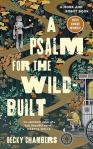
A Psalm for the Wild-Built by Becky Chambers: 4.5. Dex, a tea monk, seeks meaning and purpose from a life that always seems slightly off; they leave their known world, meet up with a robot, and make you ask more existential questions than such a quaint feeling novella should. I didn’t think I would like this book when I first started reading it, but I absolutely loved it in the end.
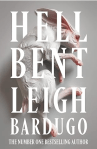
Hellbent by Leigh Bardugo: 3.5. Galaxy Stern can see and speak to the dead, and managed to send her would-be boyfriend to hell; now, she has a gentleman demon, a plot against her beloved Yale secret society, and an open portal to hell somewhere, OMG. I enjoyed The Ninth House, despite some concerns about a few of the plot points, and this hits the same spot of being entertaining while not dragging itself down in complicated side quest prose.
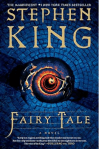
Fairy Tale by Stephen King: 1. Boy meets old man and dog, old man has lots of gold from a secret kingdom under his shed, boy enters kingdom, and boy saves it. Man, I couldn’t even dedicate a long entry to this since I hated it so much; it’s tropey BS with a white, male saviour, and I hoped it was satire when he only became whiter and more saviour-y, but I’m just not sure about anything anymore in this upside down world.
Dark Matter by Michelle Paver
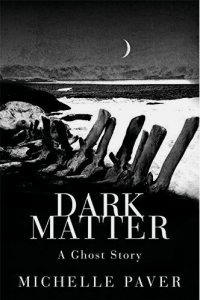
There’s nothing quite like the bitter cold and pitch-black nights to really set the horror at a 10, is there? For me, the first introduction was “The Thing” followed by the X-files episode “Ice.” The frozen parts of our world hide a multitude of mysteries and more than a few sins, and desolation is nearly as terrifying as the things that make use of such isolated places and people. Dark Matter plays on all of that: the desires we hide, the darkness that threatens us with oblivion, and the things that lurch and crawl when the night never ends and secrets are easily hidden beneath the ice.
It’s almost 1940, and Jack Miller is seeking a change. He’s been through it in the past couple of years, and all he wants is a place where he feels he’ll be useful and appreciated. Fortunately, he’s not terrible at being a wireless operator. Unfortunately, his pick for an arctic expedition to study weather patterns might be his reach exceeding his grasp, because holy shit, does that expedition break him in every possible way.
His first issue is the class divide between him and his comrades. Adventuring then (and now) is a rich man’s hobby, and Jack is far from the moneyed aristocracy who can typically afford all the things a team needs to luxuriate in an environment otherwise whole-ass in on the scarcity. He lets these differences pass when it comes to his friend Gus, but finds them pompous when handled in almost the exact same way by another adventurer. Part of that pass he gives Gus is he’s got it pretty bad for the golden boy of the expedition and the lack of such things for Albie (not his favourite) is how the richer man hinders said affections from developing naturally.
His second issue is that the Arctic is not a fucking playground. It’s the kind of cold that kills an unprepared man before they even know they’re dead. The ice in the bay keeps people from going in and out, and an accident when it’s frozen over means death. The days are short, then non-existent, submerging Jack in an intense darkness where time and space lose all meaning to him. The old money he travels with might find all of this some sort of bonanza of scientific exploration, but even they are brought back to reality when Gus suffers an infection that forces him and Albie back to the known world, leaving Jack by himself to develop unchecked mental health issues.
Jack’s third issue is the haints. Maybe Jack would have paid attention to the red flag from the captain of the ship that escorts them to Gruhuken— it’s a cursed place with a dark history— if he weren’t so mad about the sled dogs or Albie. Miners used to inhabit the location, and something dark lingered long after they left. Jack first starts encountering this “memory” while there is still daylight to be had, but it starts pursuing him more wholeheartedly when Jack is left alone due to the medical emergency. Then the daylight gives out to 24 hours of dark and darker.
I loved this book. Despite Jack telling us the story through his journal entries, atmosphere becomes another narrator, and the Arctic is fucking terrifying. These men framed it as an adventure, but really it’s worse than any of the ghosts that might remain. It tells its own blood-soaked stories in the extremes it forces humans to endure and enact. For every bit I thought Wakenhyrst was a bit droll with its exposition, the slow burn of this was like freezing to death under the eyes of past horrors, and that is such a beautiful kind of dawning horror to feel as a reader.
Would I Read it Again?: Gods yes. I’ve recommended it to several people, but trying to get my family to read my recommendations is like pulling teeth, especially since my tastes are super weird. This feels like a book where you pick up more context each and every time, where the reveal doesn’t spoil anything because it’s not the horror part of the story.
Rating: 4.5. It is a slow burn, and I think a lot of people might get turned off based on that, especially if they are looking for high drama all of the time. However, that burn is built into the narrative, and it’s appropriate here. If it were faster paced, it would lose some of the “chipping away at your sanity” that’s the point of the whole thing.
Two Sentence Book Reviews
The TL;DR for the past two weeks:
Respiratory Infection: 1
Me: 0

Road of Bones by Christopher Golden: 3.5. While making a documentary about ghosts on the Kolyma Highway— a Siberian highway built by people whose same bones form its foundation the process of creating it— Teig and his filmographer buddy travel to the northernmost point and spend the rest of the book running away from what they find there and its manifestations within their immediate circle. The middle part, the part that’s supposed to be the exciting chase, drags on a bit since there’s only so much of “bad shit is coming for us right now” a person can take before you want an actual climax; however, it’s an interesting take with a basis in folklore rather than a haunting.

No One Gets Out Alive by Adam Nevill: 3.5. Our heroine is down on her luck, especially when it comes to boarding houses with more than one murder, a crazy god in the basement, and her male neighbours just being utter creepers. I had watched the movie, which does hit differently due to its focus on the diaspora of immigrants, the themes of old gods doing brutal shit holds true; the ending on this was on par with The Reddening for me and the building tension of random weird shit happening fit Nevill’s slapdashing-creepy-shit-everywhere style more than a lot of his stories do.

The Book Eaters by Sunyi Dean: 4. Devon is a rarity in her world, a female book eater— a species that absorbs knowledge through eating books— and she’s passed around accordingly as a broodmare, at least until she gives birth to a son who doesn’t consume pages, but brains, memories, and personalities; past trauma leads her on a quest to save her tiny serial killer child from the rest of her “family.” This wasn’t a super complicated story in terms of language, but it’s a novel approach on vampirism and the obtainment of knowledge, whether humane or brutal; man, though, it gets an extra point just for world building as that’s where it really shined.
 The Wuthering Cephalopod