Two Sentence Reviews

Cover of River Woman, River Demon. Turquoise abstract cover with non-abstract flowers.

River Woman, River Demon by Jennifer Givhan: 3. A traumatized woman must deal with her friend’s murder, her husband’s arrest for said murder, and her ex being back in town while also being magical. I had not remembered much about this book, so had to look it up; I remember having weird plot concerns, but it was a standard horror read.

Cover of Thistlefoot, woodcutting stle cover with house on chicken legs alongside two siblings and city street.

Thistlefoot by GennaRose Nethercott: 4. Siblings inherit two things from their distant relatives: a house on chicken legs and an unrelenting horror created and forged in the fires of past atrocities. I found this entire story to be just the right balance of humor, horror, and charm, and just the perfect fairy tale for a winter night (when is how far behind I am).

Cover of I'm Thinking of Ending Things. Photograph of car by street lamp in trees, all covered by snow.

I’m Thinking of Ending Things by Iain Reid: 3.5. During a trip to visit her boyfriend’s parents, a woman contemplates ending the relationship, but as her feelings break down about her partner, weird things and coincidences start happening. I liked it, even if it required a lot of going back and rereading things for me, because every detail mattered in this “everything is not as it seems” story; just keep that in mind for your own read through.

Two Sentence-ish Sometimes-Horror Reviews (Part 3)

I’ve been writing reviews for a month or so now and have yet to get out of my December reading. In an effort to catch up. I’m just going to do a batches of one or two sentence reviews. Given that I read two-three books a week, I’d otherwise just be a skeleton typing things 400 years from now like some Muir protagonist.

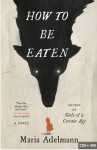
Cover of "How to be Eaten." Black wolf head coming from top of book toward little girl outline in red.

How to Be Eaten by Maria Adelmann: 4. No one emerges unscathed, even those in fairy tales; what happens to those women when the story is over, in a world where public opinion and social media are just as destructive as any evil queen? Four women come together to tell the stories that made them from their viewpoint as trauma group therapy for each of them. These were brilliant retellings with a bit of emphasis on what happens when the happy story is just another bit of fiction.

Cover of "The Tiger Flu." Illustrated tiger in center of brown, orange, black, and neutral mosaic.

The Tiger Flu by Larissa Rai**: 4. One person seeks a new starfish— a young woman who can regenerate any portion of her body to provide spare body parts— after her lover, the only remaining starfish in her tribe, dies from the flu. Lai does well with character voice, narrating the point of view with different words, structures, and tones to differentiate who is telling the story, and I’m looking forward to Salt Fish Girl.

Cover of "Mostly Dead Things." Lime green cover with pink, illustrated flamingo on it.

Mostly Dead Things** by Kristen Arnett: 2.5. After Jessa-Lynn’s father commits suicide, her mother goes off the rails and her brother’s wife— and maybe Jessa-Lynn’s one true love— abandons him as well; then there’s that pesky art curator who just keeps encouraging…. Nonsense. I wanted to like this more, with all the dead things and queer love (and it does have some black humor I enjoyed), but it just never hits quite right with its plot or characters.

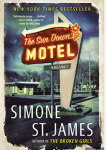
Cover of "The Sun Down Motel" Cover in shades of blue with red, retro-styled motel sign.

The Sundown Motel by Simone St. James***: 3. After her aunt disappears from a motel under mysterious circumstances, Carly moves to the same town and works at the same place only to find ghosts the building— and a serial killer— have left behind. It’s solid, though the plot telegraphs from a mile away and just needs a true crime podcaster to put the few missing clues together.

Cover of "Dogs of Summer." Red and light blue cover with image of two girls hugging in center.

Dogs of Summer by Andrea Abreu**: 3. A coming of age tale between two adolescent girls on the Canary Islands, it’s a story that focuses on how all those things at that age have a measure of the grotesque, especially attraction. I think the story loses a lot in the language translation, although the narrator does sound like the almost obsessive 10 year old girl she is. 

**There was a meme going around that listed a series of Lesbian/Queer novels for every mood. I read every one of them, except for Salt Fish Girl as I had to order a hard copy. I replaced it with a novel, The Tiger Flu, from the same author which was also featured queer relationships.

***From what I’ve read of Simone St. James, she blends the beats of crime mystery with a supernatural force in every book. Best of both worlds if you’re a true crime lover who just wants a ghost to pop up and testify now and then. 

Two Sentence-ish Sometimes-Horror Reviews (Part 2)

I’ve been writing reviews for a month or so now and have yet to get out of my December reading. In an effort to catch up. I’m just going to do batches of one or two sentence reviews. Given that I read two-three books a week, I’d otherwise just be a skeleton typing things 400 years from now like some Muir protagonist. 

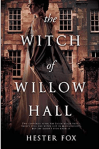
Cover of Witch of Willow Hall. Woman wearing regency dress in front of mansion.

The Witch of Willow Hall by Hester Fox*: 3.5. Banished from Boston as a result of a horrible rumor about her sister, Lydia is just trying to live her life with superpowers when she meets her Mr. McHotty. It’s not a deep read, but a little something angsty to add to my cotton candy endings doesn’t have to be.

Cover of Hidden Pictures. Shadow of car, trees, and person burying body against dark blue background.

Hidden Pictures by Jason Rekulak: 3.5. Is the nanny crazy, she’s fresh out of rehab; is the kid creepy, he’s seeing ghosts and drawing like someone many times his age; or are the parents simply too indulging, Teddy has a thousand rules and little freedom? It’s a modern take on a Gothic trope, with a ghost that gave me a fear of cottages for at least two days.

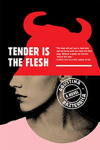
Cover of Tender is the Flesh, lower half of head is female, upper half is of a cow.

Tender is the Flesh by Agustina Bazterrica: 4. Due to possibly nefarious reasons (the government lie, never!), society now relies on humans for food, leather/hair goods, and dairy products; our point-of-view character receives what is the wagyu beef of people and establishes a forbidden relationship with it. I feel some of the brutality was made more vicious by the translation, and while I don’t eat a lot of meat anyway, I have never thought about being a vegan so hard.

The cover of The Fifth Season. Stone symbol against dark background.

The Fifth Season by N. K. Jemisin: 4.5. In a weird narrative structure that eventually makes sense, three women describe their experiences with powerful elemental sorcerers known as Orogenes, men and women who can move the very earth. I was initially thrown off by the way the story unfolds, but when I started putting it together it felt very rewarding and I loved the world building. 

Cover of The Book of Cold Cases. Car with door open in front of white house on rainy night.

The Book of Cold Cases by Simone St. James***: 3.5. Shea Collins has a day job, but you wouldn’t know it with the amount of time she spends writing her crime blog, and she’s just landed the whale: Beth Greer, an uber-wealthy old woman who was tried and acquitted of serial murder when she was in her early twenties. There were a few weird loose ends, but the ghost makes sense and the motives aren’t completely pulled out of thin air, so it’s a decent murder/ghost mystery.

=======

*All of Hester Fox’s work that I’ve read focuses on a heroine during a specific time period which varies but is always “Gothic” in tone. The protagonist is usually an outcast for some reason, and public opinion of her is not very high. There’s also a romance, and so far it’s all been with males who have a reason to be an insider. The ending is always at least sorta happy. Add some dark secrets and mix liberally with elements of the supernatural.

***From what I’ve read of Simone St. James, she blends the beats of crime mystery with a supernatural force in every book. Best of both worlds if you’re a true crime lover who just wants a ghost to pop up and testify now and then. 
Two Sentence-ish Sometimes-Horror Reviews (Part 1)

I’ve been writing reviews for a month or so now and have yet to get out of my December reading. In an effort to catch up. I’m just going to do a batches of one or two sentence reviews. Given that I read two-three books a week, I’d otherwise just be a skeleton typing things 400 years from now like some Muir protagonist. 

====

Cover of Death By Cashmere. Yarn basket in front of ocean view window.

Death By Cashmere by Sally Goldenbaum: 3.5. Ocean-side knitting club investigates the murder of upstairs roommate while doing traditional, wealthy East Coast BS. Fun little murder mystery with a focus on yarn; also, you get a knitting pattern in each book!

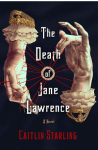
Cover of The Death of Jane Lawrence, two hands with something resembling a cat's cradle string drawn between them.

Death of Jane Lawrence by Caitlin Starling: 3.5. Young orphan seeks a loveless marriage that will meet her requirements for a husband and lifestyle, but doesn’t anticipate the necromancy (or actually falling in love with him). It’s okay, but suffers a bit from the trope of cosmic horror not requiring more than some creepy shite happening.

Leah Remini's headshot Seriously. The whole cover.

Troublemaker: Surviving Hollywood and Scientology by Leah Remini: 4. Sci-fi religion abuses those who speak out or ask questions about it: I mean, where is Shelly Miscavage? While not an entirely unbiased view of Scientology, it’s a worthwhile read where you can at least see why Remini left and continues to speak out against it.

Cover of the Kingdoms of Savannah. Red velvet chair sitting in the middle of a swamp.

Kingdoms of Savannah: A Novel by George Dawes Green: 2.5. In this mystery, Savannah’s wealthy elite does like rich people do as they seek one of the rumored locations for freed black men and women during the reign of slavery in the South. I feel like it’s coasting on Green’s reputation, since it’s not poorly written but still ultimately unsatisfying, unless you really enjoy the tiny snippets of history.

Cover of the collected Schizophrenia. Different colored marbleized patterns.

The Collected Schizophrenias by Esmé Weijun Wang: 3.5  A collection of essays about how Schizoaffective disorder sent one woman’s life off the tracks and how she has to constantly struggle with what it means to herself and others. Any person with mental illness can relate to how difficult it is to both find almost everything impossible while also trying to deflect what others perceive to be true,

Luke Arnold’s “Dead Man in a Ditch”

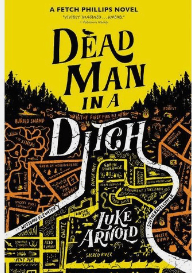
Cover of Dead Man in a Ditch-- yellow with street map..

Back in June, I was put on indefinite (okay, six weeks) hiatus due to a food-poisoning induced hernia and the subsequent surgery to fix it.

Knowing I wouldn’t be able to lift anything over five pounds, and also being aware that would just make me want to lift things more, I went ahead and asked my friends for books to read so I kept my mind off of “Fuck you, I do what I want.” This series was one of the suggestions. 

A lot of urban fantasy novels focus on what happens when magic suddenly reinvigorates the world. Luke Arnold, from Black Sails and other series, instead focuses on what happens when magic is suddenly stripped from an Earth that always had it: elves suddenly age, vampires turn to dust, fairies revert to the trees and rocks they called home. Humans, once the underdog and now the standard, are even affected as the magical fires and tools that kept their cities running stop working, forcing everyone to resort to other methods to keep warm and survive. 

Fetch Phillips, our main character, is at least 50% responsible for what happened to magic. After being on the side of the humans in staving the flow of magic, the result of his envy of the magical types and anger at their treatment of him, he’s become a private investigator trying to keep the non-magical lights on. In the first book, he has some vampire and women problems— his fairy romantic interest became a tree— but in the second one he’s dealing with things like actual guns, dead businessmen, and a strange stalker who’s literally stealing the essence of once magical creatures. These thefts open up another question: what if magic isn’t quite dead? What would once-magnificent creatures do to recapture the past?

These books are fun. They remind me a lot of the Dresden files, with a little more noir and fewer references to the various assets of women. Fetch Phillips is flawed and remains flawed throughout the series, which is relatable as he just feels like less of a stand-in for the author. The mysteries at the center of the novel are well-laid out and make sense within the context of the world. If you’re into that whole magical noir genre, it definitely will fill that hunger, even though it’s about a world where magic was killed.

Would I Read it Again?: Maybe. It’s not exactly the most mysterious of mysteries, but if I wanted to spend a rainy day with heist movies and detective fiction, I would happily return to it.

Rating: 4. It’s straight forward, interesting, and I enjoyed it. The plot makes sense and gets wrapped up well, with enough of a lead into the next book to make me want to read it (as soon as I whittle down the reading list a little).