
Holy shit. Weekly?
Category: Uncategorized
Nevill: Part 1
It’s been a long couple of weeks for me– my time and energy was focused on two things: getting through all of my doctors appointments and the teen. They are graduating from high school this year, and it feels like I’ve pulled out all my hair trying to counter their senioritis. The good news is I got a few more Nevill books read while in the waiting room, pulling. The bad news being the imminent baldness.

Banquet for the Damned: 3.5.
Dante is one half of the otherwise fractured hair metal band, Sister Morphine. The other half is Tom, a lothario who slept with the former drummer’s long-time girlfriend, as well as “stealing” and emotionally mistreating the woman Dante has a crush on, Imogene. Dante decides to participate in some good old escapism— with Tom in tow— and go to Scotland to work as a research assistant and complete a concept album with his idol, Eliot Coldwell. Coldwell is an old-school occultist who loves nothing more than lots of LSD and communicating with the dead.
When they get to St. Andrews, things aren’t as promising as they first appeared. Dante and Tom arrive as the authorities pull a dismembered arm out of the ocean. One of Coldwell’s previous research assistants committed suicide by lighting his entire car on fire with him inside of it. An American researcher is in town, drawn there by an increase in sleep terrors. The students who contact him are all tied to Coldwell in some way, and are losing their shit, sleepwalking, and then eventually vanishing. Coldwell alternates between a weird philosopher and decrepit drunk. And, most importantly, his remaining research assistant is probably possessed and feeding people to her old god sidekick. Academia, right?
I believe this was Nevill’s first published book, and I ain’t mad for it being a debut novel. There is background information– of the school, of supernatural phenomena, and of tying disparate stories together. It’s a story about witchcraft, its practitioners and what they unknowingly and knowingly call from the abyss. The characters even kind of find out shit is weird early on and have a justification for sticking around until it becomes unbearable. They know they’re outmatched. They want out of dodge. They try to get away. Most of them aren’t stupid, just afraid. Those who are skeptical have a good reason to be: they’re just having bad dreams under a great deal of stress of being post-grads or completely broke.
More in line with Nevill, it establishes the theme of humanity’s hubris when dealing with the unknown. It’s a strong basis for his work with invitations and how being the one extending the overture in no way guarantees control. In fact, it means the characters have lost their ability to be in charge the moment the “other” enters the scene. All thoughts of managing the unknown are folly.

Apartment 16: 3.
Barrington House is (in)famous. It has more than a little fuckery going on because people have never ever heard of closing the goddamned door. Seth is a starving artist. He’s employed as a security guard at Barrington House. Apryl is an American manic pixie dream girl in love with the past. Her aunt owned an apartment at Barrington House. There’s a weird kid and an absolutely negligent dead artist who can’t keep the paint brush or the, maybe literal, ghouls in his pants nor has he noticed the lease was up years ago.
Apryl inherits her aunt’s apartment in Barrington House, an uppercrust building in London that only the creme de la creme (and demons) can afford to live in. When she gets there, she’s more than a little surprised that her dead aunt had become a shut-in recluse and hoarder. She plays dress up, enjoys the crisps, and then digs into why her aunt went batty. Hint: Don’t play with demons, folks.
Meanwhile, Seth works security in the building to support his career as an artist. However, the building starts having a supernatural pest problem that draws him to Apartment 16. Even worse, when he finally makes the decision that this is a bad thing and he should get the hell out, he realizes he’s being haunted by an evil child and severe physical symptoms whenever he gets a certain distance from the building. He’s trapped with his worst nightmare: a creepy, malignant (aren’t they all?) adolescent in a hoodie.
This book is the more refined British sister/brother/haint relative of Cold Heart Canyon: trapped residents, terrible secrets, and lich phylacteries that masquerade as artwork. It did a good job of building up layers of WTF. I found some of the characters, such as the hoodie kid, tedious at first because they were trite, and I wanted to strangle the male main character for responding to “haunted building, weird dead artist, being hunted by a hooligan” with any action other than moving to the states.
The book then built on those tropes to become more interesting and horrifying. There’s no real attempt to explain what the artist tapped into, but it does explain why the residents and the building are the way they are, which somewhat satisfied my hunger for context. I was annoyed that these people couldn’t manage to just leave at the first sign of hoodie shenanigans and bonkers aunties— I’m told London has an excellent mass transport system for escaping asshole haints. However, I appreciate that freeze is a legitimate fear response when facing a kid and his ghostly patron.

The Ritual: 4.
Luke is having a moment. All of his friends either have marriages, actual professions, or various other ties to traditional success. Meanwhile, he’s fucked and resentful. But not proper fucked or proper resentful. That comes later.
He and his three friends– Dom, Phil, and Hutch— decide to take a weekend hike in the Swedish mountains, since it’s cheap and Luke is skint. However, early on physically unfit Dom screws up his knee and Phil injures his feet. Instead of following the path to the next town, which would take longer, they decide to take the shorter pathway through the nearby woods. As it happens, shortcuts are bad. Especially the ones that are marked with flayed and dismembered animal corpses. That’s the kind of shortcut that just screams, “Maybe take the long way” in red flags.
First off, it turns out the woods are full of trees, underbrush, and other things that just make it difficult to cut a straight path. They also contain dilapidated cathedrals with their foundations full of bones and pagan idolatry. Under the pressure of being hunted in both their waking hours and dreams, Luke finds out he may be a penniless slacker, but his friends are dissatisfied with their jobs, marriages, and lives. Mostly, they’re all pissed off at each other, their already fractured and dying childhood relationships falling apart as they disappear one angry white guy at a time.
Secondly, the woods also harbor some black metal artists/pretendy-time Satanists who are super into eating bats and sacrificing humans, an incredibly unhelpful elderly woman, little people in the attic, and something else that also likes eating humans. Luke is on his own by the time he figures this out, and the last part of the book is him trying to make an escape while everything else is going bonkers.
The tonal differences (dealing with the outdoors then a claustrophobic room) between the first and second parts aside, I liked it. I also watched the movie before I read the book though, so I had some interesting visuals to carry into my readthrough of it. The lack of information here, beyond brief exposition, also makes sense as these are just some random dudes going on a vacation somewhere pretty and not understanding the wildlife or locals. Nevill uses his favorite protagonist, an unlucky victim who flails at every opportunity to succeed, even when it literally leaves bleeding animals and people in trees (or poisons them or rattles plastic bags or fills the entire apartment building with sludge) to warn them to back off. It really is just Luke sacrificing his friends to learn a life lesson about the appearances and holding onto those and the past. Ancient forest bullshit might ensue.
Adam Nevill Deep Dive

I’ve mentioned it before, but here it is again: I love a good rabbit hole.
Given my neurodiversity, obsessive deep dives are the free spot on the bingo card. However, that also comes with a side order of having no short term memory. I either immediately put it on a list (and, sometimes, eventually even use those lists) because I do have good long term memory and recall, or I binge every source of media I can find until the author releases something else, someone mentions it on social media, and I start again because I’ve missed a bunch of their work.
With authors, I tend to be a binger and check out everything I can get my hands on from the library or the book store. Hell, sometimes I do it even if I think they are terrible, because there are few things my brain likes better than a hit of dopamine from good ol’ confirmation bias. I like being really firm in my opinion that I’m right and complete in that rightness, okay?
Nevill was another one of these rabbit holes— or fucked up barrows in his case. I’ve reviewed his work before in shorter reviews and included those with a few edits. During my final check for this piece, I found out there were five or six more, so I’m in the process of reading and including them. Thankfully, I put it in parts so I have some time.
Adam Nevill likes to tell stories where people violate basic tenets of dealing with the supernatural, the norms of not being a fuckwit are just thrown out the window, and people just let weird shit into their houses, apartments, or satanist dens. And that’s the basic summation of his work: brilliant ideas, lots of folk horror, unknowable antagonists.
It’s the unknowable antagonists— things that just exist because they always have— that irk me. Because existence itself creates a history. Black Mag or antlered giants are not in a vacuum, so where is their folklore? Part of that is on me: I’m good with cosmic horror. I understand some things just exist, and they do bad things without any explanation other than their existence. However, I read for the deep lore, and Nevill doesn’t often write it. It sucks, because I really appreciate his characters and settings, but I’m blueballing it through the end like a teenager watching porn static for some back story.
Anyway, over the next few months, I’ll be releasing my reviews for his books among my other projects. I plan on hitting his novels, novellas, and short story collections up, but I am not going to venture into collections by other editors that include him. I simply don’t have the time to get that far into collection books, because stupid me would read the whole thing and end up in weird book-land forever. Not the good one. The one where you end up mummified under your TBR pile after your cats had their fill.
Short Reviews
Welcome back! For those in the US, I hope you enjoyed the holiday, however you do or don’t celebrate it. Personally, we don’t celebrate the meaning so much as the opportunity to be together.
The household typically gets some additional days off, and we used to host a huge party the weekend after. The pandemic changed a lot of things for us, including our views on family/friendship and my partner’s introversion (he’s a 5-6 guest max person now). The party hasn’t happened in years. He also found his love of cooking during this time. We spend all day cooking with each other and occasionally the housemate and/or teen, invite a friend or two over, and then bemoan the huge amount of food we now have to eat over the next few days. This year was a traditional turkey, but in the past we’ve managed all sorts of experiments and first times. Thankfully, they’ve all turned out okay.
I skipped last week because of Turkey Day, and mulled over how I wanted to handle these shorter reviews in the future. Gods know my punctuation is doing all the heavy lifting to keep most of these to two sentences. They will still be short, but some may go longer or shorter depending on how I felt about the book, editing, or what I remember of it. I really should get to writing these while the memory is fresh, but it would cut into my reading time and that will not do.
Currently Reading: Blackwater by Michael McDowell
Wearing: Fox in the Flowerbed by Imaginary Authors. This is a hothouse floral perfume: overwhelming and heady when you first put it on, like walking into an estate greenhouse as everything is blooming. The jasmine sticks around, but eventually becomes powdery and more acceptable for something like a late night ball and ::gasp:: ankle showing. It’s one of the most traditional perfumes in their collection, which is appropriate for the Regency Era and some rich, catty, New York bitches.
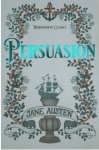
Persuasion by Jane Austen*: 4. Anne Elliot was convinced as a young woman to break off her engagement to Captain Wentworth, and now it’s a decade later and he’s back— romance, shenanigans, misunderstandings! I actually liked this better than Pride and Prejudice, but it could be because the other story has been beaten to death in my mind.

Mansfield Park by Jane Austen: 4. Fanny is poor with a million brothers and sisters, so her aunt’s family is magnanimous to take her in since they need someone to look down on. As she grows up, she experiences angst over her cousin’s lack of interest in her, despite a rich lothario being so into her he’s willing to redeem his wicked ways. God, I even created a map for this one and I don’t remember much of it. Austen is meant to be read in between other books, so maybe I can remember shit.
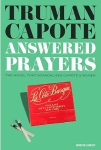
Answered Prayers by Truman Capote: 3.5: The narrator, a queer escort who services high society women, reveals information about the social circles he runs in and the women he meets. It’s more than a little based on Capote’s real life relationships with wealthy socialites, and the novel was abandoned after the third chapter made its way to the press, because, man, Capote skewered the women he was benefiting from. Then again, with that kind of money, maybe they could have been pulled back and made 100% bitchy asshole less of their personalities.
*I’m on a bit of a Jane Austen kick and doing some mapping work on the books. I want to map out the locations mentioned, find historical images of different types of dwellings, houses, fashions, etc, and put together a visual guide for each of the books at some point. I brought in things that were adjacent, like Gaskell’s book and other historical romances. You know the plot: plucky heroine, class politics, and steamy hand brushing. Surprisingly enough, this kind of stuff is useful for writing horror.
Two Sentence Reviews
Before I got into my Two Sentence Reviews, a little update:
Part of the reason I started reviewing the books I read is to get some regular practice for writing. I spent a long time writing fiction, then got very burned out due to gaming industry drama that just killed every desire in me to ever write again, despite how much of my identity was telling stories.
If writing is a muscle, writing reviews and snippets of things are how I exercise it. I’m just really good at falling off that train because depression means your motivation is always less than 0. However, I’m trying to post reviews at least once a week. I eventually hope to have a second post with whatever else I am working on, such as longer reviews, fiber and other arts, book-inspired art, movie BS, Fear Street summaries (these are erratic because of having to track down copies of 30+ year old books in order), and whatever other random things pop up so that I’m writing, even if it isn’t exactly Bram Stoker level material.
With that, you can follow me on Instagram, which is theoretically updated more often, at @wuthering_cephalopod. I don’t do the Musk app, but part of my “being better at being a person… sometimes” is posting on Bluesky at wuthceph.bsky.social
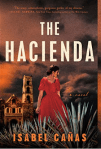
The Hacienda by Isabel Cañas: 3.5. Beatriz, a mestiza woman, marries into a higher (and much whiter) caste in order to escape the legacy of her rebellious father; instead, she finds herself haunted by the ghost of her new husband’s vengeful late wife, the terrible presence of his overbearing sister, and his expectations regarding what Beatriz should be and do with only a somewhat competent priest to help her. While it wasn’t extremely difficult to figure out where the plot was going with the main mystery, I’m always a fan of Mexican horror and how the themes shift based on when it takes place.

The Silent Companions by Laura Purcell: 3. Widowed, Elsie returns to the crumbling estate her husband left her, his poor cousin in tow; while there, she’s constantly hearing the sound of cutting wood, seeing the wooden cutouts of the home moved around, and finding out about a demonic, hidden child from 200 years past. While it’s interesting to me that Purcell likes to focus on haunted objects in her books (I have several more on the reading list), I could barely remember what this book was about other than wooden cutouts; so, I suppose it was solid, but nothing to write home about.

The Secret History of Vampire by Claude Lecouteuxs: 4.5. Less a secret than an interesting collection of sources, this book brings together ideas from letters, texts, stories, and various other sources in an effort to interpret our fascination with vampires. Man, this book gave me so many ideas on how to create a vampire game that is actually different from everything that’s out there; the primary and secondary sources are perfect for drawing your own conclusions about what vampirism meant to the people who thought they were being haunted by them.

The Broken Girls by Simone St. James***: 3.5. At a school for “troubled” girls, a group of young women bond over their shared trauma and a vengeful ghost, until one of their own goes missing without a trace; in the present, a young woman grapples with her sister’s murder at the abandoned school, as well as the mysterious deaths at the location. This was the first book I read by St. James; it took me a few chapters to recognize I was rereading it, which reminded me that I always felt the ending of the past mystery felt a little tacked on.

The House of Small Shadows by Adam Nevill: 3. After several tragedies— a missing childhood friend, mental health issues, a bullying incident, and a miscarriage— Catherine takes a job in her home town cataloguing a doll and puppet collection that has a mind of its own. This book is essentially my partner’s worst nightmare— haunted dolls abound— and Nevill tries to wrap it in a neater bow than he usually does, but so many of his books leave me wanting just a little more than the atmosphere he’s willing to give.
***From what I’ve read of Simone St. James, she blends the beats of crime mystery with a supernatural force in every book. Best of both worlds if you’re a true crime lover who just wants a ghost to pop up and testify now and then.
Two Sentence Book Reviews
I’m at least 50% back on my shit. Which means after a long period of sleeping a lot and trying to manage my chronic health issues, I’m reading and writing again. Unfortunately, while I was off both of those, I was still adding books to my to-read list. I’m Sisyphus on Everest at this point.

All the Murmuring Bones by A.G. Slatter: 3.5. Bound to the sea, the heroine’s family has seen their once-promised wealth dwindle, and she’s not willing to be the bargaining chip they exchange to regain their status. It’s a predictable but okay variation on the gothic horror trope; the world-building, however, was exceedingly good.
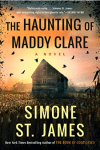
The Haunting of Maddy Clair by Simone St. James***: 3. A ghost with a very poor history with men throws shit around and possesses people until they promise to find out what really happened to her. This was one of the first things I read from St. James, and it’s really just okay— there are some problematic elements— in comparison to the later stuff.

Yerba Buena by Nina Lacour**: 3.5. Named after the “good herb” one character uses in her bartending, this is a story of two women struggling with the fall out of addiction, including the mysterious childhood death of the bartender’s best friend, while also falling in love with each other. Despite the emphasis on trauma, this really is a sweet love story that feels a little dreamy.
Sirens and Muses by Antonia Angress**: 3.5 Four artists, each of them struggling with what the meaning of art is in a world of commercialism, fall in and out of each other’s orbits. The ending was just a bit… I felt like I wanted more or less, so it was very Goldilocks with no perfect solution.

House of Hunger by Alexis Henderson: 3. In a society where the rich use the literal blood of their peasants to feed and bathe themselves, mystery and a sapphic love affair blooms between the drinkee— a bloodmaid— and her rich mistress. It’s a queer take on Bathory mythology, and I gave bonus points for that despite now it seems the plot never gels.
**There was a meme going around that listed a series of Lesbian/Queer novels for every mood. I read every one of them, except for Salt Fish Girl as I had to order a hard copy. I replaced it with a novel, The Tiger Flu, from the same author which was also focused on queer relationships.
***From what I’ve read of Simone St. James, she blends the beats of crime mystery with a supernatural force in every book. Best of both worlds if you’re a true crime lover who just wants a ghost to pop up and testify now and then.
Two Sentence-ish Sometimes-Horror Reviews (Part 1)
I’ve been writing reviews for a month or so now and have yet to get out of my December reading. In an effort to catch up. I’m just going to do a batches of one or two sentence reviews. Given that I read two-three books a week, I’d otherwise just be a skeleton typing things 400 years from now like some Muir protagonist.
====

Death By Cashmere by Sally Goldenbaum: 3.5. Ocean-side knitting club investigates the murder of upstairs roommate while doing traditional, wealthy East Coast BS. Fun little murder mystery with a focus on yarn; also, you get a knitting pattern in each book!
Death of Jane Lawrence by Caitlin Starling: 3.5. Young orphan seeks a loveless marriage that will meet her requirements for a husband and lifestyle, but doesn’t anticipate the necromancy (or actually falling in love with him). It’s okay, but suffers a bit from the trope of cosmic horror not requiring more than some creepy shite happening.

Troublemaker: Surviving Hollywood and Scientology by Leah Remini: 4. Sci-fi religion abuses those who speak out or ask questions about it: I mean, where is Shelly Miscavage? While not an entirely unbiased view of Scientology, it’s a worthwhile read where you can at least see why Remini left and continues to speak out against it.

Kingdoms of Savannah: A Novel by George Dawes Green: 2.5. In this mystery, Savannah’s wealthy elite does like rich people do as they seek one of the rumored locations for freed black men and women during the reign of slavery in the South. I feel like it’s coasting on Green’s reputation, since it’s not poorly written but still ultimately unsatisfying, unless you really enjoy the tiny snippets of history.

The Collected Schizophrenias by Esmé Weijun Wang: 3.5 A collection of essays about how Schizoaffective disorder sent one woman’s life off the tracks and how she has to constantly struggle with what it means to herself and others. Any person with mental illness can relate to how difficult it is to both find almost everything impossible while also trying to deflect what others perceive to be true,
Unconscious Bias
Yes. You’re Biased. We All Are.
It’s been a while, right?
This post brewed for a good six months while we tried to get into the nitty-gritty of bias and what it is. We found we already talked about it in all of our previous articles, such as when we broke apart dehumanization in gaming. Dehumanization is the primary factor in our natural bias and the actions we take. If you’re new to Kill the Healer, you can check previous articles about it and how we strip away identifying factors of a person or group, seeing them instead as “Other”. It plays a part in Bias or Prejudice, which are feelings/thoughts in favor or against something or someone, sometimes sweeping across those included in their “group”.
As humans, we are all biased. We are a product of our environment, formed by the things that happen around us, the mores and values of our close groups (including friends, family, and peers), and our histories. We can’t escape those things nor deny their existence. A lot of bias is unintentional, meaning we don’t realize that prejudice influences our thoughts or actions. It’s locking the car door when you see someone approach you in a crappy neighborhood. It’s microaggressions like asking a person of color about their schooling or assuming a trans person always has dysphoria. Unintentional bias consists of small (and sometimes large) things we don’t realize we are doing, based on the assumptions we have about the world.
We build these biases through our experiences, relationships, and histories and they are the foundation from which we act. And, while we cannot escape the framework of our minds, we can take efforts to acknowledge where the faulty foundation stones are and maybe try to straighten them out a little and constantly improve them. Bias is basically the Winchester House– we’re going to keep building weird shit, pulling other things apart, and finding a way to confuse a past that haunts us so it can’t find us again.
Before we get into this, many people will deny their bias. It’s hard to admit, when you feel like the ruler of liberal thoughts and actions, that you might also be a little bit biased in some way. Many people will say ‘I don’t see color” or “everyone is the same ” and not only do those statements deny the fact that these constructs exist, they negate the experiences of the people who have to live within those very different skins. It also prevents you from dissecting your opinions and thoughts to understand that we all have opinions and feelings, even the dark ones at the back of your head, and they influence what you do.
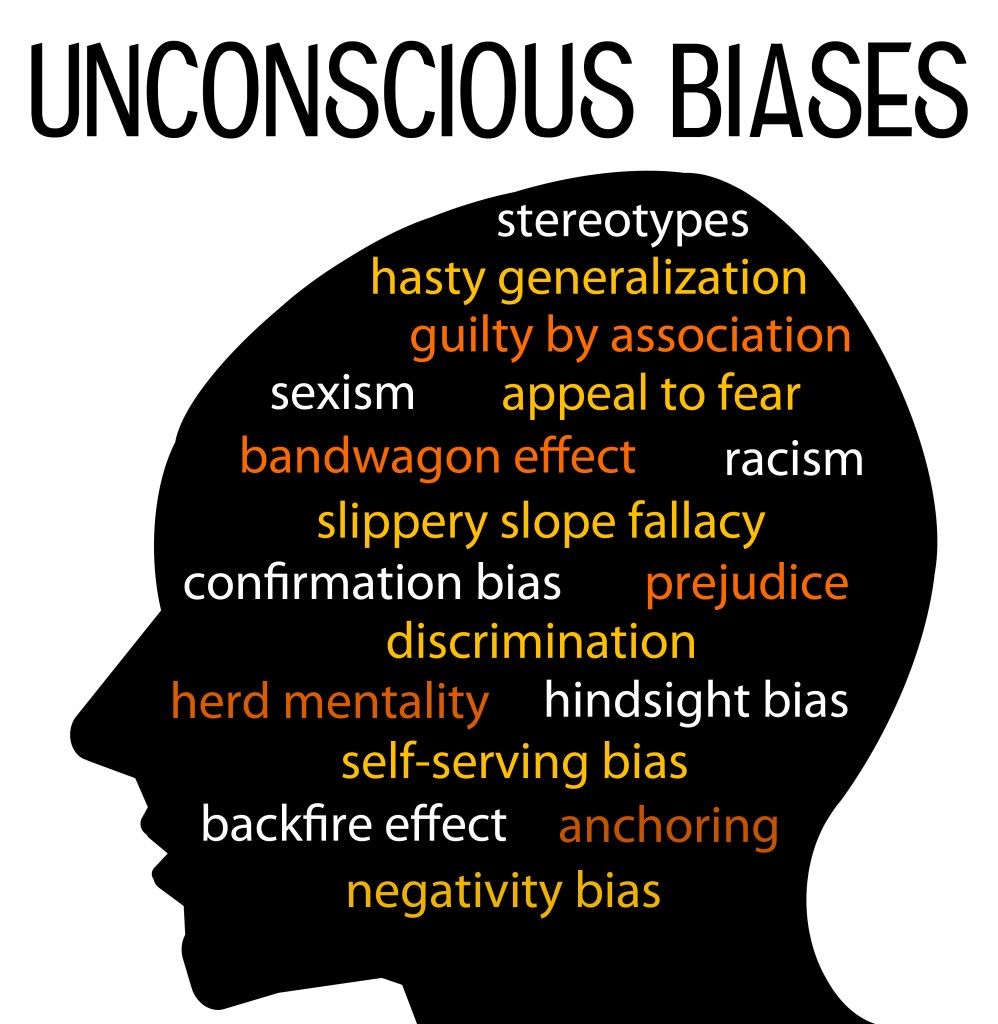
Now, we’ve talked bias against others to death without specifically pointing out one of the most prevalent biases: the one towards ourselves. Even if we doubt ourselves, possess shitty self-esteem, or have issues of personal inadequacy, we favor our thought processes above others. After all, it’s why we don’t believe others when they tell us good things about ourselves– we’ve already made up our mind otherwise. We have a personal investment in what we are thinking, how it makes us feel, and how it plays out in our actions. Even if these investments reinforce sorrowful or painful things about ourselves, we have a stake in that hurt.
For example, if I believe my opinions about politics are inherently right, they become my facts and I, like most people, am going to argue my opinion to the point of death because I believe in its value– which supports my fundamental self and self-esteem. Rightness makes us feel good and releases all sorts of fun chemicals that make our brain happy. However, while the chemicals make us feel good, we draw some improper conclusions: for us to be right, someone has to be wrong. Being wrong makes that person less than us and someone we can easily dehumanize. Their values are faulty and wrong equals bad. It means we’ve drawn black and white conclusions in order to fuel our othering and made an enemy rather than someone who disagrees with us.
We inherently justify ourselves. When confronted with a different opinion and facts supporting that opinion, we come into conflict with our personal biases. Maybe I bunker down, holding the line and disputing whatever “facts” someone gives me. Maybe I’m wrong. Maybe I’m bad. But that can’t be, right? That bias, not to be the wrong, bad person is a source of conflict. It causes us to lash out at the person who created the feeling, in ways that reinforce the feelings we naturally have regarding the situation.
Below are two example situations in which this can happen: in reinforcing our belief in our own due diligence and our victimhood.
- Due Diligence: Due diligence is a situation in which a person has reasonably completed a task. For example, there is an obvious lack of diversity in gaming. One of the ways to address that is making a space– not talking about making a space, not simply offering the space, and not occupying that space. However, many people cannot make the space at all, much less understand how to let the intended parties in.
In gaming, we often put out all-calls, posting in social media that we need certain people. This is certainly a step in the right direction, as it recognizes that gaming is not as diverse as it should be. It’s just a step though and it’s not far enough.
Let’s examine it through real life. You are organizing a party where you want people to meet new faces. You open it up to your neighborhood, to the people in your immediate area and maybe post signs or the neighborhood forum. You get people who are obviously enthusiastic to attend. You’ll have people who don’t pay attention or decline your offer. However, you’ve only extended your invitation to your known area which is homogenous and consists of people you already know. The same old faces are going to respond to your invitation.
When we just all-call to our known group, we are doing the bare minimum. We are going to see the same people over and over by including the already homogenous groups we are in. Despite that, we feel like we have made a sufficient effort. We have done our due diligence. We are not in the wrong since we wanted and encouraged diversity. We have a natural bias that we’ve done what we needed to.
However, if I want to ensure I have a diverse table, I don’t rely on my known resources. I invite others specifically or ask them for recommendations of people who might be interested. I advocate and keep making those spaces, and I don’t let them be filled by other people– people for which those spaces aren’t meant for. And, if someone calls us to the floor, we acknowledge that the people who’ve been oppressed damn near death beneath the rocks are the ones who might be able to point out when we are slacking on getting them out of there.
- Victimhood: A victim is someone who something has happened to. We can victimize others in a variety of ways in gaming, from excluding them from a game table to targeting them for mental and physical violence. There is no end to the ways we can hurt one another.
Note: This example does not apply to abohorrent and illegal situations of abuse. People in those situations should seek appropriate help from legal and mental health professionals. In addition, this does not advocate remaining silent or not taking any action in other situations, but to evaluate your emotions and the facts to make healthier choices for yourself.
We have a character that we love. We’ve spent hundreds of hours putting it together and working on it. It is an act of creativity we brought into this world. It is important and valuable to us. At some point, however, our character offended someone, whether through something they said or something they did.
After this happens, we find that we are in a sticky situation. Other characters verbally attack us. Weird political stuff happens in-character. People are talking and plotting out-of-character about us. Our character gets attacked multiple times. It makes us feel bad because the character is a part of us.
Then the worst thing happens: the character is killed. It’s like a part of us went with it– an investment of time, emotions, and energy. We are angry, and we are biased not to direct that anger at ourselves, but at the people we believe wronged us, turning us into a victim. The bias of being the victim justifies much of what we do to seek reparations for our anger and pain.
Others wronged us. In clear black and white (to us, at least), we ended up in a place through no fault of our own. We’re right, and therefore we have the right to belittle, hurt and seek revenge against the person/people who are wrong and bad. We have the right to strike out as we are the victim. After all, they initiated this attack and therefore we can hit back. Every action, though, is a result of another action. Nothing occurs in a vacuum. We default, in cases where we feel hurt, to the stance of the victim. It’s our internal bias defaulting to ourselves.
Think of every social media war ever and examine who thinks they were wronged and how it flows down to every other person involved. If, instead of posting videos, media, or words about this situation, the person realized they are the ones perpetuating the cycle of their own victimhood, they would be able to take a more effective approach to addressing their emotions, such as reaching out to someone in charge or the other person. That they are not right. That they may be in the wrong, at least in some part, but that it doesn’t make them bad but responsible for consequences and handling them/the conflict maturely.
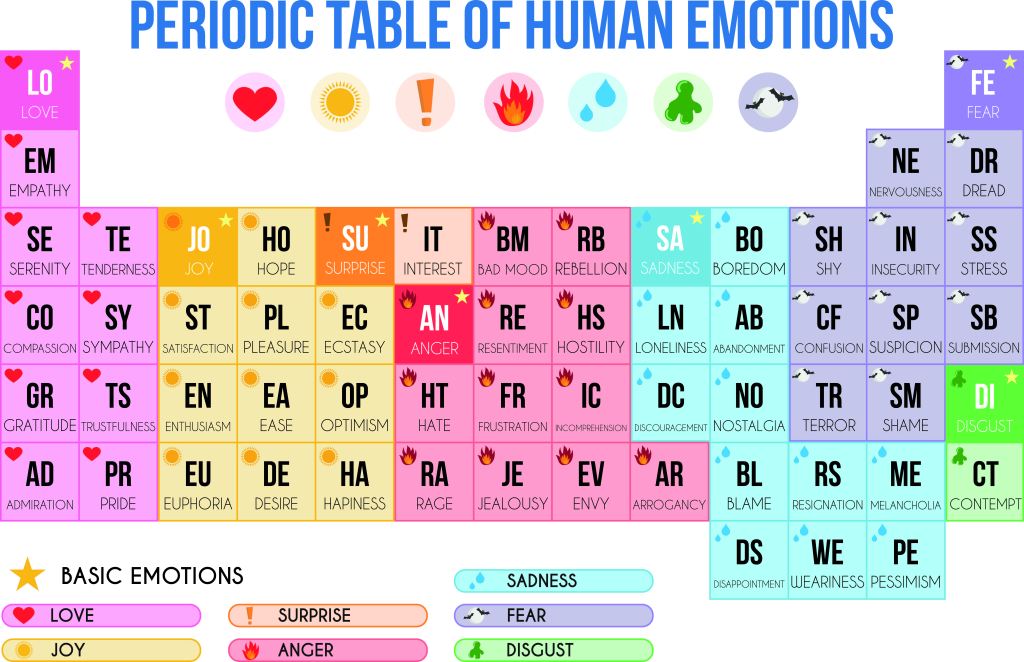
Every emotion has a basis in a situation and every situation has facts. When checking the facts, don’t use words like I feel or I believe and only state what is factually true. Let’s put this in the perspective of our examples:
Every emotion has a basis in a situation and every situation has facts. When checking the facts, don’t use words like I feel or I believe and only state what is factually true. Let’s put this in the perspective of our examples:
- We want a cool game and recognize that we’re complete shit as being diverse as gamers. We make a generalized post asking for new faces and a diverse cast for our next game. We don’t get any answers, so we fill the slots and run the game anyway.
A person of color, someone who the space was meant for, calls us on it. We get angry because we feel like we did everything possible to include others (although, as we discussed, making a space is a hugely different thing). We’re hurt and want to feel like we are the right ones. We think of letting people attack the person on our behalf as we focus on our pain at being called out for bias. If we checked the facts, we would find out the following.
- We wanted to run a diverse game.
- We put an all-call out.
- We did not specifically contact women or people of color.
- We ran the game, calling it diverse.
- Someone with personal experience advised us this was not a diverse game.
We keep breaking down the information until all we have is factual context. We do this even with our emotions, determining why we are angry and if our action is justified based on the anger. After we checked our facts, we realize that we’re hurt because our personal integrity was called into question, and we feel as though we are a bad person for being in the wrong.
We can’t be sure the person had any ill intent. They mostly likely just want us to meet our goals and want to explain how we can be better at representing diversity. Most of all, the person was right. We could have done more. That doesn’t necessarily make us wrong, and thus bad, though our self-bias tells us that. We made a mistake and we’re responsible for it, but we have no justification to perpetuate more anger and grief. No one victimized us. We just didn’t do our due diligence in something we thought we took all the steps in.
2. Someone kills our character. We’re angry, because we not only lost a huge investment of resources on our part, but we feel targeted out-of-character as a result of the string of attacks on our character. We feel like going on FB and vague-booking about it or calling out the people we feel hurt us. We think, because something bad happened to us, we are permitted to perpetuate that badness on those who we hold responsible.
Let’s check the facts.
- I am a person. My character is a construct.
- My character did something that offended someone else several months ago
- Other characters participated in vocal/physical/etc attacks, which culminated in my character’s death.
- I have not spoken with the attacker in a negative fashion out-of-character.
We are not our characters, but we do invest a portion of ourselves into the character, so it hurts when it gets attacked. Maybe we didn’t believe the offense was that big, either in character or out-of-character, but the other character did. We don’t know if the other person considered the reasons as frivolous as we did. We don’t know if that other person hated us out-of-character and targeted us in the only fashion they have available. We assume that we are the ones wronged because of personal bias, because it feels like this construct we created is a part of us, so the attack was on us. We are hurt, but our facts don’t point us at the other person, even if we want them to hurt as much as we do. We have no justified reason for our attack based on our facts.
And yes it’s a lot of work that’s on our shoulders to always break down information and handle our emotions appropriately, but think of this way: for a long time none of it was on our shoulders. We ignored the big pile of things we needed to do to dismantle. So now we have more work to do in a shorter period of time. We don’t get to pick away at it slowly anymore– that time has passed– we’ve got to throw our back into and just get it done. We don’t get to be the offended ones, the ones that are hurt, when someone points out we aren’t carrying our load or otherwise makes us examine ourselves.
We are responsible for recognizing our biases and handling them in an appropriate way. We are responsible for checking our facts against what our mind tells us, then being the people who address our feelings and actions, including making our own reparations to correct any damage we’ve done. We are responsible for checking that voice that fuels our emotions and tries to tell us we’re justified and determine if we really are. The very first thing we should tell ourselves is that we are responsible for our emotions, even if they are the result of something someone else did.
Yes. We’re all biased. Yes. We’re all responsible for dissecting and handling it maturely. And yes, maybe you’re wrong. But it’s okay– as long as you’re willing to shine a light on yourself and make yourself better.

 The Wuthering Cephalopod