Short Reviews

Welcome back! For those in the US, I hope you enjoyed the holiday, however you do or don’t celebrate it. Personally, we don’t celebrate the meaning so much as the opportunity to be together.

The household typically gets some additional days off, and we used to host a huge party the weekend after. The pandemic changed a lot of things for us, including our views on family/friendship and my partner’s introversion (he’s a 5-6 guest max person now). The party hasn’t happened in years. He also found his love of cooking during this time. We spend all day cooking with each other and occasionally the housemate and/or teen, invite a friend or two over, and then bemoan the huge amount of food we now have to eat over the next few days. This year was a traditional turkey, but in the past we’ve managed all sorts of experiments and first times. Thankfully, they’ve all turned out okay.

I skipped last week because of Turkey Day, and mulled over how I wanted to handle these shorter reviews in the future. Gods know my punctuation is doing all the heavy lifting to keep most of these to two sentences. They will still be short, but some may go longer or shorter depending on how I felt about the book, editing, or what I remember of it. I really should get to writing these while the memory is fresh, but it would cut into my reading time and that will not do.

Currently Reading: Blackwater by Michael McDowell
Wearing: Fox in the Flowerbed by Imaginary Authors. This is a hothouse floral perfume: overwhelming and heady when you first put it on, like walking into an estate greenhouse as everything is blooming. The jasmine sticks around, but eventually becomes powdery and more acceptable for something like a late night ball and ::gasp:: ankle showing. It’s one of the most traditional perfumes in their collection, which is appropriate for the Regency Era and some rich, catty, New York bitches.
Cover of Persuasion by Jane Austen. Grey-blue cover with floral border that has anchors in it. Sailing ship on pedestal in middle

Persuasion by Jane Austen*: 4. Anne Elliot was convinced as a young woman to break off her engagement to Captain Wentworth, and now it’s a decade later and he’s back— romance, shenanigans, misunderstandings! I actually liked this better than Pride and Prejudice, but it could be because the other story has been beaten to death in my mind.

Cover of Mansfield Park by Jane Austen. Light Yellow cover with image done in sampler embroidery style of estate and trees, along with floral motifs.

Mansfield Park by Jane Austen: 4.  Fanny is poor with a million brothers and sisters, so her aunt’s family is magnanimous to take her in since they need someone to look down on. As she grows up, she experiences angst over her cousin’s lack of interest in her, despite a rich lothario being so into her he’s willing to redeem his wicked ways. God, I even created a map for this one and I don’t remember much of it. Austen is meant to be read in between other books, so maybe I can remember shit.
The cover of Answered Prayers by Truman Capote. Pale green cover with a red matchbook on it. The matchbook says La Cote Basque. It has two burnt matches beside it.

Answered Prayers by Truman Capote: 3.5: The narrator, a queer escort who services high society women, reveals information about the social circles he runs in and the women he meets. It’s more than a little based on Capote’s real life relationships with wealthy socialites, and the novel was abandoned after the third chapter made its way to the press, because, man, Capote skewered the women he was benefiting from. Then again, with that kind of money, maybe they could have been pulled back and made 100% bitchy asshole less of their personalities.

*I’m on a bit of a Jane Austen kick and doing some mapping work on the books. I want to map out the locations mentioned, find historical images of different types of dwellings, houses, fashions, etc, and put together a visual guide for each of the books at some point. I brought in things that were adjacent, like Gaskell’s book and other historical romances. You know the plot: plucky heroine, class politics, and steamy hand brushing. Surprisingly enough, this kind of stuff is useful for writing horror.

Two Sentence Reviews

Currently Reading: Exquisite Corpse by Poppy Z. Brite
Wearing: Nightflyer by Olympic Orchids Perfume. We’re dealing with a number of corpses this week, and this smells like the “good” dirt after a rainy day: primal, freshly turned, and— just shy of sickly— sweet and floral. It fades into more of the mineral notes, a little salty and musky. I don’t know if I would wear it out and about unless I waited until the initial sweetness faded or layered it something to turn that note a little less… fecund. Still, I love smelling like a bog witch getting a good burial done, and it’s perfect for a fall or spring day layered in-between skin, sweaters, and blankets while reading some PNW murder mystery.

Cover of The Return. Neon pink cover showing chair in hallway with shadow of woman over it.

The Return by Rachel Harrison: 3. Elise’s best friend disappears during a hiking trip, and she spends two years wishing for her back; when Julie finally makes her return, something wrong has happened to her, and it’s only exacerbated by the getaway the group of friends has to celebrate the miracle of her survival. I think I would get the hell out of dodge after the first couple of issues, as the book is red flag central and Elise being all “Nah, fam, I got this.” She did not have this.

Cover of Bones in the Basement. Blood dripping down black cover with skull superimposed over Victorian house.

Bones in the Basement by Joni Mayhan: 3ish. A first hand account of the hauntings at the S.K. Pierce mansion from previous home owners. I’m not even sure how you rate books like these: the writing wasn’t a complete mess, and it’s a decent resource book for writing things that go bump in the night.

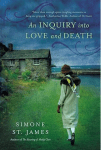
Cover of An Inquiry Into Love and Death. Woman in post-WWI dress walking toward cottage.

An Inquiry into Love and Death by Simone St. James**: 3. A young woman leaves her privileged women’s college and travels to the small town her uncle died in to handle his affairs, chase ghosts and nazis, and bone down detectives. It’s very typical, which means it wasn’t not enjoyable, but it wasn’t anything I would get excited and nerd dump about.

**From what I’ve read of Simone St. James, she blends the beats of crime mystery with a supernatural force in every book. Best of both worlds if you’re a true crime lover who just wants a ghost to pop up and testify now and then.

Two Sentence Reviews (sometimes!)

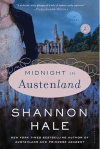
Cover of Midnight in Austenland. Woman in regency dress standing in front of regency manner.

Midnight in Austenland by Shannon Hale: 3. Suffering from the sting of her husband’s infidelity, their divorce, and his quick remarriage to his mistress, Charlotte runs off to a Jane Austen theme park (just a mansion and grounds with actors, really) to become a regency lady and find some fake love; unfortunately, there is a murder. It was fun, and a break between some longer Austen things I was (and will be reading) even if it wasn’t some funny and poignant regency commentary.

Cover of Daisy Jones & the Six. Picture of woman from neck up surrounded by red hair.

Daisy Jones and the Six by Taylor Jenkins Reid: 3.5: Billy Dunne and his band The Six really want to make it big, and Daisy is a talented and gorgeous song writer; the story loosely follows the volatile band dynamics as they negotiate love, anger, passion, and attraction. It’s very loosely based on the drama that was Fleetwood Mac and the oral history format makes it like reading an— admittedly long— Rolling Stones story.

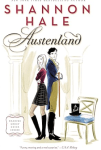
Cover of Austenland. Woman in modern dress standing back-to-back with man in Regency dress.

Austenland by Shannon Hale: 3. Jane is obsessed with the Regency era and takes a trip to a special theme park where even real life resembles a Jane Austen book, so she gets it on (and on and on). I had read this after the sequel, which was the more interesting book as a murder mystery; it’s a standard romance using the Austen-trappings in a faux fairy-tale setting, but add some illicit and very naughty sex (even ankles were shown) to spice it up.

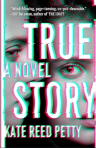
Cover of True Story with magenta/turquoise lines to make it look like image meant to be viewed through 3-D glasses.

True Story by Kate Reed Perry: 3. A teenager has a blackout, and the trauma of what did or did not occur in that moment, and what other people make of it, haunts this teenager into adulthood as she tries to navigate how the truth is formed and what it means. I liked the idea of how we can fill in moments with information that’s just as traumatic as the action itself— how lack of knowing means anything can take its place.

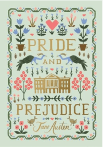
Cover of Pride and Prejudice. Simple art that looks like embroidery sampler.

Pride and Prejudice by Jane Austen*: 4. Lizzy is a firebrand and Mr. Darcy has 10k pounds per year; hilarity ensues. I think we all know most of these stories by now and Austen is nothing if not formulaic, even in one of her most well known novels; it’s funny and what you would expect from regency romance while giving a bird’s eye view into the social politics of the time.

Two Sentence (Sometimes) Reviews

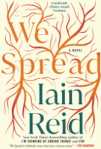
Cover of We Spread by Iain Reid, cream cover with letters of title branching out like trees or blood vessels.

We Spread by Iain Reid: 3.5. An elderly woman becomes untethered to the world she knows when her partner dies and, she can no longer live on her own; in her new, special, nursing home she becomes the artist she once was, but at some cost she can’t define. It is beautifully written, even if I think there’s something off about the conclusion, and like the previous book, you have to pay attention to every detail.

Cover of Hester by Laurie Lico Albanese. Black cover with pink roses and green leaves.

Hester by Laurie Lico Albanese: 3. This retelling of the Scarlet Letter, but if Hester was a real woman (in this case, a talented seamstress and maybe witch) and Hawthorn was, ultimately, a fuckboy. It didn’t have me hanging on the edge of my seat, and there was a bit of magical negro nonsense, but it was mostly an okay read.

Cover of Wives and Daughters by Elizabeth Gaskell. Oil style paiting of house in countryside.

Wives and Daughters by Elizabeth Gaskell*: 3.5. Molly is a physician’s daughter in ye oldie times, and has to go through the tribulations of her father’s second marriage, her step-sister stealing her love interest, and a rumor mill trying to ruin her reputation by romantically associating her with a creep of a man. It’s what I expected from this type of book, and I actually enjoyed a peek into the non-regency (wrong time) politics and social scene in a project otherwise full of it.

*I’m on a bit of a Jane Austen kick and doing some mapping work on the books, but it also meant I brought in things that were adjacent, like Gaskell’s book and other historical romances. You know the plot: plucky heroine, class politics, and steamy hand brushing. Surprisingly enough, this kind of stuff is useful for writing horror.
Alma Katsu’s The Hunger and The Deep

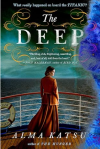
The cover of The Deep by Alma Katsu. Woman in orange edwardian dress standing on deck of the Titanic

History is fickle. We all know that, right? That the “facts” in our historical recollections at best belong to survivors of an event, in the middle belong to those relying on recollections and their own perceptions and observations, and at worst to those who achieved victory and rewrite their struggles to turn them into heroes. It’s all got some modicum of storytelling and fiction. Alma Katsu seizes this whole concept and then runs off with it to create some paranormal shenanigans.

To be transparent: I stumbled upon Alma Katsu’s books by accident. I had meant to check out Nick Cutter’s book The Deep, but when you mix the library app with sleep meds, you get what you get and you don’t throw a fit. So, I ended up with a book by Katsu.

The Deep is about the Titanic and the Brittannic in two timelines involving, relatively, the same people. The beginning of the book starts with a letter from a father to a sanitorium regarding his missing daughter, Annie Hebley. The doctor, in a rare moment for a physician at the beginning of the century, decides to leave the question unanswered out of respect for the patient’s privacy. Annie has been his patient for years, even though no one thinks anything is wrong with her. Her call to action is a letter from an old friend, one she met on the Titanic, regarding a position of a nurse aboard the once sister of the doomed ship, the Britannic. Encouraged by the hospital, she takes the position. 

From there, the timeline switches between the Titanic and the Britannic. Annie, a servant to the first class on the Titanic, integrates herself with the culture and spiritualist conjecture of the rich, becoming entangled within their affairs and fearing their talk of spiritual possession. She also meets the husband of a wealthy woman and creeps on him for a bit, while everything else melts down on the ship and the inevitable happens.

That’s pretty much what happens on the Britannic as well. The man, who Annie was sure died on the Titanic, shows up as a wounded soldier on her new boat and having learned zero manners in the years since the disaster, she creeps on him some more and tells him of all the sexy things they did together. Of course, he remembers none of it. There’s a whole reason for it, and we already know the Britannic sank too. Chick is 0/2.

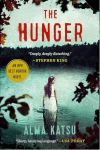
The cover of The Hunger by Alma Katsu. A young woman in period undergarments standing in the middle of a lake.

The Hunger also deals with a historical event, the Donner Party. I don’t think I have to rehash 90% of that. People go west. Rich people make poor leadership decisions. They get caught in the snow and start eating each other because long pork is better than dying of starvation. Except this time, the party is being pursued by something that likes eating everything below the skull of little kids, some people are acting bizarre and attacking others, and some of the more prominent historical figures (Tamsen Donner) may be witches or psychics or mediums or whatever.

I feel like I should like these books. I like history. I like ghosts. Hell, I even like the whole mysterious, possible-cryptid eating people. And yet, there’s something a little too precious for me in her writing, even as she describes cannibalism and vengeful spirits. And maybe I’ll still read her other stuff, because I have a morbid fascination with confirmation of trends and an abiding love of being happily surprised. It’s why I did a deepdive into Hester Fox, and despite never finding a deep appreciation for Fox’s work, I at least settled into a familiarity with it.  I know I’ll pick up her newish one about the internment camps, even if her romantic-specific historic peeps-paranormal is kind of a little too…prissy? For me, at least, though I recognize that it’s a viable style and format for a lot of other readers so I still want to support the work.

Would I Read it Again?: No. The style isn’t my jam. I (probably) keep throwing myself at whatever else she publishes, but I don’t think I’ll be doing any rereads of old material.

Rating: A solid 3, and The Hunger pulled The Deep kicking and screaming there. Like I said, this is definitely for somebody, and it’s okay for whoever that person is. I have some weird issues around rewriting actual events, especially when they were such awful tragedies for those involved, but that’s my spider-filled brain trying to wrap itself around historical theory and how malleable it can be in fiction.

Two Sentence Book Reviews

I’m at least 50% back on my shit. Which means after a long period of sleeping a lot and trying to manage my chronic health issues, I’m reading and writing again. Unfortunately, while I was off both of those, I was still adding books to my to-read list. I’m Sisyphus on Everest at this point.

Cover of All the Murmuring Bones, dark blue with mermaid tail.

All the Murmuring Bones by A.G. Slatter: 3.5. Bound to the sea, the heroine’s family has seen their once-promised wealth dwindle, and she’s not willing to be the bargaining chip they exchange to regain their status. It’s a predictable but okay variation on the gothic horror trope; the world-building, however, was exceedingly good.

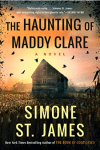
The cover of The Haunting of Maddy Clare. Farm house in corn field.

The Haunting of Maddy Clair by Simone St. James***: 3. A ghost with a very poor history with men throws shit around and possesses people until they promise to find out what really happened to her. This was one of the first things I read from St. James, and it’s really just okay— there are some problematic elements— in comparison to the later stuff.

Cover of Yerba Buena. Illustrated cocktail and flower arrangement on green background.

Yerba Buena by Nina Lacour**: 3.5. Named after the “good herb” one character uses in her bartending, this is a story of two women struggling with the fall out of addiction, including the mysterious childhood death of the bartender’s best friend, while also falling in love with each other. Despite the emphasis on trauma, this really is a sweet love story that feels a little dreamy.

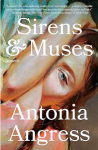
Cover of Sirens and Muses. Classical-style painting of woman in bedsheets.

Sirens and Muses by Antonia Angress**: 3.5  Four artists, each of them struggling with what the meaning of art is in a world of commercialism, fall in and out of each other’s orbits. The ending was just a bit… I felt like I wanted more or less, so it was very Goldilocks with no perfect solution.

Cover of House of Hunger. Woman with red dress and black choker.

House of Hunger by Alexis Henderson: 3. In a society where the rich use the literal blood of their peasants to feed and bathe themselves, mystery and a sapphic love affair blooms between the drinkee— a bloodmaid— and her rich mistress. It’s a queer take on Bathory mythology, and I gave bonus points for that despite now it seems the plot never gels.

**There was a meme going around that listed a series of Lesbian/Queer novels for every mood. I read every one of them, except for Salt Fish Girl as I had to order a hard copy. I replaced it with a novel, The Tiger Flu, from the same author which was also focused on queer relationships.

***From what I’ve read of Simone St. James, she blends the beats of crime mystery with a supernatural force in every book. Best of both worlds if you’re a true crime lover who just wants a ghost to pop up and testify now and then. 


Two Sentence-ish Sometimes-Horror Reviews

Cover of Paradise Rot: black with various plants and flowers.

Paradise Rot** by Jenny Hval: 3. I’ll be quite honest: I’m still not sure what happened in this book, beyond a young woman moving into an apartment (with another woman); both her environment and her roommate slowly become enveloped by vegetation, a lush and rotting Eden of bodily functions, desire, and connection. I think I would like it better untranslated, because it’s very much not a linear story so much as an evolution.

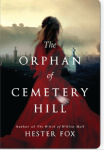
Cover of "The Orphan of Cemetery Hill." Woman in red, historical dress from behind, overlooking graveyard and church.

The Orphan at Cemetery Hill by Hester Fox*: 3. An honest-to-God medium, Tabby ran away from a life of exploitation to live in a cemetery where she has all the friends she could want, only for a rich boy and a bunch of graverobbers throw a wrench in her plan. It’s not bad, but not really a mystery so much as trying to capture the actual bad guy in escalating Scooby Doo situations.

Cover of "How to be a Tudor." Back cover with red writing, thorny vines, and Tudor rose on it.

How to Be a Tudor by Ruth Goodman: 4.5. This book goes over the day-to-next day life of a person living in England during the Tudor time period, including things like routines, how life changes based on income levels, and what people would have eaten and enjoyed as entertainment. I think this, along with How to be a Victorian, are required reading for historical fiction set in the named period, because it provides some lived-in experiences as well as references from history.

Cover of "Ghost 19." Black and white inverted photo of window with curtain draped to side and vase of flowers.

Ghost 19 by Simone St. James***: 3. An actress escapes the city to recoup after some mental exhaustion, losing herself in the neighbours’ lives; meanwhile, something lurks in the basement, and she slowly finds her life limited not only to the house, but to fewer and fewer rooms within the house. It’s an okay short mystery, focusing on the influence of how deteriorating mental health is burdened even more by a haunting.

Cover of "The Little Stranger." desaturated image of palatial estate in front of bright yellow sky.

The Little Stranger by Sarah Waters: 3. A nostalgic physician returns to a house he loved as a child, to a once-rich family that has disintegrated in the years since he left. He loses himself in those memories— the house, his ideals and both of their ghosts— over the people who need him. I know Sarah Waters more for her queer-focused books, and I just enjoyed “Tipping the Velvet” and “The Fingersmith” (which was the better mystery by far) much more.

*All of Hester Fox’s work that I’ve read focuses on a heroine during a specific time period (which varies but is always “Gothic” in tone). The protagonist is usually an outcast for some reason, and public opinion of her is not very high. There’s also a romance, and so far it’s all been with males who have a reason to be an insider. The ending is always at least sorta happy. Add some dark secrets and mix liberally with elements of the supernatural.

**There was a meme going around that listed a series of Lesbian/Queer novels for every mood. I read every one of them, except for Salt Fish Girl as I had to order a hard copy. I replaced it with a novel, The Tiger Flu, from the same author which was also focused on queer relationships.

***From what I’ve read of Simone St. James, she blends the beats of crime mystery with a supernatural force in every book. Best of both worlds if you’re a true crime lover who just wants a ghost to pop up and testify now and then.

Two Sentence-ish Sometimes-Horror Reviews

Cover of "Miseducation of Cameron Post." Zoomed out shot of girl wearing cowboy boots sprawled over rolled hay.

Miseducation of Cameron Post by Emily M. Danforth**: 4. A coming-of-age story through a queer lens, as Cameron— expert swimmer, not so expert at hiding her desires— falls in-love with her best friend and betrayed by her, ending up in a conversion camp. This feels like a good story for teenagers to see queer people in their many different forms keep the cores of their beings intact.

The cover of "The Widow at Pale Harbor." Zoomed-out shot of woman in read cloak walking through fog in front of a mansion.

The Widow of Pale Harbor by Hester Fox*: 3.5. She’s a possible witch who was married to and widowed by the town patriarch; he’s a wanna-be preacher with a dead wife and baby. Together, they fight crime. It was a lot of fun, and I think anyone looking for romance and mystery will enjoy it.

Cover of "Cantoras." Coastal rocks with waves breaking over them.

Cantoras by Carolina De Robertis**: 4. Several lesbians find a retreat by the sea in a regime-led Uruguay, and this story follows their lives as they choose wisely, poorly, and even tragically in cases of love, oppression, and freedom; Cantoras means singers in Spanish. I enjoyed realistic and flawed characters who wanted to be the best version of themselves, but struggle with what that means.

The cover of "A Lullaby of Witches." Golden clock tower of top of mansion home against teal flowered background.

A Lullaby of Witches by Hester Fox*: 3. Two witches are drawn together from across the centuries, connected by a common bloodline; but what does the ghost really want from the descendent of flesh and bone: just to be remembered or something more? It’s slightly less gothic than its predecessors due to a modern protagonist, and it’s an okay story and romance with a predictable ending.

Cover of "Strange Creatures." Upside down picture of gold-tinted  grass and trees. The shadows of two children holding hands over this image.

Strange Creatures by Phoebe North**: 3.  A young woman recreates and loses herself the fantasy world she once shared with her missing brother; reality and fantasy become one as she explores her feelings, including those about the girl her brother used to date. A lot of people like this book, and the themes of damage as this exponential force and the desire for a fantasy often resonate with me as well. This just didn’t catch me like that, even if textually sound.

*All of Hester Fox’s work that I’ve read focuses on a heroine during a specific time period (which varies but is always “Gothic” in tone). The protagonist is usually an outcast for some reason, and public opinion of her is not very high. There’s also a romance, and so far it’s all been with males who have a reason to be an insider. The ending is always at least sorta happy. Add some dark secrets and mix liberally with elements of the supernatural.

**There was a meme going around that listed a series of Lesbian/Queer novels for every mood. I read every one of them, except for Salt Fish Girl as I had to order a hard copy. I replaced it with a novel, The Tiger Flu, from the same author which was also focused on queer relationships.

Two Sentence-ish Sometimes-Horror Reviews (Part 3)

I’ve been writing reviews for a month or so now and have yet to get out of my December reading. In an effort to catch up. I’m just going to do a batches of one or two sentence reviews. Given that I read two-three books a week, I’d otherwise just be a skeleton typing things 400 years from now like some Muir protagonist.

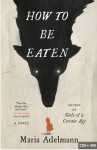
Cover of "How to be Eaten." Black wolf head coming from top of book toward little girl outline in red.

How to Be Eaten by Maria Adelmann: 4. No one emerges unscathed, even those in fairy tales; what happens to those women when the story is over, in a world where public opinion and social media are just as destructive as any evil queen? Four women come together to tell the stories that made them from their viewpoint as trauma group therapy for each of them. These were brilliant retellings with a bit of emphasis on what happens when the happy story is just another bit of fiction.

Cover of "The Tiger Flu." Illustrated tiger in center of brown, orange, black, and neutral mosaic.

The Tiger Flu by Larissa Rai**: 4. One person seeks a new starfish— a young woman who can regenerate any portion of her body to provide spare body parts— after her lover, the only remaining starfish in her tribe, dies from the flu. Lai does well with character voice, narrating the point of view with different words, structures, and tones to differentiate who is telling the story, and I’m looking forward to Salt Fish Girl.

Cover of "Mostly Dead Things." Lime green cover with pink, illustrated flamingo on it.

Mostly Dead Things** by Kristen Arnett: 2.5. After Jessa-Lynn’s father commits suicide, her mother goes off the rails and her brother’s wife— and maybe Jessa-Lynn’s one true love— abandons him as well; then there’s that pesky art curator who just keeps encouraging…. Nonsense. I wanted to like this more, with all the dead things and queer love (and it does have some black humor I enjoyed), but it just never hits quite right with its plot or characters.

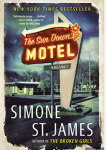
Cover of "The Sun Down Motel" Cover in shades of blue with red, retro-styled motel sign.

The Sundown Motel by Simone St. James***: 3. After her aunt disappears from a motel under mysterious circumstances, Carly moves to the same town and works at the same place only to find ghosts the building— and a serial killer— have left behind. It’s solid, though the plot telegraphs from a mile away and just needs a true crime podcaster to put the few missing clues together.

Cover of "Dogs of Summer." Red and light blue cover with image of two girls hugging in center.

Dogs of Summer by Andrea Abreu**: 3. A coming of age tale between two adolescent girls on the Canary Islands, it’s a story that focuses on how all those things at that age have a measure of the grotesque, especially attraction. I think the story loses a lot in the language translation, although the narrator does sound like the almost obsessive 10 year old girl she is. 

**There was a meme going around that listed a series of Lesbian/Queer novels for every mood. I read every one of them, except for Salt Fish Girl as I had to order a hard copy. I replaced it with a novel, The Tiger Flu, from the same author which was also featured queer relationships.

***From what I’ve read of Simone St. James, she blends the beats of crime mystery with a supernatural force in every book. Best of both worlds if you’re a true crime lover who just wants a ghost to pop up and testify now and then. 

Rebecca Serle’s “One Italian Summer”

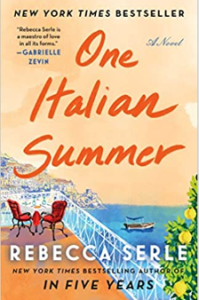
Cover of "One Italian Summer." Brightly colored balcony overlooking bright blue water.

Okay. I admit. I cried at this one.

I can only defend myself by describing my environment while I was reading: South Carolina, my mom’s house, the holidays. To say I have a complicated relationship with my parents, family, and heritage is probably the only time I won’t speak with flamboyantly flourished— do you know I couldn’t find a single word meaning language that starts with an F (words)? Anyway, when reading a book about complicated relationships while engaging with complicated relationships, even the best fall.

Katy begins the books with loss. Her mother, Carol— who she considers her soulmate and true love beyond all other relationships— has died. This leaves her bereft, to the point that she leaves her lukewarm husband to go on the Italy trip they planned before Carol’s death by cancer. 

Katy’s mother had taken this trip to Italy in her own youth, and Katy plans to visit locations her mother described from her trips. Somehow, she finds out she’s not quite sure when she is, as she sees her mother as a young woman, recognizing her from old photographs. From there, it deals with things like loss, changing views of those we love and put on a pedestal, and charting a life worth living for oneself.

I wouldn’t call this a light read, despite being a romance. It’s not the deepest and darkest topic ever, but it deals with common ones that hit close to home. It requires a modest amount of reading comprehension, but delivers a cathartic cry if you even remotely had a maternal figure.

Would I Read it Again?: Nah. It’s at a high school level, reading  smoothly even when dealing with the previous generation’s issues. I also disliked the ending because it seemed a little too regressive based on what I previously read about the character.

Rating: A 3. A solid, if not entirely innovative, story that delivers on the feels. Add a +.5 if that type of romance is your jam or don’t, because the ending is kind of frustrating if you thought the whole book was supposed to be an invitation to adventure.