Two Sentence (Sometimes) Reviews

Cover of We Spread by Iain Reid, cream cover with letters of title branching out like trees or blood vessels.

We Spread by Iain Reid: 3.5. An elderly woman becomes untethered to the world she knows when her partner dies and, she can no longer live on her own; in her new, special, nursing home she becomes the artist she once was, but at some cost she can’t define. It is beautifully written, even if I think there’s something off about the conclusion, and like the previous book, you have to pay attention to every detail.

Cover of Hester by Laurie Lico Albanese. Black cover with pink roses and green leaves.

Hester by Laurie Lico Albanese: 3. This retelling of the Scarlet Letter, but if Hester was a real woman (in this case, a talented seamstress and maybe witch) and Hawthorn was, ultimately, a fuckboy. It didn’t have me hanging on the edge of my seat, and there was a bit of magical negro nonsense, but it was mostly an okay read.

Cover of Wives and Daughters by Elizabeth Gaskell. Oil style paiting of house in countryside.

Wives and Daughters by Elizabeth Gaskell*: 3.5. Molly is a physician’s daughter in ye oldie times, and has to go through the tribulations of her father’s second marriage, her step-sister stealing her love interest, and a rumor mill trying to ruin her reputation by romantically associating her with a creep of a man. It’s what I expected from this type of book, and I actually enjoyed a peek into the non-regency (wrong time) politics and social scene in a project otherwise full of it.

*I’m on a bit of a Jane Austen kick and doing some mapping work on the books, but it also meant I brought in things that were adjacent, like Gaskell’s book and other historical romances. You know the plot: plucky heroine, class politics, and steamy hand brushing. Surprisingly enough, this kind of stuff is useful for writing horror.

Two Sentence Reviews

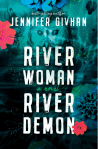
Cover of River Woman, River Demon. Turquoise abstract cover with non-abstract flowers.

River Woman, River Demon by Jennifer Givhan: 3. A traumatized woman must deal with her friend’s murder, her husband’s arrest for said murder, and her ex being back in town while also being magical. I had not remembered much about this book, so had to look it up; I remember having weird plot concerns, but it was a standard horror read.

Cover of Thistlefoot, woodcutting stle cover with house on chicken legs alongside two siblings and city street.

Thistlefoot by GennaRose Nethercott: 4. Siblings inherit two things from their distant relatives: a house on chicken legs and an unrelenting horror created and forged in the fires of past atrocities. I found this entire story to be just the right balance of humor, horror, and charm, and just the perfect fairy tale for a winter night (when is how far behind I am).

Cover of I'm Thinking of Ending Things. Photograph of car by street lamp in trees, all covered by snow.

I’m Thinking of Ending Things by Iain Reid: 3.5. During a trip to visit her boyfriend’s parents, a woman contemplates ending the relationship, but as her feelings break down about her partner, weird things and coincidences start happening. I liked it, even if it required a lot of going back and rereading things for me, because every detail mattered in this “everything is not as it seems” story; just keep that in mind for your own read through.

Alma Katsu’s The Hunger and The Deep

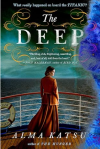
The cover of The Deep by Alma Katsu. Woman in orange edwardian dress standing on deck of the Titanic

History is fickle. We all know that, right? That the “facts” in our historical recollections at best belong to survivors of an event, in the middle belong to those relying on recollections and their own perceptions and observations, and at worst to those who achieved victory and rewrite their struggles to turn them into heroes. It’s all got some modicum of storytelling and fiction. Alma Katsu seizes this whole concept and then runs off with it to create some paranormal shenanigans.

To be transparent: I stumbled upon Alma Katsu’s books by accident. I had meant to check out Nick Cutter’s book The Deep, but when you mix the library app with sleep meds, you get what you get and you don’t throw a fit. So, I ended up with a book by Katsu.

The Deep is about the Titanic and the Brittannic in two timelines involving, relatively, the same people. The beginning of the book starts with a letter from a father to a sanitorium regarding his missing daughter, Annie Hebley. The doctor, in a rare moment for a physician at the beginning of the century, decides to leave the question unanswered out of respect for the patient’s privacy. Annie has been his patient for years, even though no one thinks anything is wrong with her. Her call to action is a letter from an old friend, one she met on the Titanic, regarding a position of a nurse aboard the once sister of the doomed ship, the Britannic. Encouraged by the hospital, she takes the position. 

From there, the timeline switches between the Titanic and the Britannic. Annie, a servant to the first class on the Titanic, integrates herself with the culture and spiritualist conjecture of the rich, becoming entangled within their affairs and fearing their talk of spiritual possession. She also meets the husband of a wealthy woman and creeps on him for a bit, while everything else melts down on the ship and the inevitable happens.

That’s pretty much what happens on the Britannic as well. The man, who Annie was sure died on the Titanic, shows up as a wounded soldier on her new boat and having learned zero manners in the years since the disaster, she creeps on him some more and tells him of all the sexy things they did together. Of course, he remembers none of it. There’s a whole reason for it, and we already know the Britannic sank too. Chick is 0/2.

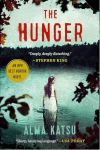
The cover of The Hunger by Alma Katsu. A young woman in period undergarments standing in the middle of a lake.

The Hunger also deals with a historical event, the Donner Party. I don’t think I have to rehash 90% of that. People go west. Rich people make poor leadership decisions. They get caught in the snow and start eating each other because long pork is better than dying of starvation. Except this time, the party is being pursued by something that likes eating everything below the skull of little kids, some people are acting bizarre and attacking others, and some of the more prominent historical figures (Tamsen Donner) may be witches or psychics or mediums or whatever.

I feel like I should like these books. I like history. I like ghosts. Hell, I even like the whole mysterious, possible-cryptid eating people. And yet, there’s something a little too precious for me in her writing, even as she describes cannibalism and vengeful spirits. And maybe I’ll still read her other stuff, because I have a morbid fascination with confirmation of trends and an abiding love of being happily surprised. It’s why I did a deepdive into Hester Fox, and despite never finding a deep appreciation for Fox’s work, I at least settled into a familiarity with it.  I know I’ll pick up her newish one about the internment camps, even if her romantic-specific historic peeps-paranormal is kind of a little too…prissy? For me, at least, though I recognize that it’s a viable style and format for a lot of other readers so I still want to support the work.

Would I Read it Again?: No. The style isn’t my jam. I (probably) keep throwing myself at whatever else she publishes, but I don’t think I’ll be doing any rereads of old material.

Rating: A solid 3, and The Hunger pulled The Deep kicking and screaming there. Like I said, this is definitely for somebody, and it’s okay for whoever that person is. I have some weird issues around rewriting actual events, especially when they were such awful tragedies for those involved, but that’s my spider-filled brain trying to wrap itself around historical theory and how malleable it can be in fiction.

Two Sentence Reviews

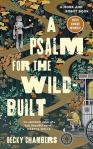
Cover of A Psalm for the Wild-Built; monk having tea in tea cart in bottom right corner, robot in top left. Road surrounded with flowers winding between them.

A Psalm for the Wild-Built by Becky Chambers: 4.5. Dex, a tea monk, seeks meaning and purpose from a life that always seems slightly off; they leave their known world, meet up with a robot, and make you ask more existential questions than such a quaint feeling novella should. I didn’t think I would like this book when I first started reading it, but I absolutely loved it in the end.

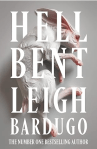
Cover of Hellbent, Wet and possibly dead white rabbit with red eyes in fetal position against gray background.

Hellbent by Leigh Bardugo: 3.5. Galaxy Stern can see and speak to the dead, and managed to send her would-be boyfriend to hell; now, she has a gentleman demon, a plot against her beloved Yale secret society, and an open portal to hell somewhere, OMG. I enjoyed The Ninth House, despite some concerns about a few of the plot points, and this hits the same spot of being entertaining while not dragging itself down in complicated side quest prose.

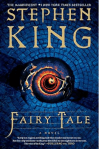
Cover of Fairy Tale. Boy holding lantern beside dog, looking down a well.

Fairy Tale by Stephen King: 1. Boy meets old man and dog, old man has lots of gold from a secret kingdom under his shed, boy enters kingdom, and boy saves it. Man, I couldn’t even dedicate a long entry to this since I hated it so much; it’s tropey BS with a white, male saviour, and I hoped it was satire when he only became whiter and more saviour-y, but I’m just not sure about anything anymore in this upside down world.

Two Sentence Book Reviews

The TL;DR for the past two weeks:

Respiratory Infection: 1
Me: 0

Cover of Road of Bones. Above view of winding highway entering frozen woods.

Road of Bones by Christopher Golden: 3.5. While making a documentary about ghosts on the Kolyma Highway— a Siberian highway built by people whose same bones form its foundation the process of creating it— Teig and his filmographer buddy travel to the northernmost point and spend the rest of the book running away from what they find there and its manifestations within their immediate circle. The middle part, the part that’s supposed to be the exciting chase, drags on a bit since there’s only so much of “bad shit is coming for us right now” a person can take before you want an actual climax; however, it’s an interesting take with a basis in folklore rather than a haunting.

Cover of No One Gets Out Alive. Front view of decyaing woman from throat to nose.

No One Gets Out Alive by Adam Nevill: 3.5. Our heroine is down on her luck, especially when it comes to boarding houses with more than one murder, a crazy god in the basement, and her male neighbours just being utter creepers. I had watched the movie, which does hit differently due to its focus on the diaspora of immigrants, the themes of old gods doing brutal shit holds true; the ending on this was on par with The Reddening for me and the building tension of random weird shit happening fit Nevill’s slapdashing-creepy-shit-everywhere style more than a lot of his stories do. 

Cover of The Book Eaters. Images cout out of book pages of woman and child approaching cut out of house.

The Book Eaters by Sunyi Dean: 4. Devon is a rarity in her world, a female book eater— a species that absorbs knowledge through eating books— and she’s passed around accordingly as a broodmare, at least until she gives birth to a son who doesn’t consume pages, but brains, memories, and personalities; past trauma leads her on a quest to save her tiny serial killer child from the rest of her “family.” This wasn’t a super complicated story in terms of language, but it’s a novel approach on vampirism and the obtainment of knowledge, whether humane or brutal; man, though, it gets an extra point just for world building as that’s where it really shined.

Two Sentence Book Reviews

I’m at least 50% back on my shit. Which means after a long period of sleeping a lot and trying to manage my chronic health issues, I’m reading and writing again. Unfortunately, while I was off both of those, I was still adding books to my to-read list. I’m Sisyphus on Everest at this point.

Cover of All the Murmuring Bones, dark blue with mermaid tail.

All the Murmuring Bones by A.G. Slatter: 3.5. Bound to the sea, the heroine’s family has seen their once-promised wealth dwindle, and she’s not willing to be the bargaining chip they exchange to regain their status. It’s a predictable but okay variation on the gothic horror trope; the world-building, however, was exceedingly good.

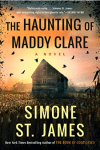
The cover of The Haunting of Maddy Clare. Farm house in corn field.

The Haunting of Maddy Clair by Simone St. James***: 3. A ghost with a very poor history with men throws shit around and possesses people until they promise to find out what really happened to her. This was one of the first things I read from St. James, and it’s really just okay— there are some problematic elements— in comparison to the later stuff.

Cover of Yerba Buena. Illustrated cocktail and flower arrangement on green background.

Yerba Buena by Nina Lacour**: 3.5. Named after the “good herb” one character uses in her bartending, this is a story of two women struggling with the fall out of addiction, including the mysterious childhood death of the bartender’s best friend, while also falling in love with each other. Despite the emphasis on trauma, this really is a sweet love story that feels a little dreamy.

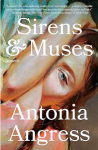
Cover of Sirens and Muses. Classical-style painting of woman in bedsheets.

Sirens and Muses by Antonia Angress**: 3.5  Four artists, each of them struggling with what the meaning of art is in a world of commercialism, fall in and out of each other’s orbits. The ending was just a bit… I felt like I wanted more or less, so it was very Goldilocks with no perfect solution.

Cover of House of Hunger. Woman with red dress and black choker.

House of Hunger by Alexis Henderson: 3. In a society where the rich use the literal blood of their peasants to feed and bathe themselves, mystery and a sapphic love affair blooms between the drinkee— a bloodmaid— and her rich mistress. It’s a queer take on Bathory mythology, and I gave bonus points for that despite now it seems the plot never gels.

**There was a meme going around that listed a series of Lesbian/Queer novels for every mood. I read every one of them, except for Salt Fish Girl as I had to order a hard copy. I replaced it with a novel, The Tiger Flu, from the same author which was also focused on queer relationships.

***From what I’ve read of Simone St. James, she blends the beats of crime mystery with a supernatural force in every book. Best of both worlds if you’re a true crime lover who just wants a ghost to pop up and testify now and then. 


Two Sentence-ish Sometimes-Horror Reviews

Cover of Paradise Rot: black with various plants and flowers.

Paradise Rot** by Jenny Hval: 3. I’ll be quite honest: I’m still not sure what happened in this book, beyond a young woman moving into an apartment (with another woman); both her environment and her roommate slowly become enveloped by vegetation, a lush and rotting Eden of bodily functions, desire, and connection. I think I would like it better untranslated, because it’s very much not a linear story so much as an evolution.

Cover of "The Orphan of Cemetery Hill." Woman in red, historical dress from behind, overlooking graveyard and church.

The Orphan at Cemetery Hill by Hester Fox*: 3. An honest-to-God medium, Tabby ran away from a life of exploitation to live in a cemetery where she has all the friends she could want, only for a rich boy and a bunch of graverobbers throw a wrench in her plan. It’s not bad, but not really a mystery so much as trying to capture the actual bad guy in escalating Scooby Doo situations.

Cover of "How to be a Tudor." Back cover with red writing, thorny vines, and Tudor rose on it.

How to Be a Tudor by Ruth Goodman: 4.5. This book goes over the day-to-next day life of a person living in England during the Tudor time period, including things like routines, how life changes based on income levels, and what people would have eaten and enjoyed as entertainment. I think this, along with How to be a Victorian, are required reading for historical fiction set in the named period, because it provides some lived-in experiences as well as references from history.

Cover of "Ghost 19." Black and white inverted photo of window with curtain draped to side and vase of flowers.

Ghost 19 by Simone St. James***: 3. An actress escapes the city to recoup after some mental exhaustion, losing herself in the neighbours’ lives; meanwhile, something lurks in the basement, and she slowly finds her life limited not only to the house, but to fewer and fewer rooms within the house. It’s an okay short mystery, focusing on the influence of how deteriorating mental health is burdened even more by a haunting.

Cover of "The Little Stranger." desaturated image of palatial estate in front of bright yellow sky.

The Little Stranger by Sarah Waters: 3. A nostalgic physician returns to a house he loved as a child, to a once-rich family that has disintegrated in the years since he left. He loses himself in those memories— the house, his ideals and both of their ghosts— over the people who need him. I know Sarah Waters more for her queer-focused books, and I just enjoyed “Tipping the Velvet” and “The Fingersmith” (which was the better mystery by far) much more.

*All of Hester Fox’s work that I’ve read focuses on a heroine during a specific time period (which varies but is always “Gothic” in tone). The protagonist is usually an outcast for some reason, and public opinion of her is not very high. There’s also a romance, and so far it’s all been with males who have a reason to be an insider. The ending is always at least sorta happy. Add some dark secrets and mix liberally with elements of the supernatural.

**There was a meme going around that listed a series of Lesbian/Queer novels for every mood. I read every one of them, except for Salt Fish Girl as I had to order a hard copy. I replaced it with a novel, The Tiger Flu, from the same author which was also focused on queer relationships.

***From what I’ve read of Simone St. James, she blends the beats of crime mystery with a supernatural force in every book. Best of both worlds if you’re a true crime lover who just wants a ghost to pop up and testify now and then.

Two Sentence-ish Sometimes-Horror Reviews

Cover of "Miseducation of Cameron Post." Zoomed out shot of girl wearing cowboy boots sprawled over rolled hay.

Miseducation of Cameron Post by Emily M. Danforth**: 4. A coming-of-age story through a queer lens, as Cameron— expert swimmer, not so expert at hiding her desires— falls in-love with her best friend and betrayed by her, ending up in a conversion camp. This feels like a good story for teenagers to see queer people in their many different forms keep the cores of their beings intact.

The cover of "The Widow at Pale Harbor." Zoomed-out shot of woman in read cloak walking through fog in front of a mansion.

The Widow of Pale Harbor by Hester Fox*: 3.5. She’s a possible witch who was married to and widowed by the town patriarch; he’s a wanna-be preacher with a dead wife and baby. Together, they fight crime. It was a lot of fun, and I think anyone looking for romance and mystery will enjoy it.

Cover of "Cantoras." Coastal rocks with waves breaking over them.

Cantoras by Carolina De Robertis**: 4. Several lesbians find a retreat by the sea in a regime-led Uruguay, and this story follows their lives as they choose wisely, poorly, and even tragically in cases of love, oppression, and freedom; Cantoras means singers in Spanish. I enjoyed realistic and flawed characters who wanted to be the best version of themselves, but struggle with what that means.

The cover of "A Lullaby of Witches." Golden clock tower of top of mansion home against teal flowered background.

A Lullaby of Witches by Hester Fox*: 3. Two witches are drawn together from across the centuries, connected by a common bloodline; but what does the ghost really want from the descendent of flesh and bone: just to be remembered or something more? It’s slightly less gothic than its predecessors due to a modern protagonist, and it’s an okay story and romance with a predictable ending.

Cover of "Strange Creatures." Upside down picture of gold-tinted  grass and trees. The shadows of two children holding hands over this image.

Strange Creatures by Phoebe North**: 3.  A young woman recreates and loses herself the fantasy world she once shared with her missing brother; reality and fantasy become one as she explores her feelings, including those about the girl her brother used to date. A lot of people like this book, and the themes of damage as this exponential force and the desire for a fantasy often resonate with me as well. This just didn’t catch me like that, even if textually sound.

*All of Hester Fox’s work that I’ve read focuses on a heroine during a specific time period (which varies but is always “Gothic” in tone). The protagonist is usually an outcast for some reason, and public opinion of her is not very high. There’s also a romance, and so far it’s all been with males who have a reason to be an insider. The ending is always at least sorta happy. Add some dark secrets and mix liberally with elements of the supernatural.

**There was a meme going around that listed a series of Lesbian/Queer novels for every mood. I read every one of them, except for Salt Fish Girl as I had to order a hard copy. I replaced it with a novel, The Tiger Flu, from the same author which was also focused on queer relationships.