Two Sentence-ish Sometimes-Horror Reviews (Part 1)

I’ve been writing reviews for a month or so now and have yet to get out of my December reading. In an effort to catch up. I’m just going to do a batches of one or two sentence reviews. Given that I read two-three books a week, I’d otherwise just be a skeleton typing things 400 years from now like some Muir protagonist. 

====

Cover of Death By Cashmere. Yarn basket in front of ocean view window.

Death By Cashmere by Sally Goldenbaum: 3.5. Ocean-side knitting club investigates the murder of upstairs roommate while doing traditional, wealthy East Coast BS. Fun little murder mystery with a focus on yarn; also, you get a knitting pattern in each book!

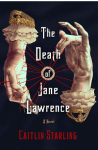
Cover of The Death of Jane Lawrence, two hands with something resembling a cat's cradle string drawn between them.

Death of Jane Lawrence by Caitlin Starling: 3.5. Young orphan seeks a loveless marriage that will meet her requirements for a husband and lifestyle, but doesn’t anticipate the necromancy (or actually falling in love with him). It’s okay, but suffers a bit from the trope of cosmic horror not requiring more than some creepy shite happening.

Leah Remini's headshot Seriously. The whole cover.

Troublemaker: Surviving Hollywood and Scientology by Leah Remini: 4. Sci-fi religion abuses those who speak out or ask questions about it: I mean, where is Shelly Miscavage? While not an entirely unbiased view of Scientology, it’s a worthwhile read where you can at least see why Remini left and continues to speak out against it.

Cover of the Kingdoms of Savannah. Red velvet chair sitting in the middle of a swamp.

Kingdoms of Savannah: A Novel by George Dawes Green: 2.5. In this mystery, Savannah’s wealthy elite does like rich people do as they seek one of the rumored locations for freed black men and women during the reign of slavery in the South. I feel like it’s coasting on Green’s reputation, since it’s not poorly written but still ultimately unsatisfying, unless you really enjoy the tiny snippets of history.

Cover of the collected Schizophrenia. Different colored marbleized patterns.

The Collected Schizophrenias by Esmé Weijun Wang: 3.5  A collection of essays about how Schizoaffective disorder sent one woman’s life off the tracks and how she has to constantly struggle with what it means to herself and others. Any person with mental illness can relate to how difficult it is to both find almost everything impossible while also trying to deflect what others perceive to be true,

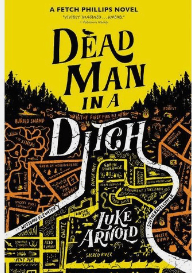
Luke Arnold’s “Dead Man in a Ditch”

Cover of Dead Man in a Ditch-- yellow with street map..

Back in June, I was put on indefinite (okay, six weeks) hiatus due to a food-poisoning induced hernia and the subsequent surgery to fix it.

Knowing I wouldn’t be able to lift anything over five pounds, and also being aware that would just make me want to lift things more, I went ahead and asked my friends for books to read so I kept my mind off of “Fuck you, I do what I want.” This series was one of the suggestions. 

A lot of urban fantasy novels focus on what happens when magic suddenly reinvigorates the world. Luke Arnold, from Black Sails and other series, instead focuses on what happens when magic is suddenly stripped from an Earth that always had it: elves suddenly age, vampires turn to dust, fairies revert to the trees and rocks they called home. Humans, once the underdog and now the standard, are even affected as the magical fires and tools that kept their cities running stop working, forcing everyone to resort to other methods to keep warm and survive. 

Fetch Phillips, our main character, is at least 50% responsible for what happened to magic. After being on the side of the humans in staving the flow of magic, the result of his envy of the magical types and anger at their treatment of him, he’s become a private investigator trying to keep the non-magical lights on. In the first book, he has some vampire and women problems— his fairy romantic interest became a tree— but in the second one he’s dealing with things like actual guns, dead businessmen, and a strange stalker who’s literally stealing the essence of once magical creatures. These thefts open up another question: what if magic isn’t quite dead? What would once-magnificent creatures do to recapture the past?

These books are fun. They remind me a lot of the Dresden files, with a little more noir and fewer references to the various assets of women. Fetch Phillips is flawed and remains flawed throughout the series, which is relatable as he just feels like less of a stand-in for the author. The mysteries at the center of the novel are well-laid out and make sense within the context of the world. If you’re into that whole magical noir genre, it definitely will fill that hunger, even though it’s about a world where magic was killed.

Would I Read it Again?: Maybe. It’s not exactly the most mysterious of mysteries, but if I wanted to spend a rainy day with heist movies and detective fiction, I would happily return to it.

Rating: 4. It’s straight forward, interesting, and I enjoyed it. The plot makes sense and gets wrapped up well, with enough of a lead into the next book to make me want to read it (as soon as I whittle down the reading list a little).

Mrs. Harris Goes to Paris & Mrs. Harris Goes to New York

Cover of Mrs. Harris Goes to Paris and Mrs. Harris goes to new York showing older woman holding fancy dress in front of her with another cast of characters from the book across the top.

Occasionally, I delve out of horror to read books that a friend recommended, where a movie is being made, or they come across my suggested feeds from social media. Things like that. In this case, I saw a movie being made out of the first book, and it hit a chord with my deep love of historical fashion. I’m a multi-faceted person. If only I could put that into my art, right?

Mrs. Harris Goes to Paris (and New York!) follows the widow and charwoman (housecleaner) Mrs. Harris as she goes on two journeys set in motion by her dogged determination. In the first, she sees a Dior dress at one of her rich client’s houses and makes the decision to save up the 500 pounds she needs to travel to Paris and the House of Dior to own the gown of her dreams. Along the way, she charms aristocrats, models, and accountants, even setting in place a romance for the supporting characters. She does much the same in New York, seeking the father of a poor, abused child she basically kidnaps from his foster family. She’s charming, so it’s okay.

If you are looking for short, feel-good reads, then these two novellas will satisfy you. There is some heteronormative bullshit, as a dear friend would call it, as you see women who lead envious, glamourous lifestyles just seeking to settle with something less, because why the fuck not? But, these were written by a man during an era when women were expected to want that, so it’s not out of the blue, just kind of obnoxious.

Would I Read it Again?: Nah. Both of these novellas are short and sweet, and there’s just not a ton of depth to them. They’re meant to make you feel good, like that third piece of chocolate cake you need on a crappy day.

Rating: A 3, maybe? It’s simple writing, but not everything needs to be super profound. It just needs to satisfy, and these books do a decent job of that.

Elizabeth Kostova’s “The Historian”

Cover of The Historian by Elizabeth Kostova. Half face of statue with rest in darkness.

I love this book. 

And while I could end the review there, as long as I added how much I loved it a few more times, I’ve committed to writing more words.

The Historian is a love letter to the weird history surrounding the life of Vlad Tepes and the myth of Dracula. After a diplomat’s young daughter discovers his cache of records and books dedicated to the history of Vlad Tepes, she starts to research the stories on her own. As she finds out more information, she even asks her father to tell her the stories from his youth, when he also sought out Dracula after receiving a strange book with a cryptic map when he was younger.

This map leads them on a strange journey, with malevolent figures and disappearances abounding, through how history viewed Dracula, as well as what it says about him. The book takes us from academics and anachronistic protectors in Turkey to abandoned castles in Romania, mingling folklore with the rigorous nature of academia. At first, it’s a father telling a story to his daughter about his own youth, before they throw themselves back into the search once more, following historical breadcrumbs with both glee and apprehension.

This is not a book of action, even though the characters do follow the myth from location to location. It’s a passionate letter to the history that supports a mythology and how those things seep into and change our primary sources. The language is beautiful, just as you would write to a lover who inflames you just… so. It reminded me quite a bit of “Interview with the Vampire” by Anne Rice with how it invokes atmosphere and mystery with language rather than a great deal of action.

If you don’t like slow books, this is not the read for you. I do suggest maybe just taking in the first chapter to see if you can get into it, but it’s still a tough sell if you like faster-paced mysteries. If you love history and language, this is such a great combination of those topics. It’s obvious Kostova loves both, and it’s nearly impossible not to get caught up in that underlying current of enthusiasm if you’re even vaguely a history buff.

Would I Read it Again?: Well, I liked it so much I bought it so I could do exactly that. Most of my reading is through the Libby app, but I felt this was a needed member of my personal library. I also was able to pick up another recommended book through it that’s a glorious historical reference for my writing work.

Rating: 5, if you like history. Probably more of a 3 if you want people to start doing things rather than telling stories.

Scott Thomas’ Kill Creek

Cover of kill creek by Scott Thomas showing outline of dilapidated farmhouse

Every haunted house has a story. A malignant owner. A heinous act. A terrible tragedy. Something that makes the people who see it shiver even on the hottest days. They rush past these places, sometimes running, until whatever lurks within those walls can no longer see or hurt them.

In Kansas, this house is on Kill Creek Road. Its very foundation is built on a terrible and heinous tragedy: the man who built the house, and his black girlfriend, were both violently murdered by the locals. Years after this crime, the Finch Sisters buy the house and become little more than evil witches to the townspeople. When one of them dies of disease and the other hangs herself from the same tree as the previously murdered lover, the story of Kill Creek only grows.

This house serves as an inspiration, as several horror writers (representing the provocateur, the ingenue, the christian, and the established, prolific veteran) are invited to the most infamous house in Kansas to film a live stream. While the house serves up a couple scares during the stream, most of what occurs there is unremarkable. A few cold winds, sounds, and a mysteriously bricked-up stairwell make up most of the mystery for these writers seeking inspiration.

It’s what happens after that inspires and strikes terror in the hearts of those same writers, as some dark force causes them to check out of their normal lives and throw themselves headlong into writing a story; despite using their unique styles, this story is remarkably similar for each of them. This sudden obsession, and the consequences they face when they try to stop writing, force them back to the house on Kill Creek, where shenanigans ensue. And holy shit, are their shenanigans.

It’s a straightforward read about the power of belief and how it interacts with spiritual forces. If you want a haunted house book where the house is haunted, but not where the typical ghosts are going to get everyone way, this is a good deviation from the mean. It has a similar feel to “The House Next Door” (Siddons), without all of the waxing sweetly about Southern life in between the house demon issues.

Would I Read it Again?: No. Everything in the book was pretty clear cut and once you read the ending, there’s not a lot that makes you go “So, that’s what happened.”

Rating: 3.5. It’s a solid horror novel, but that’s really it. There are some loose ends that get lost in the twist. Like another recent read, Last Days, it’s a little unsatisfying.

Laird Barron’s “Occultation”

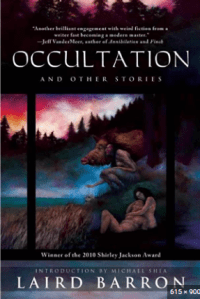
Cover of "Occultation and Other Stories" by Laird Barron. Naked couple holding each other, with another person squatting near warthog.

I have a thing for the outer dark.

Not in the sexy way, but instead a darker, filthier fascination of what oblivion means to all I know as me. Terrified of either truth. That kind of thing.

“Occultation” by Laird Barron definitely satisfies this particular hunger and manages to do so in one of my favorite formats: the short story. The book is a collection of nine short stories all dealing with those things that are beyond ken for many. Madness waits for the rest. If Eve ate an apple and gained the understanding of her vulnerability, then “Occultation” is eating the whole damned tree and losing oneself in the process.

I won’t pick a favorite story. The entire book is full of things I love. They range from a couple slowly going mad while the world outside devolves to eternal dark to a man who hears strange sounds in his vent, the voices slowly getting closer as he loses his mind. Most of the stories deal with relationships in some shape or form, showing both the comfort and claustrophobia such ties bring when the stars are right (when, really, they’re all wrong).

If you are into the kind of creeping madness that stays out of sight but definitely on the mind, while also breaking down the ties that bind us to reality in a sort of folie a duex, “Occultation” is a fantastic read.

Would I Read it Again?: Happily. I think this is one of those books where you pick up more and more details once you already know the end of the story.

Rating: 4.5. The .5 is about how dense the language can be, especially concerning dialogue. Reading through things again to catch clues is awesome, but needing to read it again to understand what is going on is a complete PITA.

Anne Rivers Siddons’ The House Next Door

The cover of The House Next Door, showing a house hidden behind vegetation.

What’s a house without a ghost? Still one bad motherfucker, if The House Next Door is to be believed. It doesn’t need any incorporeal spirit rattling its chains or throwing plates. Those are so… last year. Instead, it relies on a person’s own weaknesses, feeding them until they become grotesqueries and horrors beyond imagining. And what if you just happen to live next door to all of the zany butchery?

That’s the premise of The House Next Door. The neighbors, Colquitt and Walter, are pissed when they find out the empty lot next to their house— in a very influential Atlanta neighborhood— is to be no more. A newly-minted architect has been hired by an old money daughter of the South to build a house that says fuck daddy in all its glory. Colquitt and Walter do come around on it, even becoming close friends with the architect, as they see his talent come alive in the form of a modern home. Then shit starts to go down.

After several suspicious wildlife maulings, the new neighbors lose everything that is valuable to them: a child, reputation, their father— until they are driven from the home in an attempt to to maintain their reputations. Two more families follow, along with various incidences of “bad luck” with those who visit the house. The architect loses his talent, other neighbors watch their son throw his life away, and  “Col,” as the book often calls her, and Walter almost implode an otherwise impenetrable marriage. Walking into this house is the karma equivalent of breaking a billion mirrors and passing under a ladder on your way out. It takes a family or two, as well as the drunken ramblings of the architect, before anyone believes something might be going on and Col/Walt find a reason to start taking… action. 

Siddons is known for her slice of Southern, and I think that shows well in this horror story. One has to move those stories at a certain pace, or they become absolute trudges. In this case, it meant there was always more action with enough of the slice of life to make the story of this strange house in a conservative (of course, they think themselves liberal), old money community feel like an avoidable tragedy.

There are some issues with language used to describe an queer entanglement. In addition, a Jewish character is portrayed as a new money-hungry boo. It’s an unforgivable part of an otherwise good book, even though many might say it perfectly emulates the mindset of the Southern WASP who happened to write in 1978 about other Southern WASPS. It definitely shows how even those who consider themselves on the right side of the Civil Rights movement are the type who speak and act one way in public and become entirely different people within their cloistered communities.

Would I Read it Again?: Yeah. Apparently I rushed a little at the end and missed important information. This happened a couple of times and I had to go back to correct my understanding. The book isn’t so spectacular that I would read it again just for enjoyment, since I feel like I got most of what I needed the first time.

Rating: 3. The writing was solid, but the Jewish character really just threw off everything for me, especially with all the calls to it the characters make. I knocked a point off for that since it wasn’t just narrator perception framing the racism. 

.

Michelle Paver’s Wakenhyrst

Cover of Wakenhyrst by Michelle Pacer. Old fashioned estate house with graveyard in front over a floral motif.

Michelle Paver is popular in many horror circles. She’s often mentioned on the /rhorrorlit board I follow for book suggestions. 

However, the first book I read of hers was Wakenhyrst, which has horror elements but is more of a gothic romance. It has the requisite madness and a “maybe” demon, along with some tragedy and death.

Spoiler? Maybe. The main character, Maud, suffers an impossibly patriarchal father, while being the most competent character in the book. The book is very much her coming of age, moving from the innocent superstitions of her life on the marsh to and finding her agency; and it’s not just agency from her father, but from all of the superstitions, beliefs, and the expectations of a woman in her position.

It was okay. I love Maud in all of her iterations, and her maturation has layers of shit she throws off as she learns. However, it’s just okay. Perhaps her horror is better (I’ve ordered the books). It shares a trait with “The Little Stranger” (a book by another author who I otherwise love and speak well of) in that it’s just too long. I know Gothic Lit has a habit of lingering, but in the case of “Wakenhyrst” it drags the action down. I just want it a little cleaner.

Would I Read it Again?: So. Yes. I would. Like many books of its ilk, I always want to confirm that my first opinion is correct. Maybe there are some details that make all of the extra worth it. Usually, I’m a little disappointed.

Rating: 3

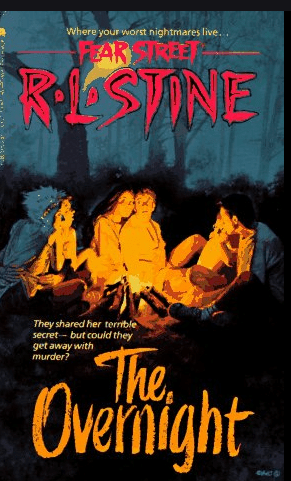
Fear Street #3: The Overnight

I’m reading every Fear Street novel from my childhood and summarizing them here. Instead of subjecting you to all of the teen angst and bad decision making that turns Shadyside into the #1 place to be if you want to be murdered, I’ve taken on the burden.

Who am I kidding? I love trash horror. Enjoy the spoilers.

====

Of all the books I’ve read in the Fear Street series, which admittedly is both too many yet not enough, The Overnight might be the most straightforward one. There’s no real mystery, no threatening phone calls from a mysterious source, and no  teenagers go on a weirdly murderous rampage to solve otherwise mundane problems.

Della O’Conner is our “protagonist.” She’s one of those teens that thinks the cycle of breaking and making up with her boyfriend is some kind of foreplay. The lucky guy is Gary, and they both have the personalities of turnips. They’re members of the Outdoors Club, around which our drama revolves.

Other members include the very punk rock Suki Thomas, who is very up for stopping the fun and games between Della and Gary. Maia is the very overprotected friend with the requisite strict parents. There’s the preppy Pete, who also wants to end the shenanigans between the unhappy main couple by hooking up with Della; Ricky Schorr breaks up the monotony by having the sole trait of cracking bad jokes for 99% of his dialogue in the book. Because of this terrible habit, everyone is really mean to him, because Shadysiders are way more interested in picking on the weird kid than identifying possible murderers in their midst. The cast finishes out with some random parents, Mr. Abner (the teacher in charge of the Outdoors Club), and the two strangers who come into play during the overnight.

The story starts with the Outdoors Club meeting about their upcoming overnight trip. After some bad jokes from Ricky and bullying from the other members of the club, there’s some posturing over who gets to date Gary from Suki and Della. Mr. Abner comes in to end all of their fun. He has a family obligation so he can’t chaperone the upcoming overnight trip.

His suggestion to postpone it was vetoed without him present. Maia spent a lot of time convincing her parents to let her go because they appropriately treat her like a teenage girl loose among other teenaged Shadysiders who could be evil ghosts or have an axe stored in their locker. So, the teenagers decide to go on the trip by themselves. Della’s mom thinks the overnight is a bad idea even with Mr. Abner there. But they still go. To Fear Island. Because that ever goes well.

They make it out to the island with minimal distress from Ricky and lots of flirting from Suki (Gary) and Pete (Della). Della gets particularly pissy because Suki crawls up Gary’s ass, and it’s obvious, but guys, they’re on a break.  Ricky is a fan of ZAP, so he brought along some paintball guns. After they set up camp, they play some boys vs girls, and this is where the fun begins.

Della meets this creepy guy in the woods, and first mulls over how handsome he is. Like… a movie star, folx. He starts talking about how everyone is lacking in communication then attacks Della. She pushes him down a ravine; while she’s burying him with leaves, the rest of her rag-tag campers show up and verify that “he’s dead.” Instead of anyone thinking that they should tell their fucking parents, they all get very upset that someone might find out that they took the trip by themselves. Maia worries not one bit about the dead dude, but how she will never again be able to leave her house. Only Ricky has any sense, and in one of his few serious moments, he throws up everywhere. The friends agree to a cover up, and I honestly thought this would transition into a I Know What You Did Last Summer moment.

Instead, they go home and get terrorized for a week by people ding-dong-ditching them and sending threatening notes that include a charm from the dead man’s neklace. Maia is less worried about being murderated than her parents finding out, so they don’t end up going to the police. They do this even after they find out that the guy Della knocked down the hill was probably one of two men who robbed an old man and killed him. I’d say the suggestion of the culprits being ghosts was far-fetched, but they get points for considering a very real threat in Shadyside.

As a side note, Pete spends his time of abject horror also asking out Della. And even though she initially thought he was kind of a square, I guess watching Gary move on has opened her up to the possibility of dating someone whose main quality is being nice while wearing a popped collar. They go out on a date at a club together to seal the deal, and almost get run off the road by a psycho killer, but still no police, right?

Mr. Abner reschedules the real overnight with a chaperone for the next week, and the teenagers are appropriately terrified and provide a bunch of excuses. However, they realize they left one of Ricky’s ZAP guns on the effing corpse, so they agree to go back to retrieve it. Maia has no problem explaining the second overnight trip to her parents, so maybe they’re only strict when it’s convenient to explain plot points.

After a hike, they set up camp (again), and Mr. Abner sends the kids out to gather firewood. Not too far out though, because hanky panky is required on spooky islands. Della tries to get far enough out to retrieve the gun but is interrupted by Maia screaming. Someone knocked out Mr. Abner. Instead of leaving the island to get him help, they go out on an adventure to  find the gun. They find the spot where Della knocked the guy into the ravine and find that he’s not there. She gets attacked and starts to run, finding out both men are still alive.

The men’s entire idea was to blackmail the kids so that their rich parents would pay them. Their robbery was apparently a bust, except for killing that old guy. There’s some back and forth cartoon shenanigans, until Della finally escapes to the campsite. Thankfully, despite no one calling them, the police wait for her there so they can take the burglars into custody. Surprise police are best police? In this one case only?

Then, we finish off with the prerequisite snappy ending. Della is definitely dating Pete and never again wants to go outside. Probably smart, given the town they live in.

Death Count: 0 (2 Fear Street deaths total)

Death Count on Fear Street: 0 (1 total)

Actual Ghosts: 0 (0 total)

Rating: 10/10 for making it easy to write about.

Fear Street # 2: The Surprise Party

I’m reading every Fear Street novel from my childhood and summarizing them here. Instead of subjecting you to all of the teen angst and bad decision making that turns Shadyside into the #1 place to be if you want to be murdered, I’ve taken on the burden.

Who am I kidding? I love trash horror. Enjoy the spoilers.

====

I want to apologize. While a Fear Street book takes me all of an hour to read, I’ve had some difficulties in sitting down and writing about all of the illicit secrets and tantalizing murderers. The sky fell, and it’s been a complete pain in the ass.

When I say the sky fell, what I mean is that the ceiling in my dining room collapsed. Our house is over 100 years old and has seen quite a few repairs in its time. When we moved in, there was a hairline crack in the ceiling that we figured was from an old house settling in nice and right over time. We were wrong.

What had actually happened is that the previous owner had repaired the ceiling at some point. They nailed the thin wooden shims (lathe) that hold the plaster in with finishing nails. Then, they installed a heavy chandelier onto the lathe. Hundreds of pounds of plaster and lighting was all held in place by those teeny-tiny nails, and they finally said fuck it. The past month has been a process of putting up drywall, mudding drywall, and texturing and painting drywall. Since our dining room was already a wreck, we also took the opportunity to paint, refinish a few furniture and decorative pieces, and put up crown molding to hide the fact that our walls (or our new drywall ceiling) weren’t even.

We’re close to the finish line, though. Thus, I bring you the fine classical stories we all know and love from Fear Street.

===

After rereading three books (with one being very much out of order), I realized I’m going to run out of stuff to talk about. Every book is a simple premise that causes an inproportionate amount of teen drama, threatening phone calls, and sometimes murder and mutilation. I’m going to be shortening my recaps a little, unless a book is especially brilliant or bad.

Our main character is Meg Dalton. Meg has the habit of looking too young and being naive. Since naivety and gullibility are the traits of every protagonist in Shadyside so far, I’d say she’s cast perfectly. Her best friend, Shannon, looks like Molly Ringwald. Meg idealizes this beauty, which is just a reminder of how old I am as I get the reference and its sapphic vibes. Shannon once had a brother named Evan. Evan was murdered via shotgun the previous year in Shadyside and in the previous chapter in our world.

Meg has a moody, and frankly abusive, boyfriend named Tony. I’m not sure why she’s with this guy, beyond that fact that everyone in Shadyside has terrible judgement. He’s a condescending dickhead that has explosive anger issues, taking this all out on Meg. He also thinks he’s a murderer and almost becomes one— manifestation, baby!— just to cover his tracks. More on that later.

Dwayne is the town creeper, a rare feat in a town full of them. Brian is Meg’s cousin. The two of them play Wizards and Dungeons together in the woods, which practically means they are devil worshippers during this time period.

Our final two players are Ellen, who is Evan’s ex-girlfriend. She moved away after his death, and her return to Shadyside forms the premise of the book. What does she know? What secrets does Ellen hide within her heart? Is she a murderess? Nope. Just a plot device like Mke: Shannon’s half-brother who looks a lot like Evan.

There are several throwback moments to Lisa and Cory from the previous book. Apparently, not all is fair in their paradise. Cory is still a fucking moron, who knew?

Our story begins with a murder, supposedly over a girl who is very bad, and hoping to get away with it. I feel like wanting to get away with it is a given in the great majority of murders, and we should perhaps only mention cases where the murderer is just doing it to get caught and be treated to a fantastic trial and some jail time. Unless they’re a white dude, then they’ll just get job offers from Tucker Carlson.

We start our story with an introduction of the main players having a conversation while they ride their bikes, and Tony acts like an asshole. Meg reminisces or fantasizes about the past where he was nice, Evan was alive, and Ellen was around. Cory and Lisa interrupt her reverie, and Tony’s verbal abuse, to let them know that Ellen is coming back to town to visit a relative.

Meg decides with her friends that they should have a surprise party for Ellen so she knows they still love her. However, later that night, Meg receives a threatening phone call that she must not host a party. Apparently Ellen isn’t all that welcome. Also, can we talk about how in Fear Street phone calls are the modus operandi of all creepy people? Since the internet wasn’t around, I suppose every bully ever just needed to pick up the handset and make some vague threats. It’s just not Shadyside without 15 calls telling you that your current path is probably ill-advised.

Meg suspects it’s a joke, but Tony wants her to take it very seriously. He even advises her to call the police— how novel!— and wants her to not host the party. This doesn’t sound suspicious at all, especially from a guy who has temper tantrums every other second.

Along with more calls, Meg’s party invitations get torn up. She also receives a lunch bag full of red paint, almost gets run over, and gets a threatening message from the school secretary; however the woman doesn’t know who left it. Since the secretary also missed Cory hiding out in the principal’s office in the last book, I don’t think she should be responsible for children anymore.

Tony also gets some threatening messages and says he’s being followed, using those to support his efforts to have the party cancelled. When Meg doesn’t agree with him, he breaks up with her. A view into his thought processes reveals he wants to kill Meg because he’s afraid she might find out he was the one “killed” Evan. He tries to run her over, then contemplates pushing her off a cliff before he finds out she really has no clue he’s a complete dick.

Meg spends far too much time trying to figure out who the culprit might be. She recalls how Brian was in the woods the day Evan died and also changed from whatever happened there. Shannon, Brian, and Dwayne are also on her list. The last only gets there because he’s a creep who demeans dead Evan and lusts after Shannon, so at least she has some common sense. He also gropes Shannon a few times at a party, much to everyone’s gross-out factor.

She then makes the awful mistake of accusing Shannon, who rightly loses her shit on Meg about the accusation. Instead, Meg tries to justify her overreaction as guilt. Thankfully, she comes around on how it’s okay for her best friend to be pissed off at her for the accusation. Meg recalls a time the friends— Evan, Ellen, Tony, Meg, and Shannon— were all together. During a pool game, Evan goes batshit insane and smacks the hell out of Tony with a pool cue. After Evan knocks him out, Ellen starts screaming about how it wasn’t an accident, so there was some tension between the three.

Shit hits the fan when Tony and Brian go out to play Wizards and Dungeons together out in Fear Street woods. Tony pushes Brian down a gully because Brian witnessed Tony “kill” Evan. Both Brian and Meg are saved from Tony’s murderous intentions. This leads Meg to believe Brian has some sort of secret, so she then gives him the third degree. He responds with the kind of stuff you would expect a 10 year old to say about their video game adventure, so Meg’s just kind of pissed and low-key disturbed.

One awkward friend reunion later, the surprise party finally happens. Brian, despite his injuries, shows up to the party. Speaking like a drunken Gandalf, he tells everyone he’s brought Evan back to life. As I previously mentioned, Shannon’s other brother— Mike— looks a lot like Evan. They use this to freak Tony the fuck out, and he starts to brandish *the goddamned pistol* he brought to the party. He tells everyone he will confess to who killed Evan..

Only to freak the fuck out of the real killer, Dwayne, more. You see, Dwayne had a crush on Shannon, and Evan stood as the one obstacle to his adoration. You know, forgoing the fact that Shannon thinks he’s the worst. After shooting Tony, he takes the girls hostage, and the true story comes out.

A long time ago, in a land far away, Tony and Ellen were cheating on their respective partners. Ellen broke up with Evan, and he fled into the woods with a rifle. Tony and Ellen followed him, with Brian following after, and the gun went off in the middle of a fight. Tony assumed he killed his best friend. However, Evan was still alive. Dwayne finished him off because of his deep, abiding, and perfectly normal love for Shannon.

The girls distract him by screaming about a mouse, using the opportunity to knock Dwayne out. The final scene has Meg and Shannon discussing how Tony was responsible for threatening Meg. Brian, Mike, and Ellen made a plan to out Tony after he pushed Brian down the hill. Anyway, since Meg’s single now that Tony is no longer in the picture, Mike asks her out, and she agrees as long as there are no parties. I’d say she’s moving on a bit quickly, but I have a feeling the normal reaction to being almost dead in Fear Street  is to immediately hook up with anyone who hasn’t become a killer yet.

And now, on to book 3. Good Gods, save me.

Death Count: 1 (2 Fear Street deaths total)

Death Count on Fear Street: 1 (1 total)

Actual Ghosts: 0 (0 total)

Rating: 4/10 for the twist ending!